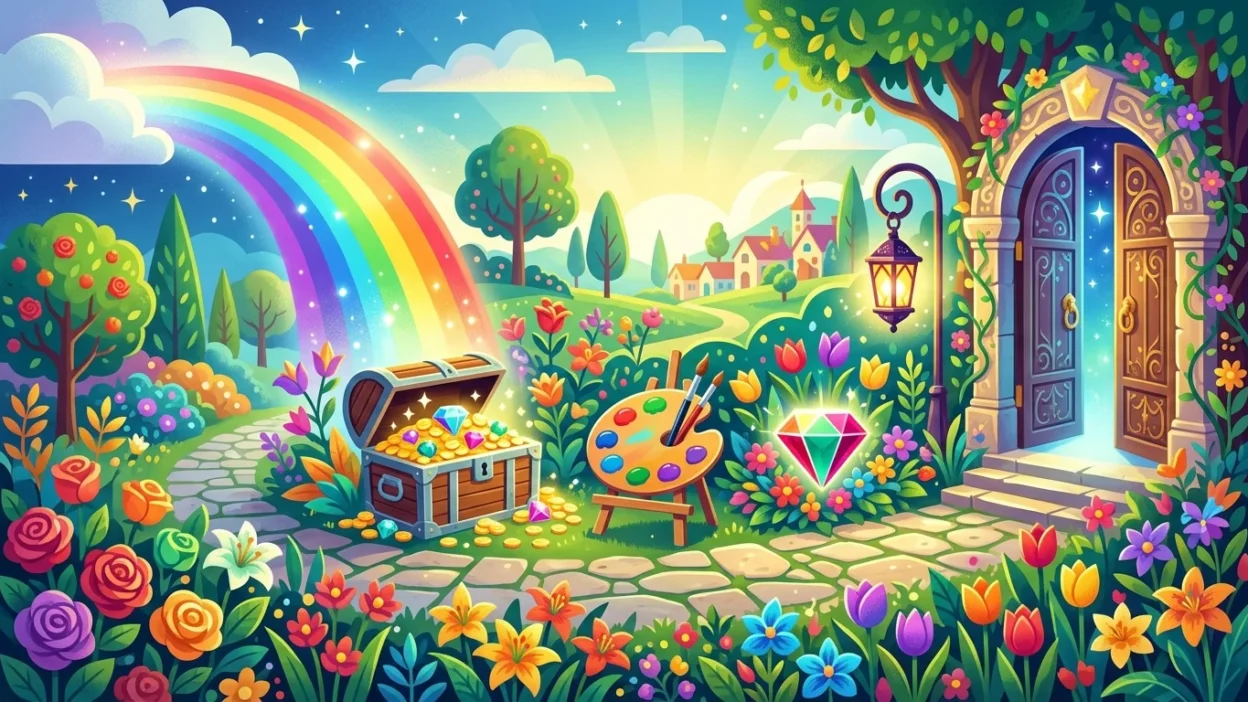
Colors do more than brighten the world. They can symbolize emotions, personalities, moods, and experiences. A single color can represent hope, love, sadness, courage, peace, or mystery. That is why writers often use metaphors for colors to make their writing more expressive and meaningful.
If you are writing a poem, story, speech, essay, or journal, these original metaphors will help you describe colors in fresh and creative ways.
Metaphors for colors are figurative expressions that compare colors to meaningful images, such as a rainbow of dreams, a silent language, a painter’s voice, or a living emotion. These literary devices help readers connect colors with feelings, ideas, and experiences.
What Are Metaphors for Colors?
A color metaphor compares a color or the idea of color to another object or concept to highlight a particular meaning or emotion.
For example:
“Colors are the language of emotions.”
This does not mean colors literally speak. It means colors communicate feelings without words.
Color metaphors are useful in:
- Poetry
- Creative writing
- School essays
- Speeches
- Storytelling
- Art descriptions
20 Original Metaphors for Colors
| Metaphor | Main Meaning |
|---|---|
| A rainbow of dreams | Hope and endless possibilities |
| A painter’s voice | Creative expression |
| A silent language | Feelings without words |
| A living emotion | Strong emotional expression |
| A joyful song | Happiness and celebration |
| A woven tapestry | Diversity and unity |
| A glowing heartbeat | Energy and life |
| A window to the soul | Revealing emotions |
| A blooming garden | Beauty and variety |
| A treasure chest | Richness and value |
| A dancing flame | Passion and excitement |
| A bridge of feelings | Emotional connection |
| A morning sunrise | Hope and fresh beginnings |
| A soft blanket | Comfort and peace |
| A sparkling jewel | Rare beauty |
| A flowing river | Constant change |
| A glowing lantern | Guidance and warmth |
| A festival of light | Joy and celebration |
| A box of memories | Nostalgia and reflection |
| A magical doorway | Imagination and creativity |
Detailed Meanings and Example Sentences
1. A rainbow of dreams
Meaning: Hope and endless possibilities.
Example sentences:
- Her artwork became a rainbow of dreams.
- The children’s imagination was a rainbow of dreams.
2. A painter’s voice
Meaning: Creative expression.
Example sentences:
- Every color was a painter’s voice.
- Bright shades became the painter’s voice on the canvas.
3. A silent language
Meaning: Feelings without words.
Example sentences:
- Colors formed a silent language.
- The sunset spoke through its silent language.
4. A living emotion
Meaning: Strong emotional expression.
Example sentences:
- Every brushstroke became a living emotion.
- The mural was a living emotion on the wall.
5. A joyful song
Meaning: Happiness and celebration.
Example sentences:
- The festival was a joyful song of colors.
- Spring painted the fields with a joyful song.
6. A woven tapestry
Meaning: Diversity and unity.
Example sentences:
- The market became a woven tapestry of colors.
- Nature created a woven tapestry across the hills.
7. A glowing heartbeat
Meaning: Energy and life.
Example sentences:
- The city lights formed a glowing heartbeat.
- Every colorful flower was a glowing heartbeat of spring.
8. A window to the soul
Meaning: Revealing emotions.
Example sentences:
- Her paintings were a window to the soul.
- Every shade became a window to the soul.
9. A blooming garden
Meaning: Beauty and variety.
Example sentences:
- The parade became a blooming garden of colors.
- Autumn turned the forest into a blooming garden.
10. A treasure chest
Meaning: Richness and value.
Example sentences:
- The coral reef was a treasure chest of colors.
- The artist opened a treasure chest on the canvas.
11. A dancing flame
Meaning: Passion and excitement.
Example sentences:
- Red became a dancing flame in the painting.
- The celebration glowed with a dancing flame.
12. A bridge of feelings
Meaning: Emotional connection.
Example sentences:
- Colors built a bridge of feelings.
- The mural became a bridge of feelings between generations.
13. A morning sunrise
Meaning: Hope and fresh beginnings.
Example sentences:
- Yellow became a morning sunrise in the room.
- Bright colors welcomed us with a morning sunrise.
14. A soft blanket
Meaning: Comfort and peace.
Example sentences:
- Blue spread a soft blanket over the lake.
- Gentle colors wrapped the room in a soft blanket.
15. A sparkling jewel
Meaning: Rare beauty.
Example sentences:
- The butterfly became a sparkling jewel.
- Every flower looked like a sparkling jewel.
16. A flowing river
Meaning: Constant change.
Example sentences:
- The sky became a flowing river of colors.
- The painting flowed like a river from blue to gold.
17. A glowing lantern
Meaning: Guidance and warmth.
Example sentences:
- Orange became a glowing lantern at sunset.
- Warm colors acted as a glowing lantern.
18. A festival of light
Meaning: Joy and celebration.
Example sentences:
- The fireworks created a festival of light.
- The celebration became a festival of colorful light.
19. A box of memories
Meaning: Nostalgia and reflection.
Example sentences:
- The faded photograph was a box of memories.
- Autumn colors opened a box of memories.
20. A magical doorway
Meaning: Imagination and creativity.
Example sentences:
- Every painting became a magical doorway.
- Bright colors opened a magical doorway into fantasy.
How to Use Metaphors for Colors in Writing
Poetry
“Every sunset became a rainbow of dreams across the sky.”
Creative writing
“The room was a treasure chest filled with warm colors and happy memories.”
Speech
“Let kindness become the glowing lantern that brightens every life.”
School essay
“The writer uses colors as a silent language to express emotions.”
Common Mistakes
| Mistake | Better Choice |
|---|---|
| Using too many color metaphors together | Choose one or two strong images |
| Mixing unrelated symbols | Keep the message consistent |
| Explaining every metaphor | Let readers imagine the meaning |
| Repeating the same image | Use a variety of original metaphors |
Similar Expressions
- A splash of color
- A world of color
- Brighten someone’s day
- Paint a picture
- Full of life
- Colorful personality
- Shades of emotion
Creative Writing Tips
- Use rainbow of dreams to describe hope and imagination.
- Use silent language to express emotions.
- Use treasure chest for colorful beauty.
- Use glowing lantern for warmth and guidance.
- Use festival of light for celebrations.
For example:
Weak: “The painting was colorful.”
Stronger: “The painting became a rainbow of dreams that filled the room with hope.”
Practice Questions
Choose the best metaphor.
1. Which metaphor suggests hope?
- A. Rainbow of dreams
- B. Broken chain
- C. Empty box
Answer: A
Explanation: A rainbow often represents hope and possibilities.
2. Which metaphor suggests emotions without words?
- A. Silent language
- B. Stone wall
- C. Dark cave
Answer: A
Explanation: Colors can communicate feelings without speaking.
3. Which metaphor suggests creativity?
- A. Painter’s voice
- B. Locked door
- C. Dry leaf
Answer: A
Explanation: A painter expresses ideas through color.
4. Which metaphor suggests beauty and variety?
- A. Blooming garden
- B. Rusty chain
- C. Broken ladder
Answer: A
Explanation: A blooming garden is full of colorful beauty.
5. Which metaphor suggests comfort?
- A. Soft blanket
- B. Sharp stone
- C. Empty road
Answer: A
Explanation: A blanket provides warmth and comfort.
6. Which metaphor suggests celebration?
- A. Festival of light
- B. Dark tunnel
- C. Silent cave
Answer: A
Explanation: Festivals are joyful and full of colorful lights.
7. Which metaphor suggests imagination?
- A. Magical doorway
- B. Closed gate
- C. Broken window
Answer: A
Explanation: A magical doorway represents entering a world of imagination.
8. Which metaphor suggests warmth and guidance?
- A. Glowing lantern
- B. Frozen river
- C. Black cloud
Answer: A
Explanation: A lantern provides both light and comfort.
9. Which metaphor suggests valuable beauty?
- A. Treasure chest
- B. Empty shelf
- C. Dusty road
Answer: A
Explanation: A treasure chest contains precious things.
10. Which metaphor suggests change?
- A. Flowing river
- B. Stone statue
- C. Brick wall
Answer: A
Explanation: A river is always moving and changing.
Frequently Asked Questions
What are metaphors for colors?
Metaphors for colors are figurative expressions that compare colors to meaningful images or ideas to express emotions, beauty, or experiences.
Why do writers use color metaphors?
They make writing more vivid, emotional, and memorable by helping readers picture ideas more clearly.
Can I use color metaphors in a school essay?
Yes. They are excellent for descriptive writing, creative essays, and literary analysis.
What is a common metaphor for colors?
“Colors are the language of emotions” is a common metaphor because colors often express feelings without words.
Are color metaphors useful in poetry?
Yes. They add symbolism, imagery, and emotion to poems.
How many color metaphors should I use in one paragraph?
One or two strong metaphors are usually enough to create a clear image.
Can I create my own color metaphors?
Absolutely. Original color metaphors make your writing more personal, creative, and memorable.
Conclusion
Metaphors for colors help writers describe emotions, beauty, imagination, and experiences in a creative and memorable way. By comparing colors to a rainbow of dreams, a silent language, a glowing lantern, a blooming garden, or a treasure chest, readers can connect with your ideas on a deeper level.
These figurative expressions are useful in poetry, stories, speeches, essays, and everyday writing. Choose a metaphor that matches your message, and your descriptions will become more vivid, meaningful, and engaging.
Adam Aaron is a language enthusiast and content writer at SimileHive, creating clear, engaging guides on similes, idioms, metaphors, and figurative language to help readers improve English confidently every day.