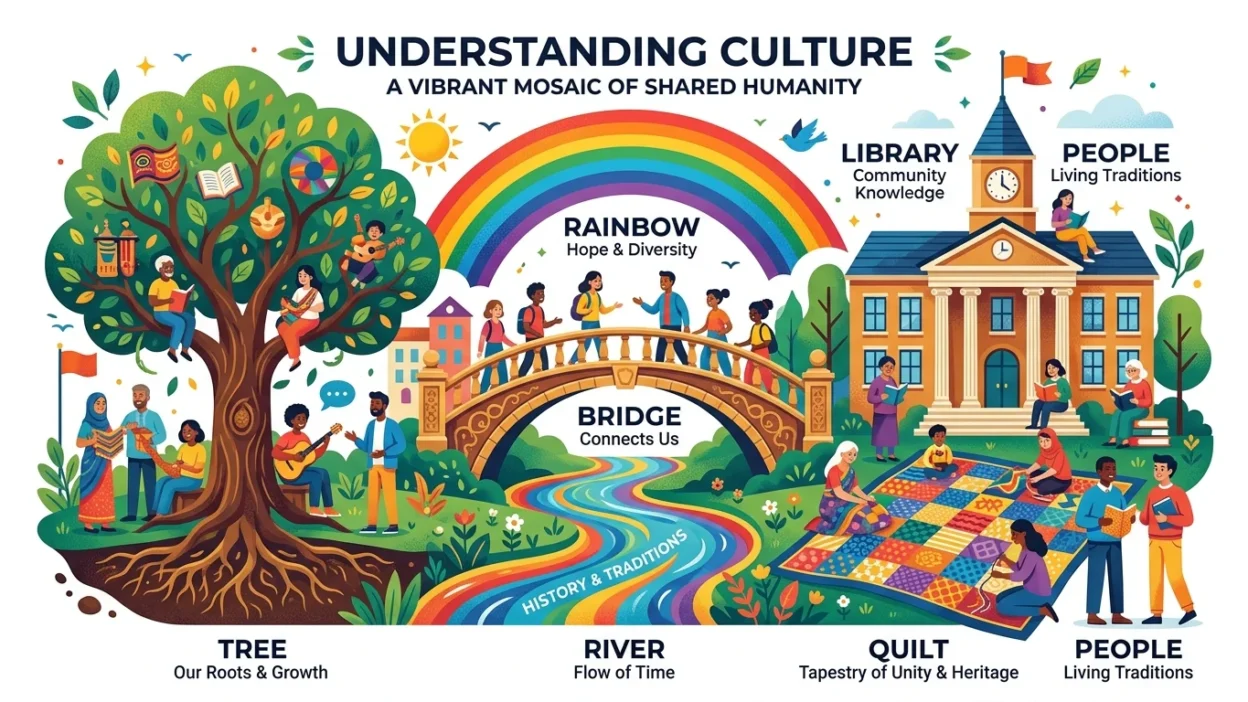
Culture is all around us. It shapes how people think, speak, celebrate, eat, and connect with others. Because culture is such a big idea, writers often use metaphors to explain it in a simple and creative way. Metaphors help readers see culture as something they already understand. Instead of giving a long definition, a metaphor paints a picture in the reader’s mind.
If you are a student, teacher, writer, or English learner, learning metaphors for culture can improve your vocabulary and creative writing. These figurative language examples also make essays, speeches, and stories more interesting.
In this guide, you will discover what culture metaphors mean, why they are useful, and how to use them correctly. You will also find 20 original metaphors with meanings, explanations, and example sentences that are easy to understand. By the end, you will feel more confident using culture metaphors in everyday English and creative writing.
Quick Answer
Metaphors for culture compare culture to another object or idea without using the words like or as. They help explain how culture grows, connects people, changes over time, and shapes communities. Popular examples include culture is a bridge, culture is a garden, and culture is a living story.
What Are Metaphors for Culture?
A metaphor is a figure of speech that says one thing is another to create a deeper meaning.
When people say, “Culture is a bridge,” they do not mean culture is made of stone or steel. They mean culture connects people, ideas, and traditions.
Metaphors make difficult ideas easier to understand. They also make writing more colorful and memorable.
Why Writers Use Metaphors for Culture
Writers use metaphors because they help readers imagine abstract ideas.
Benefits include:
- Make complex ideas simple
- Improve creative writing
- Add emotion and imagery
- Help readers remember important ideas
- Make essays and speeches more engaging
20 Original Metaphors for Culture
| Metaphor | Main Idea |
|---|---|
| Culture is a bridge. | It connects people. |
| Culture is a garden. | It grows with care. |
| Culture is a tapestry. | Many parts create one whole. |
| Culture is a mirror. | It reflects identity. |
| Culture is a river. | It keeps moving. |
| Culture is a tree. | Strong roots support growth. |
| Culture is a heartbeat. | It gives life to a community. |
| Culture is a compass. | It guides people. |
| Culture is a treasure chest. | It holds valuable traditions. |
| Culture is a flame. | It passes from one generation to another. |
| Culture is a language of the heart. | It expresses shared feelings. |
| Culture is a colorful quilt. | Different pieces create beauty. |
| Culture is a lighthouse. | It shows direction. |
| Culture is fertile soil. | It helps ideas grow. |
| Culture is a song. | It tells shared stories. |
| Culture is a library. | It stores knowledge. |
| Culture is a woven basket. | It holds people together. |
| Culture is a rainbow. | Diversity creates beauty. |
| Culture is an endless journey. | It keeps changing. |
| Culture is a living story. | It grows with every generation. |
Culture Is a Bridge
Meaning
Culture connects people from different backgrounds.
Explanation
Just as a bridge joins two places, culture brings communities together.
Example Sentences
- Our shared culture is a bridge between old friends and new neighbors.
- Music became a bridge that connected every culture in the festival.
Culture Is a Garden
Meaning
Culture grows when people care for it.
Explanation
Traditions become stronger when families and communities protect them.
Example Sentences
- Every family helps the garden of culture bloom.
- Respect keeps the garden of culture healthy.
Culture Is a Tapestry
Meaning
Many traditions combine into one beautiful whole.
Explanation
Every custom adds another colorful thread.
Example Sentences
- The city is a tapestry of many cultures.
- Every celebration adds another thread to the tapestry.
Culture Is a Mirror
Meaning
Culture reflects who people are.
Explanation
It shows beliefs, values, and traditions.
Example Sentences
- Culture is a mirror that shows our identity.
- Festivals reflect the mirror of our community.
Culture Is a River
Meaning
Culture keeps changing.
Explanation
Like flowing water, traditions adapt with time.
Example Sentences
- Culture is a river that never stops moving.
- New ideas joined the river of culture.
Culture Is a Tree
Meaning
Strong roots create strong communities.
Explanation
The roots represent history while the branches represent future generations.
Example Sentences
- Our culture is a tree with deep roots.
- Every child becomes a new branch on the tree.
Culture Is a Heartbeat
Meaning
Culture keeps a community alive.
Explanation
Without culture, traditions slowly disappear.
Example Sentences
- Music is the heartbeat of our culture.
- Festivals keep the heartbeat strong.
Culture Is a Compass
Meaning
Culture guides people’s choices.
Explanation
Values help people know the right direction.
Example Sentences
- Our culture is a compass during difficult times.
- Family traditions became my compass.
Culture Is a Treasure Chest
Meaning
Culture contains valuable memories and traditions.
Explanation
Each tradition is a precious treasure.
Example Sentences
- Grandparents opened the treasure chest of culture through stories.
- Every holiday adds another treasure.
Culture Is a Flame
Meaning
Culture passes from one generation to another.
Explanation
Like a flame, it continues when shared.
Example Sentences
- Parents pass the flame of culture to their children.
- The festival kept the flame burning.
Culture Is the Language of the Heart
Meaning
Culture expresses feelings beyond words.
Explanation
Shared traditions build emotional connections.
Example Sentences
- Dance became the language of the heart.
- Food spoke the language of our culture.
Culture Is a Colorful Quilt
Meaning
Different traditions create one beautiful community.
Explanation
Each culture adds its own color.
Example Sentences
- Our town is a colorful quilt.
- Every family stitched another piece into the quilt.
Culture Is a Lighthouse
Meaning
Culture provides guidance.
Explanation
It helps people stay connected to their values.
Example Sentences
- Culture became our lighthouse during change.
- Traditions shine like a lighthouse.
Culture Is Fertile Soil
Meaning
Culture helps ideas grow.
Explanation
Creative minds grow best in rich cultural environments.
Example Sentences
- Art grows in the fertile soil of culture.
- Respect prepares the soil for future generations.
Culture Is a Song
Meaning
Culture tells stories through shared experiences.
Explanation
Every generation adds another verse.
Example Sentences
- Our culture is a beautiful song.
- Children learned the song through stories.
Culture Is a Library
Meaning
Culture stores knowledge.
Explanation
History, customs, and wisdom stay alive through culture.
Example Sentences
- Every elder is part of our cultural library.
- Museums protect the library of culture.
Culture Is a Woven Basket
Meaning
Culture holds communities together.
Explanation
Every tradition strengthens the whole.
Example Sentences
- Kindness strengthens the woven basket.
- Every celebration adds another strand.
Culture Is a Rainbow
Meaning
Different cultures create beauty together.
Explanation
Diversity makes communities brighter.
Example Sentences
- The school became a rainbow of cultures.
- Every language added another color.
Culture Is an Endless Journey
Meaning
Culture never stops changing.
Explanation
Every generation adds something new.
Example Sentences
- Learning culture is an endless journey.
- Every traveler discovers another part of the journey.
Culture Is a Living Story
Meaning
Culture grows with each generation.
Explanation
People continue writing the story through their lives.
Example Sentences
- Every family writes another chapter of culture.
- Our traditions keep the living story alive.
Common Mistakes
- Mixing metaphors in one sentence.
- Taking metaphors literally.
- Using too many metaphors in one paragraph.
- Choosing metaphors that do not match the topic.
- Repeating the same metaphor many times.
Similar Expressions
- Culture is our shared home.
- Culture builds strong roots.
- Culture shapes identity.
- Culture brings people together.
- Culture carries history.
- Culture inspires creativity.
- Culture connects generations.
- Culture keeps traditions alive.
Creative Writing Tips
- Choose a metaphor that matches your message.
- Keep the image clear and easy to imagine.
- Use one strong metaphor instead of several weak ones.
- Explain the metaphor if your audience is young.
- Add real life examples to make the meaning stronger.
Practice Questions
1. Which metaphor shows culture connecting people?
Answer: Culture is a bridge.
Explanation: A bridge joins different places just as culture joins people.
2. Which metaphor shows culture growing?
Answer: Culture is a garden.
Explanation: Gardens grow with care, just as culture grows through traditions.
3. Which metaphor represents guidance?
Answer: Culture is a compass.
Explanation: A compass helps people find direction.
4. Which metaphor represents history and wisdom?
Answer: Culture is a library.
Explanation: Libraries store knowledge just as culture preserves traditions.
5. Which metaphor represents diversity?
Answer: Culture is a rainbow.
Explanation: Different colors represent different cultures living together.
6. Which metaphor represents strong traditions?
Answer: Culture is a tree.
Explanation: Deep roots symbolize lasting traditions.
7. Which metaphor shows culture changing over time?
Answer: Culture is a river.
Explanation: Rivers keep flowing, just as culture keeps changing.
8. Which metaphor represents shared memories?
Answer: Culture is a treasure chest.
Explanation: Treasure symbolizes valuable traditions.
9. Which metaphor represents storytelling?
Answer: Culture is a living story.
Explanation: Every generation adds a new chapter.
10. Why are metaphors useful in creative writing?
Answer: They make ideas easier to understand and more memorable.
Explanation: Strong images help readers imagine abstract ideas.
FAQs
What are metaphors for culture?
Metaphors for culture are creative comparisons that explain culture by comparing it to something familiar without using the words like or as.
Why are culture metaphors useful?
They make complex ideas easier to understand and improve creative writing, essays, speeches, and classroom activities.
Can students use culture metaphors in school essays?
Yes. They make writing more engaging and help explain ideas clearly.
What is the most common metaphor for culture?
One of the most common is Culture is a bridge because it shows how culture connects people and communities.
Are metaphors considered figurative language?
Yes. Metaphors are one of the most common forms of figurative language and are also literary devices.
How can I create my own metaphor for culture?
Think about what culture does, such as connecting, growing, guiding, or preserving traditions, then compare it directly to something with the same qualities.
What is the difference between a metaphor and a simile?
A metaphor says something is another thing, while a simile compares using like or as.
Conclusion
Culture is much more than customs and traditions. It connects people, shapes identity, preserves history, and inspires future generations. That is why metaphors are such powerful tools for explaining it. If you describe culture as a bridge, a garden, a river, or a living story, each metaphor highlights a different part of its meaning.
Learning these metaphors can improve your English vocabulary, strengthen your creative writing, and make your ideas easier for others to understand.
Keep practicing these examples, create your own comparisons, and use them naturally in conversations, essays, speeches, and stories. The more you practice figurative language, the more vivid and memorable your writing will become.

Charles Kevin is a passionate language writer and researcher at SimileHive, creating clear, engaging content about similes, idioms, metaphors, and figurative language to help readers improve English communication confidently every day.