
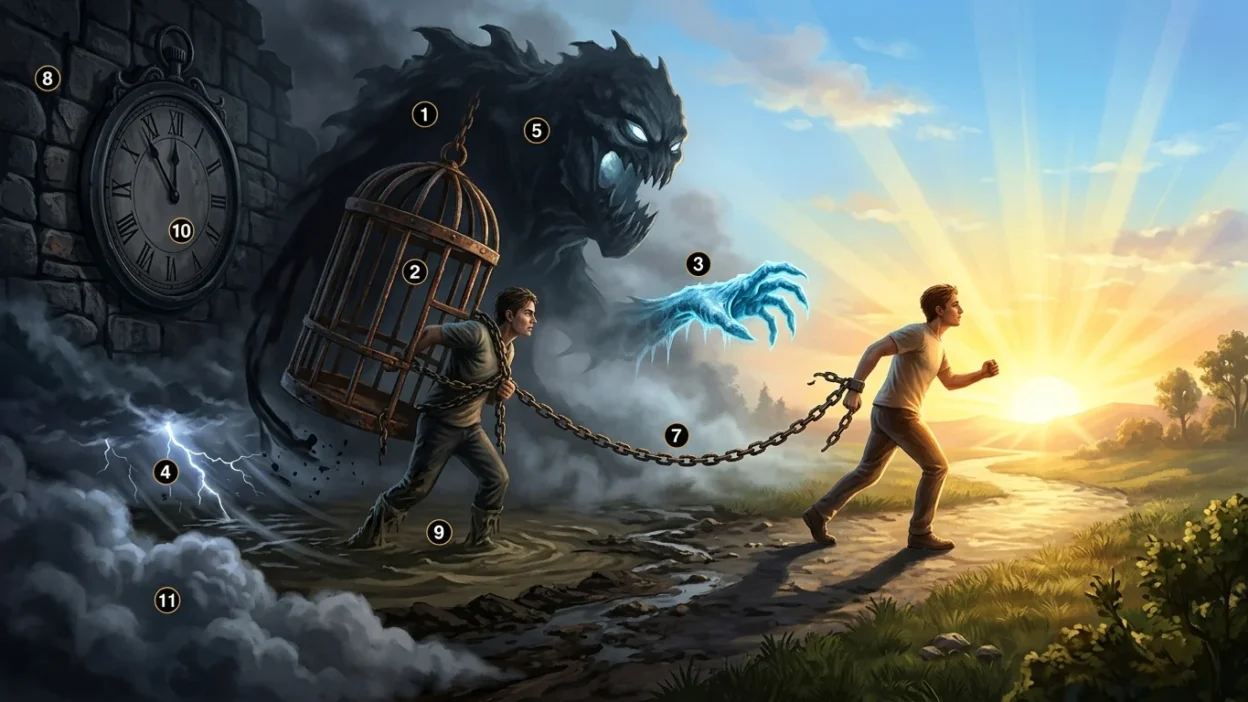
Fear is a strong feeling that can affect the body, mind, and choices. It can make someone freeze, run away, stay silent, or feel trapped. Sometimes fear arrives suddenly, while at other times it grows slowly. Because fear can be hard to explain with simple words, writers often use metaphors to give it a clear shape.
Metaphors for fear compare this emotion to familiar things such as a shadow, a cage, a storm, a monster, a dark cloud, or an icy hand. Each metaphor can show a different kind of fear. For example, “Fear was a shadow behind me” suggests a feeling that follows someone wherever they go. “Fear was a cage” suggests that fear prevents someone from feeling free.
These metaphors are useful in essays, poems, stories, speeches, and creative writing. They can help writers describe nervousness, anxiety, danger, uncertainty, panic, or the fear of failure in a vivid and memorable way.
Quick Answer
Metaphors for fear describe fear through powerful images. Examples include “Fear was a shadow,” “Fear was a cage,” “Fear was an icy hand,” “Fear was a storm,” and “Fear was a monster under the bed.” These metaphors can show how fear follows, traps, chills, overwhelms, or controls someone.
What Are Metaphors for Fear?
A metaphor directly compares one thing to another without using like or as.
For example:
“Fear was a shadow.”
Fear is not literally a shadow. The metaphor suggests that fear follows someone and stays close to them.
Metaphors allow writers to turn an invisible emotion into something readers can picture.
Why Use Metaphors for Fear?
Fear metaphors can help writers:
- Show the strength of fear
- Describe nervousness
- Explain feeling trapped
- Show fear that follows someone
- Create suspense
- Make stories more emotional
- Describe inner struggles
- Make creative writing more vivid
20 Original Metaphors for Fear
| Metaphor | Meaning |
|---|---|
| Fear was a shadow. | Fear followed someone wherever they went. |
| Fear was a cage. | Fear made someone feel trapped. |
| Fear was an icy hand. | Fear created a sudden cold and frightening feeling. |
| Fear was a storm. | Fear overwhelmed someone with powerful emotions. |
| Fear was a monster. | Fear seemed powerful, threatening, and difficult to face. |
| Fear was a dark cloud. | Fear filled someone’s thoughts with worry. |
| Fear was a locked door. | Fear prevented someone from moving forward. |
| Fear was a heavy chain. | Fear stopped someone from feeling free. |
| Fear was a thief. | Fear stole confidence, peace, or happiness. |
| Fear was a whisper in the dark. | Fear created quiet but disturbing thoughts. |
| Fear was a wall. | Fear prevented someone from reaching a goal. |
| Fear was a drumbeat. | Fear caused a strong feeling of nervous anticipation. |
| Fear was quicksand. | Fear made someone feel stuck and helpless. |
| Fear was a burning alarm. | Fear warned someone that something felt dangerous. |
| Fear was a fog. | Fear made thoughts and decisions unclear. |
| Fear was a wolf at the door. | Fear created a strong sense of approaching danger. |
| Fear was a prison. | Fear controlled someone’s choices and freedom. |
| Fear was a cracked mirror. | Fear changed how someone saw themselves. |
| Fear was a cold river. | Fear created a powerful feeling that moved through the body. |
| Fear was a ticking clock. | Fear created pressure and growing nervousness. |
Fear Was a Shadow
Meaning
Fear followed someone wherever they went.
Explanation
A shadow stays close to a person and follows their movement. This makes it a useful metaphor for fear that is difficult to escape.
Example Sentences
- Fear was a shadow that followed him everywhere.
- Her fear became a shadow behind every decision.
Fear Was a Cage
Meaning
Fear made someone feel trapped.
Explanation
A cage limits movement and freedom. Fear can have the same effect when it stops someone from trying new things.
Example Sentences
- Fear was a cage around his dreams.
- She finally broke free from the cage of fear.
Fear Was an Icy Hand
Meaning
Fear created a sudden cold and frightening feeling.
Explanation
Strong fear can make a person feel cold or chilled. An icy hand gives this physical feeling a clear image.
Example Sentences
- Fear was an icy hand around her heart.
- An icy hand of fear touched him when he heard the noise.
Fear Was a Storm
Meaning
Fear overwhelmed someone with powerful emotions.
Explanation
A storm can bring strong winds, darkness, and confusion. This makes it a useful metaphor for intense fear.
Example Sentences
- Fear was a storm raging inside him.
- A storm of fear filled her mind before the performance.
Fear Was a Monster
Meaning
Fear seemed powerful and threatening.
Explanation
A monster represents danger and something difficult to face. This metaphor can make fear feel like an enemy.
Example Sentences
- Fear was a monster waiting in the corner of his mind.
- She faced the monster of fear and kept moving forward.
Fear Was a Dark Cloud
Meaning
Fear filled someone’s thoughts with worry.
Explanation
A dark cloud can make the world seem gloomy. It represents fear that affects a person’s mood and thinking.
Example Sentences
- Fear was a dark cloud over his future.
- A dark cloud of fear followed her throughout the day.
Fear Was a Locked Door
Meaning
Fear prevented someone from moving forward.
Explanation
A locked door stops someone from entering or leaving. Fear can similarly stop people from taking opportunities.
Example Sentences
- Fear was a locked door between her and her dreams.
- He refused to let fear become a locked door.
Fear Was a Heavy Chain
Meaning
Fear stopped someone from feeling free.
Explanation
A heavy chain restricts movement. This metaphor shows how fear can limit choices and actions.
Example Sentences
- Fear was a heavy chain around his confidence.
- She carried fear like a heavy chain.
Fear Was a Thief
Meaning
Fear stole confidence, peace, or happiness.
Explanation
A thief takes something valuable. Fear can take away moments of joy or prevent someone from enjoying life.
Example Sentences
- Fear was a thief stealing her confidence.
- He refused to let fear become a thief of his happiness.
Fear Was a Whisper in the Dark
Meaning
Fear created quiet but disturbing thoughts.
Explanation
A whisper is soft and difficult to ignore. Darkness can add mystery and uncertainty.
Example Sentences
- Fear was a whisper in the dark.
- A whisper of fear told him that something was wrong.
Fear Was a Wall
Meaning
Fear prevented someone from reaching a goal.
Explanation
A wall blocks a person’s path. Fear can become an emotional barrier that stops progress.
Example Sentences
- Fear was a wall between him and success.
- She climbed over the wall of fear.
Fear Was a Drumbeat
Meaning
Fear created strong nervous anticipation.
Explanation
A drumbeat can become faster and louder. This metaphor can represent a growing feeling of fear.
Example Sentences
- Fear was a drumbeat in her chest.
- His fear became a steady drumbeat before the announcement.
Fear Was Quicksand
Meaning
Fear made someone feel stuck and helpless.
Explanation
Quicksand can make movement difficult. The harder someone struggles, the more trapped they may feel. This creates a strong image for overwhelming fear.
Example Sentences
- Fear was quicksand beneath his feet.
- She felt trapped in the quicksand of fear.
Fear Was a Burning Alarm
Meaning
Fear warned someone that something felt dangerous.
Explanation
An alarm warns people about possible danger. Fear can work as an emotional warning system.
Example Sentences
- Fear was a burning alarm inside her mind.
- A sudden alarm of fear told him to be careful.
Fear Was a Fog
Meaning
Fear made thoughts and decisions unclear.
Explanation
Fog makes it difficult to see where you are going. Fear can make it equally difficult to think clearly.
Example Sentences
- Fear was a fog covering his thoughts.
- She tried to find her way through the fog of fear.
Fear Was a Wolf at the Door
Meaning
Fear created a strong sense of approaching danger.
Explanation
A wolf at the door creates an image of danger waiting outside. It suggests that fear feels close and threatening.
Example Sentences
- Fear was a wolf at the door of his mind.
- She felt as though a wolf of fear was waiting outside.
Fear Was a Prison
Meaning
Fear controlled someone’s choices and freedom.
Explanation
A prison limits where someone can go. Fear can create emotional limits that keep people from doing what they want.
Example Sentences
- Fear was a prison built from his own doubts.
- She decided that fear would no longer be her prison.
Fear Was a Cracked Mirror
Meaning
Fear changed how someone saw themselves.
Explanation
A cracked mirror gives a distorted image. Fear can make people see themselves as weaker or less capable than they really are.
Example Sentences
- Fear was a cracked mirror reflecting all his doubts.
- She saw herself through the cracked mirror of fear.
Fear Was a Cold River
Meaning
Fear created a powerful feeling that moved through the body.
Explanation
A cold river can create a strong physical sensation. This metaphor can describe fear spreading through someone’s body.
Example Sentences
- Fear was a cold river running through his body.
- A river of fear moved through her when the lights went out.
Fear Was a Ticking Clock
Meaning
Fear created pressure and growing nervousness.
Explanation
A ticking clock reminds people that time is passing. It can represent fear that grows as an important moment approaches.
Example Sentences
- Fear was a ticking clock in his mind.
- Every second became another tick of fear.
Common Mistakes
- Using like or as and calling the expression a metaphor.
- Using the same image repeatedly.
- Making every fear metaphor sound frightening or dramatic.
- Forgetting that fear can be quiet, slow, sudden, or overwhelming.
- Mixing several unrelated metaphors in one sentence.
- Explaining fear only through physical danger when it can also describe emotional fear.
Similar Expressions
- Fear took hold
- Frozen with fear
- Fear gripped me
- Fear crept in
- A wave of fear
- A sense of dread
- Fear of the unknown
- A sinking feeling
- Heart in my throat
- Shaking with fear
Creative Writing Tips
- Use a shadow for fear that follows someone.
- Use a cage for fear that limits freedom.
- Use an icy hand for sudden physical fear.
- Use a storm for overwhelming fear.
- Use a fog for confused thinking.
- Use quicksand for fear that makes someone feel trapped.
- Use a ticking clock for growing pressure.
- Use a wall for fear that blocks progress.
- Use a thief for fear that steals happiness or confidence.
- Show how the fear affects the character instead of simply saying they are scared.
Practice Questions
1. Which metaphor describes fear that follows someone?
Answer: Fear was a shadow.
Explanation: A shadow stays close and follows a person, making it a good image for lasting fear.
2. Which metaphor describes feeling trapped by fear?
Answer: Fear was a cage.
Explanation: A cage limits freedom and movement.
3. Which metaphor represents sudden physical fear?
Answer: Fear was an icy hand.
Explanation: The image of coldness shows the physical effect that fear can create.
4. Which metaphor represents overwhelming fear?
Answer: Fear was a storm.
Explanation: A storm can be powerful, confusing, and difficult to control.
5. Which metaphor describes fear taking away happiness?
Answer: Fear was a thief.
Explanation: A thief takes something valuable, just as fear can take away peace or confidence.
6. Which metaphor describes unclear thinking?
Answer: Fear was a fog.
Explanation: Fog makes it difficult to see clearly, just as fear can make decisions harder.
7. Which metaphor represents feeling stuck?
Answer: Fear was quicksand.
Explanation: Quicksand creates an image of being trapped and unable to move easily.
8. Which metaphor represents fear that blocks success?
Answer: Fear was a wall.
Explanation: A wall blocks a person’s path toward a goal.
9. Which metaphor represents growing pressure?
Answer: Fear was a ticking clock.
Explanation: A ticking clock creates a feeling that time is running out.
10. Why do writers use metaphors for fear?
Answer: They make an invisible emotion easier to picture and understand.
Explanation: Metaphors turn fear into familiar images, helping readers feel the emotion more strongly.
FAQs
What are metaphors for fear?
Metaphors for fear compare fear to familiar things such as shadows, cages, storms, monsters, fog, walls, and chains.
What is a good metaphor for fear?
“Fear was a shadow” is a simple and effective metaphor because it shows fear that follows someone wherever they go.
What is a metaphor for being trapped by fear?
“Fear was a cage” shows that fear has limited someone’s freedom and choices.
What is a metaphor for intense fear?
“Fear was a storm” suggests that fear is powerful, overwhelming, and difficult to control.
Can I use fear metaphors in an essay?
Yes. Fear metaphors can make descriptive essays, personal writing, poems, stories, and speeches more vivid.
Are metaphors for fear figurative language?
Yes. Metaphors are a form of figurative language and an important literary device.
How can I create my own metaphor for fear?
Think about what the fear feels like. If it follows you, call it a shadow. If it traps you, call it a cage. If it makes your thoughts unclear, call it fog.
What is the difference between a metaphor and a simile for fear?
A metaphor makes a direct comparison, such as “Fear was a storm.” A simile uses like or as, such as “Fear was like a storm.”
Conclusion
Fear can be difficult to describe because it is an invisible emotion with many different forms. Sometimes it follows us like a shadow, while at other times it feels like a cage, a storm, a wall, or a heavy chain.
Metaphors help writers turn these hidden feelings into images that readers can see and understand. A shadow can represent lasting fear, fog can represent confused thinking, and quicksand can represent feeling trapped.
The best metaphor depends on the kind of fear you want to describe. By choosing a clear image and connecting it to the character’s experience, you can make your writing more powerful, emotional, and memorable.

Adam Aaron is a language enthusiast and content writer at SimileHive, creating clear, engaging guides on similes, idioms, metaphors, and figurative language to help readers improve English confidently every day.