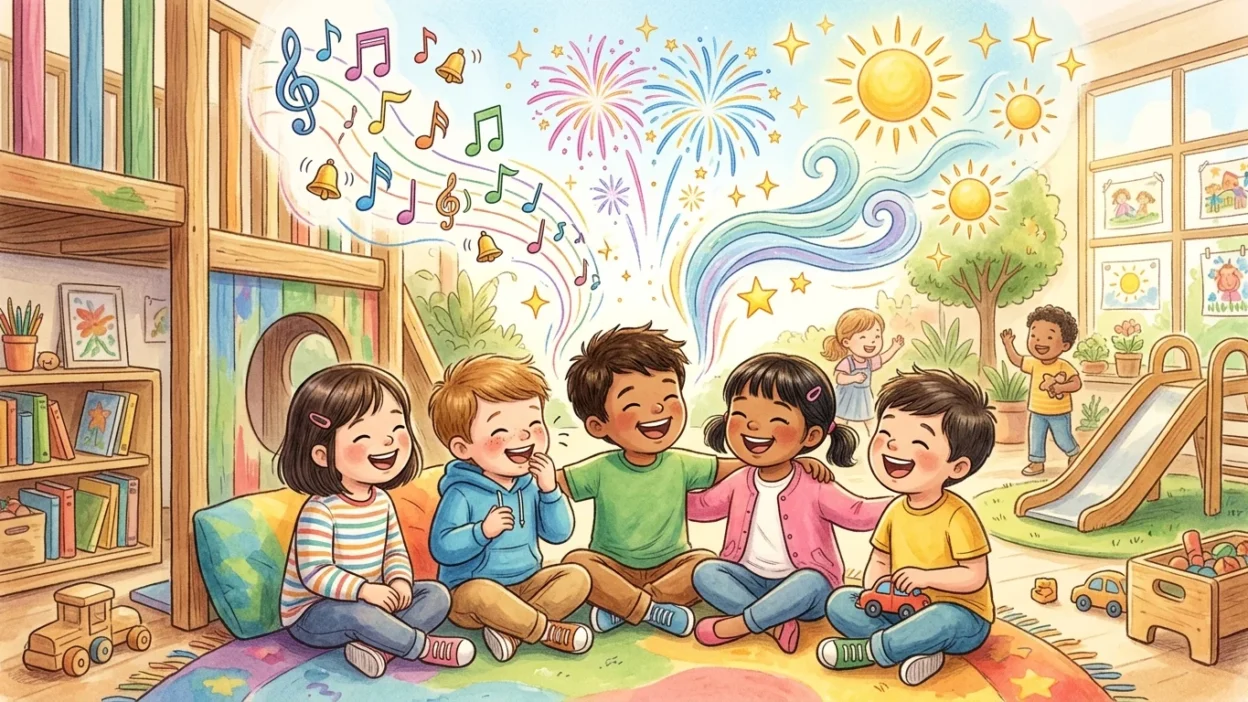
Laughing is one of the easiest ways to show happiness, joy, surprise, or amusement. Sometimes a simple word such as “laughed” does not fully show how a person sounded or how the moment felt. Metaphors can make descriptions of laughter more colorful and fun.
A metaphor compares one thing to another by saying that one thing is another. It does not mean the two things are really the same. For example, “Her laughter was music” does not mean her laughter was a real song. It means her laughter sounded pleasant and made people happy.
Metaphors for laughing are useful in stories, poems, essays, and creative writing. They can help readers imagine a person’s laughter and feel the mood of a scene. A loud laugh might be compared to thunder, while a soft laugh might be compared to a gentle stream.
In this guide, you will find 20 easy and original metaphors for laughing. Each metaphor includes a simple meaning, an explanation, and two example sentences. You will also learn common mistakes, similar expressions, writing tips, practice questions, and helpful answers.
Quick Answer
Metaphors for laughing describe laughter through creative comparisons. Examples include “Her laughter was music,” “His laugh was thunder,” “Their laughter was fireworks,” and “Her giggle was a tiny bell.” These comparisons help readers imagine the sound, feeling, energy, or happiness behind someone’s laughter.
What Are Metaphors for Laughing?
Metaphors for laughing are creative comparisons that describe how laughter sounds, looks, or makes people feel.
For example:
“His laugh was thunder.”
This does not mean his laugh was actual thunder. It means his laugh was very loud and powerful.
Another example is:
“Her giggle was a tiny bell.”
This suggests that her laugh was light, sweet, and pleasant to hear.
These metaphors are a useful part of figurative language. Writers can use them to make characters and scenes more interesting.
What Can Laughing Symbolize?
Laughing can represent many feelings and ideas, such as:
• Happiness
• Joy
• Fun
• Freedom
• Friendship
• Surprise
• Relief
• Excitement
• Playfulness
• Comfort
The best metaphor depends on the type of laughter you want to describe.
20 Metaphors for Laughing
| Metaphor | Meaning |
|---|---|
| 1. Her laughter was music | Her laugh sounded beautiful |
| 2. His laugh was thunder | His laugh was loud and powerful |
| 3. Their laughter was fireworks | Their laughter was exciting and full of energy |
| 4. Her giggle was a tiny bell | Her laugh was soft and sweet |
| 5. His laughter was a river | His laughter flowed freely |
| 6. Her laugh was sunshine | Her laughter made people feel happy |
| 7. Their laughter was a wave | Their laughter spread from person to person |
| 8. His laugh was a drumbeat | His laugh was strong and lively |
| 9. Her laughter was a spark | Her laugh quickly created happiness |
| 10. His giggle was a breeze | His laugh was light and gentle |
| 11. Their laughter was a storm | Their laughter was loud and uncontrollable |
| 12. Her laugh was a song | Her laughter was pleasant to hear |
| 13. His laughter was a burst of joy | His laugh showed sudden happiness |
| 14. Her giggle was a butterfly | Her laugh was light and delicate |
| 15. Their laughter was a rainbow | Their laughter brought color and happiness |
| 16. His laugh was a bouncing ball | His laughter was playful and energetic |
| 17. Her laughter was a golden thread | Her laugh brought people together |
| 18. His giggle was a bubbling spring | His laugh was fresh and cheerful |
| 19. Their laughter was a garden of joy | Their laughter created a happy atmosphere |
| 20. Her laugh was a bright star | Her laughter stood out and lifted the mood |
1. Her Laughter Was Music
Meaning: Her laughter sounded beautiful and pleasant.
Explanation: Music can make people feel happy and relaxed. This metaphor compares pleasant laughter to something enjoyable to hear.
Example Sentences:
- Her laughter was music in the quiet room.
- Grandma’s laughter was music to everyone around her.
2. His Laugh Was Thunder
Meaning: His laugh was very loud and powerful.
Explanation: Thunder can make a strong and sudden sound. This metaphor shows that the person’s laugh was impossible to ignore.
Example Sentences:
- His laugh was thunder across the room.
- My brother’s laugh was thunder during the funny movie.
3. Their Laughter Was Fireworks
Meaning: Their laughter was exciting, lively, and full of energy.
Explanation: Fireworks create bright bursts in the sky. This metaphor gives the idea that the laughter was sudden, colorful, and exciting.
Example Sentences:
- Their laughter was fireworks at the dinner table.
- The children’s laughter was fireworks filling the playground.
4. Her Giggle Was a Tiny Bell
Meaning: Her giggle was soft, sweet, and pleasant.
Explanation: A small bell can make a light and cheerful sound. This metaphor creates a gentle picture of someone’s giggle.
Example Sentences:
- Her giggle was a tiny bell in the quiet classroom.
- The baby’s laugh was a tiny bell of happiness.
5. His Laughter Was a River
Meaning: His laughter flowed freely and continuously.
Explanation: A river keeps moving forward. This metaphor suggests that the person could not stop laughing once he started.
Example Sentences:
- His laughter was a river that kept flowing.
- His laughter flowed like a river through the room.
6. Her Laugh Was Sunshine
Meaning: Her laughter made people feel happy.
Explanation: Sunshine can brighten a place. In the same way, cheerful laughter can brighten people’s moods.
Example Sentences:
- Her laugh was sunshine on a difficult day.
- The girl’s laughter was sunshine for everyone around her.
7. Their Laughter Was a Wave
Meaning: Their laughter spread from one person to another.
Explanation: A wave moves across the water. Laughter can spread through a group in a similar way.
Example Sentences:
- Their laughter was a wave moving through the room.
- One joke started a wave of laughter among the students.
8. His Laugh Was a Drumbeat
Meaning: His laugh was strong, lively, and easy to notice.
Explanation: A drumbeat has a clear and powerful sound. This metaphor describes a laugh that stands out.
Example Sentences:
- His laugh was a drumbeat in the quiet hall.
- I could hear his laugh like a drumbeat from outside.
9. Her Laughter Was a Spark
Meaning: Her laughter quickly created happiness or amusement.
Explanation: A spark can start a fire. One person’s laughter can also encourage others to laugh.
Example Sentences:
- Her laughter was a spark that made everyone smile.
- One small laugh became a spark of joy in the room.
10. His Giggle Was a Breeze
Meaning: His giggle was soft, light, and gentle.
Explanation: A gentle breeze moves quietly and softly. This metaphor gives the laugh a calm and pleasant quality.
Example Sentences:
- His giggle was a breeze on a warm afternoon.
- The child’s giggle was a gentle breeze through the room.
11. Their Laughter Was a Storm
Meaning: Their laughter was very loud and difficult to stop.
Explanation: A storm can be powerful and full of movement. This metaphor describes laughter that takes over a room.
Example Sentences:
- Their laughter was a storm after the teacher told the joke.
- A storm of laughter filled the classroom.
12. Her Laugh Was a Song
Meaning: Her laugh was pleasant and joyful.
Explanation: A song can be enjoyable to hear. This metaphor compares a beautiful laugh to a happy melody.
Example Sentences:
- Her laugh was a song that brightened the morning.
- The child’s laugh was a song of pure happiness.
13. His Laughter Was a Burst of Joy
Meaning: His laughter showed sudden and strong happiness.
Explanation: A burst happens quickly and strongly. This metaphor describes laughter that suddenly comes out because of great amusement.
Example Sentences:
- His laughter was a burst of joy after hearing the joke.
- A burst of joy escaped him when he saw his friend.
14. Her Giggle Was a Butterfly
Meaning: Her giggle was light, delicate, and playful.
Explanation: Butterflies move gently and lightly. This metaphor creates a soft picture of a quiet and playful laugh.
Example Sentences:
- Her giggle was a butterfly floating through the conversation.
- The little girl’s laugh was a butterfly of happiness.
15. Their Laughter Was a Rainbow
Meaning: Their laughter brought happiness and brightness to the moment.
Explanation: A rainbow is colorful and beautiful. This metaphor shows how laughter can make an ordinary moment feel special.
Example Sentences:
- Their laughter was a rainbow after a difficult day.
- The children’s laughter became a rainbow in the playground.
16. His Laugh Was a Bouncing Ball
Meaning: His laugh was playful, energetic, and hard to keep quiet.
Explanation: A bouncing ball moves quickly and unpredictably. This metaphor describes laughter that jumps out again and again.
Example Sentences:
- His laugh was a bouncing ball that filled the room.
- Her brother’s giggle was a bouncing ball of energy.
17. Her Laughter Was a Golden Thread
Meaning: Her laughter helped bring people together.
Explanation: A thread can connect pieces of cloth. This metaphor shows laughter creating a connection between people.
Example Sentences:
- Her laughter was a golden thread connecting the whole family.
- Their shared laughter became a golden thread of friendship.
18. His Giggle Was a Bubbling Spring
Meaning: His giggle was fresh, cheerful, and full of life.
Explanation: A bubbling spring has water that moves and bubbles with energy. This metaphor gives laughter a fresh and playful feeling.
Example Sentences:
- His giggle was a bubbling spring of happiness.
- The baby’s laughter sounded like a bubbling spring.
19. Their Laughter Was a Garden of Joy
Meaning: Their laughter created a happy and pleasant atmosphere.
Explanation: A garden can be full of life and beauty. This metaphor presents laughter as something that fills a place with happiness.
Example Sentences:
- Their laughter was a garden of joy around the dinner table.
- The children’s laughter turned the park into a garden of joy.
20. Her Laugh Was a Bright Star
Meaning: Her laughter stood out and made people feel happier.
Explanation: A bright star can stand out in the night sky. This metaphor describes laughter that catches attention and lifts people’s moods.
Example Sentences:
- Her laugh was a bright star in the quiet room.
- The girl’s bright laugh became a star of the celebration.
Common Mistakes When Using Metaphors for Laughing
1. Taking the metaphor literally
When we say “His laugh was thunder,” we do not mean that thunder came from his mouth.
The metaphor means his laugh was very loud.
2. Confusing metaphors with similes
A metaphor directly compares two things.
Metaphor:
“Her laughter was music.”
Simile:
“Her laughter was like music.”
The second sentence is a simile because it uses like.
3. Choosing a comparison that does not fit
The comparison should match the type of laughter.
For example, “Her giggle was a tiny bell” works well for a soft laugh. It would not be the best choice for a very loud laugh.
4. Using too many metaphors
Too many comparisons in one paragraph can make writing confusing.
Choose one strong metaphor and let it create a clear picture.
Similar Expressions for Laughing
Writers can describe laughter in several ways.
Metaphor:
“His laugh was thunder.”
Simile:
“His laugh was like thunder.”
Personification:
“The laughter danced around the room.”
Literal description:
“He laughed very loudly.”
Each form creates a different effect.
How to Use Metaphors for Laughing in Creative Writing
Describe a loud laugh
Try:
“His laughter was thunder.”
This quickly tells the reader that the laugh was powerful and loud.
Describe a soft laugh
Try:
“Her giggle was a tiny bell.”
This creates a gentle and sweet picture.
Describe group laughter
Try:
“Their laughter was a wave.”
This shows how laughter moved from one person to another.
Describe happy laughter
Try:
“Her laugh was sunshine.”
This shows that her laughter made people feel good.
Describe uncontrollable laughter
Try:
“Their laughter was a storm.”
This gives the reader a picture of loud and unstoppable laughter.
Practical Tips for Creating Your Own Metaphors for Laughing
- Think about how the laughter sounds.
- Decide whether it is loud, soft, fast, slow, playful, or joyful.
- Think of something with the same quality.
- Connect the laugh directly to that thing.
- Keep the comparison easy to understand.
- Avoid comparisons that have no clear connection.
- Use metaphors to create a feeling, not just a description.
For example, if a character has a very loud laugh, think of things that make loud sounds.
You might create:
“His laugh was a crashing drum.”
If a character has a soft laugh, you might write:
“Her giggle was a floating feather.”
Practice Questions
1. What does “His laugh was thunder” mean?
Answer: His laugh was very loud and powerful.
Explanation: Thunder makes a strong sound, so it is a good comparison for a loud laugh.
2. Which sentence is a metaphor?
A. She laughed loudly.
B. Her laugh was like music.
C. Her laugh was music.
Answer: C.
Explanation: “Her laugh was music” directly compares laughter to music.
3. What does “Her giggle was a tiny bell” mean?
Answer: Her giggle was soft and pleasant.
Explanation: A small bell can make a light and cheerful sound.
4. Complete the metaphor: “His laughter was _____.”
Answer: “His laughter was a river.”
Explanation: A river keeps flowing, so this can describe laughter that continues for a long time.
5. Which metaphor describes very loud laughter?
A. Her laugh was a tiny bell.
B. His laugh was thunder.
C. Her laugh was a butterfly.
Answer: B.
Explanation: Thunder is loud and powerful.
6. What does “Their laughter was a wave” mean?
Answer: Their laughter spread from one person to another.
Explanation: A wave moves across water, just as laughter can spread through a group.
7. Turn this sentence into a metaphor: “Her laugh made everyone happy.”
Answer: “Her laugh was sunshine.”
Explanation: Sunshine is bright and cheerful, so it works as a metaphor for happy laughter.
8. Which metaphor best describes a gentle giggle?
A. Her giggle was thunder.
B. Her giggle was a tiny bell.
C. Her giggle was a storm.
Answer: B.
Explanation: A tiny bell suggests a soft and pleasant sound.
9. What does “Their laughter was a storm” suggest?
Answer: Their laughter was loud, powerful, and difficult to stop.
Explanation: A storm can be strong and full of energy.
10. Create your own metaphor for laughing.
Sample Answer: “His laugh was a bouncing ball.”
Explanation: A bouncing ball is energetic and playful, making it a good comparison for a lively laugh.
FAQs
What is a metaphor for laughing?
A metaphor for laughing compares laughter to something else to describe its sound, feeling, or effect. For example, “Her laughter was music” describes pleasant laughter.
What is a good metaphor for a loud laugh?
“His laugh was thunder” is a simple metaphor for a very loud laugh because thunder has a strong and powerful sound.
What is a metaphor for a quiet laugh?
“Her giggle was a tiny bell” works well for a quiet and sweet laugh.
Is “her laugh was like music” a metaphor?
No. It is a simile because it uses the word like. The metaphor would be “Her laugh was music.”
How can I describe laughter in creative writing?
Think about the sound and feeling of the laughter. Then compare it to something with a similar quality, such as thunder for loud laughter or sunshine for happy laughter.
Can laughter be compared to nature?
Yes. Writers often compare laughter to things found in nature, such as rivers, waves, sunshine, storms, and springs.
Can metaphors describe different types of laughter?
Yes. A metaphor can describe loud laughter, quiet laughter, nervous laughter, joyful laughter, playful laughter, or uncontrollable laughter.
Why use metaphors for laughing?
Metaphors make descriptions more vivid and interesting. Instead of simply telling readers that someone laughed, they help readers imagine how that laughter sounded and felt.
Conclusion
Metaphors for laughing can turn a simple description into a colorful picture. Instead of saying someone laughed loudly, you can say “His laugh was thunder.” Instead of saying someone had a sweet giggle, you can write “Her giggle was a tiny bell.” These comparisons help readers hear the laughter in their minds.
Good metaphors can describe the sound, energy, feeling, or effect of laughter. They are useful in stories, poems, essays, and creative writing. When creating your own metaphor, first think about the kind of laugh you want to describe.
Then choose something that shares the same quality. With simple and thoughtful comparisons, even one laugh can become a memorable part of a story.

Lucas Luke is a passionate language writer and content creator at SimileHive, specializing in similes, idioms, metaphors, and figurative language. He enjoys making complex English expressions simple, engaging, and easy to understand for students, writers, and language enthusiasts through well-researched, practical content.