
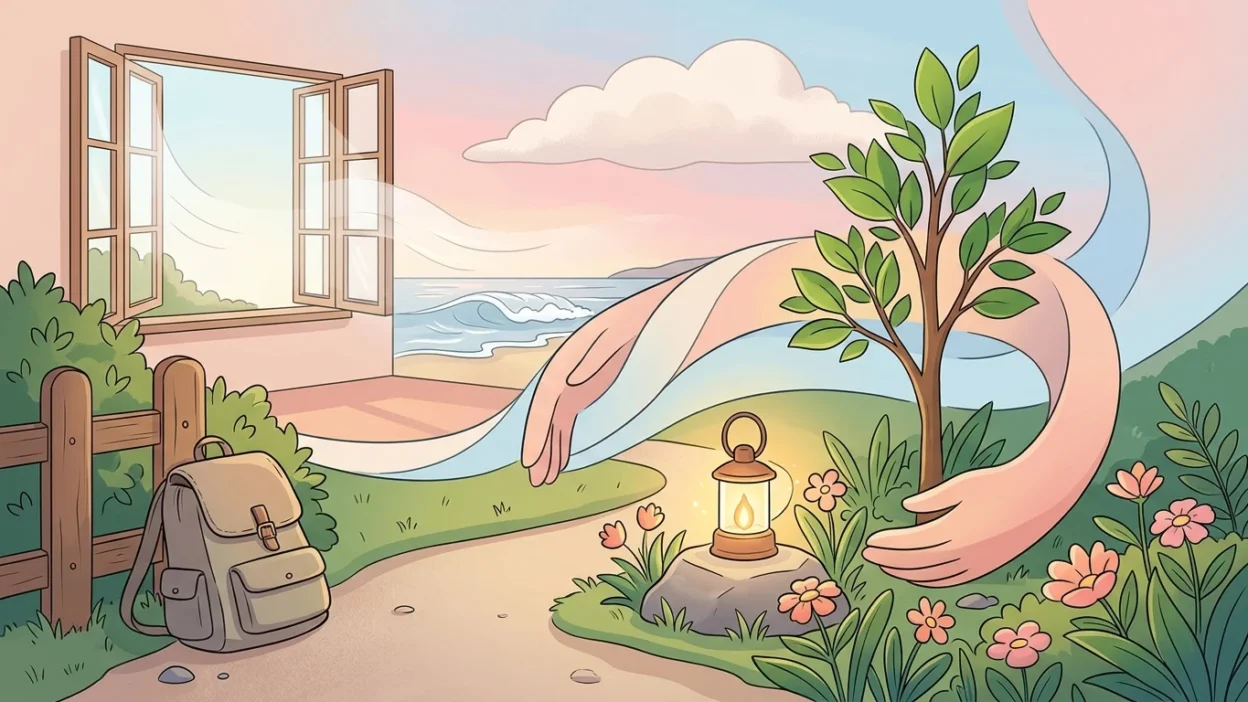
Mental health is an important part of everyday life. Our thoughts, feelings, stress, hopes, fears, and relationships can all affect how we experience the world. Because mental health can be difficult to explain, metaphors can help us describe it in simple and meaningful ways.
A metaphor compares one thing to another without saying they are literally the same. For example, saying “The mind is a garden” does not mean that a person’s mind is an actual garden. It suggests that thoughts and feelings need care, patience, and attention, just as plants need care to grow.
Metaphors for mental health can help students, teachers, writers, and families talk about emotions in a way that is easier to understand. They can also make creative writing more powerful by giving readers a clear picture of an invisible experience.
In this article, you will find 20 original metaphors for mental health. Each metaphor includes its meaning, a simple explanation, and two example sentences. You will also learn how to use these expressions in creative writing and everyday communication.
Quick Answer
Mental health can be described as a garden, battery, window, weather vane, backpack, river, room, traffic light, garden path, or musical instrument. These metaphors can represent emotions, stress, rest, self care, personal growth, balance, and the changing nature of our thoughts and feelings.
What Are Metaphors for Mental Health?
Metaphors for mental health are creative comparisons that help describe thoughts, feelings, emotional struggles, personal growth, and inner experiences.
Mental health is not something we can always see. A person may look fine on the outside while dealing with difficult feelings inside. Metaphors can give these hidden experiences a shape that people can understand.
For example:
“Stress is a backpack full of stones.”
This does not mean that stress is literally a backpack. It means that carrying too much stress can feel heavy and tiring.
A good metaphor should help explain an idea without making someone feel judged or blamed.
What Can Mental Health Symbolize?
Mental health metaphors can symbolize many different ideas, including:
- Balance, because our emotional needs can change.
- Growth, because people can learn new ways to care for themselves.
- Rest, because the mind needs breaks.
- Strength, because facing difficult moments can require courage.
- Change, because feelings do not always stay the same.
- Connection, because supportive relationships can matter greatly.
- Self care, because our inner life needs attention.
- Healing, because difficult experiences can become easier with time and support.
- Hope, because hard moments can change.
- Awareness, because noticing our thoughts and feelings can help us understand ourselves.
20 Metaphors for Mental Health
1. Mental Health Is a Garden
Meaning: Mental health needs care and attention.
Explanation: A garden needs water, sunlight, and regular care. In a similar way, our mental well being can benefit from rest, healthy habits, supportive people, and time for ourselves.
Example sentences:
- Mental health is a garden that needs regular care.
- She learned that looking after her mind was like tending a small garden.
2. Stress Is a Backpack Full of Stones
Meaning: Too much stress can feel heavy.
Explanation: Carrying a heavy backpack can make walking tiring. Stress can feel similar when someone has too many worries or responsibilities to carry.
Example sentences:
- His worries felt like a backpack full of stones.
- Talking to someone helped her put down some of the stones in her backpack.
3. The Mind Is a Window
Meaning: Our thoughts can affect how we see the world.
Explanation: A window gives us a view of what is outside. Our thoughts and feelings can also affect the way we see situations around us.
Example sentences:
- The mind is a window through which we look at life.
- A calm mind can make the world seem different through the same window.
4. Mental Health Is a Battery
Meaning: We need to recharge our mental energy.
Explanation: A battery becomes low when it is used for a long time. People can also feel mentally tired after dealing with stress, work, school, or difficult situations. Rest can help restore energy.
Example sentences:
- Her mental health was like a battery that needed time to recharge.
- He took a quiet afternoon to recharge his mental battery.
5. Anxiety Is a Loud Alarm
Meaning: Anxiety can make danger feel close even when there is no immediate danger.
Explanation: An alarm makes a loud sound when it senses a problem. Anxiety can sometimes create a strong feeling that something is wrong or about to go wrong.
Example sentences:
- Anxiety was a loud alarm ringing inside his mind.
- She felt as if an alarm had started ringing every time she faced a new situation.
6. Peace of Mind Is a Quiet Room
Meaning: Peace can feel calm and free from too much noise.
Explanation: A quiet room gives us space to think and relax. Peace of mind can create a similar feeling inside us.
Example sentences:
- Peace of mind was a quiet room inside her busy day.
- Reading gave him a quiet room where his thoughts could slow down.
7. Emotions Are Waves
Meaning: Feelings can rise and fall.
Explanation: Waves become larger and smaller as they move. Emotions can also become stronger and then settle down. This metaphor reminds us that feelings can change.
Example sentences:
- Her emotions were waves moving across the day.
- He learned to let difficult feelings rise and fall like waves.
8. Healing Is a Garden Path
Meaning: Healing can take time and may happen step by step.
Explanation: A garden path takes you forward little by little. Personal healing can also be a gradual process rather than something that happens all at once.
Example sentences:
- Healing was a garden path that she walked one step at a time.
- He reminded himself that every small step was part of the path.
9. Worry Is a Spinning Wheel
Meaning: Worry can make the same thoughts repeat again and again.
Explanation: A spinning wheel keeps moving around. Worry can sometimes feel similar because the mind keeps returning to the same question or fear.
Example sentences:
- Worry was a spinning wheel that kept turning in his mind.
- She tried to slow the spinning wheel by taking a quiet break.
10. Hope Is a Small Lantern
Meaning: Hope can provide light during difficult times.
Explanation: A lantern gives light when a place is dark. Hope can provide a sense of direction or comfort when life feels difficult.
Example sentences:
- Hope was a small lantern in the darkest part of her journey.
- His friend’s kind words became a lantern of hope.
11. Self Care Is a Toolbox
Meaning: Self care can include many different helpful actions.
Explanation: A toolbox contains different tools for different jobs. Looking after ourselves can also involve many tools, such as sleep, healthy routines, hobbies, rest, support, and time away from stress.
Example sentences:
- Self care is a toolbox filled with ways to look after yourself.
- She added quiet reading to her self care toolbox.
12. The Mind Is a House
Meaning: Our minds can contain many different thoughts and feelings.
Explanation: A house has different rooms, and each room can have a different purpose. The mind can also hold many different memories, emotions, ideas, and experiences.
Example sentences:
- The mind is a house with many rooms.
- Some memories stayed in quiet rooms of his mind.
13. Stress Is a Pressure Cooker
Meaning: Too much stress can build up over time.
Explanation: Pressure builds inside a pressure cooker. In the same way, stress can grow when worries and responsibilities are not given enough time or space to be handled.
Example sentences:
- Unfinished work made his mind feel like a pressure cooker.
- She knew she needed a break before the pressure cooker became too full.
14. Confidence Is a Growing Tree
Meaning: Confidence can become stronger over time.
Explanation: A tree grows slowly and becomes stronger as it develops. Confidence can also grow through practice, learning, support, and experience.
Example sentences:
- Her confidence was a growing tree.
- Every small success helped his confidence grow another branch.
15. Sadness Is a Cloud
Meaning: Sad feelings can sometimes make life feel darker.
Explanation: A cloud can cover the bright sky for a while. Sadness can also cover our sense of joy or energy. Like a cloud, the feeling may change with time.
Example sentences:
- Sadness was a gray cloud hanging over his day.
- She knew that the cloud would not always stay.
16. Mental Balance Is a Tightrope
Meaning: Keeping life balanced can require care and attention.
Explanation: Walking on a tightrope requires careful balance. Managing school, work, relationships, rest, and personal needs can also require balance.
Example sentences:
- Managing everything felt like walking a tightrope.
- She learned that mental balance required knowing when to slow down.
17. Thoughts Are Passing Trains
Meaning: Thoughts can come and go.
Explanation: Trains arrive and leave a station. Thoughts can also enter our minds and then move away. Not every thought needs to be followed.
Example sentences:
- His thoughts were passing trains at a busy station.
- She watched her thoughts arrive and leave without chasing every train.
18. Support Is a Safety Net
Meaning: Support can help people feel less alone during difficult times.
Explanation: A safety net can catch someone who falls. Friends, family members, teachers, counselors, and other trusted people can provide support when someone is struggling.
Example sentences:
- Her family was a safety net during a difficult period.
- Good friends can become a strong safety net when life feels hard.
19. Rest Is a Reset Button
Meaning: Rest can help us pause and regain energy.
Explanation: A reset button starts something again from a fresh point. Rest does not solve every problem, but it can give the mind and body time to slow down and recover.
Example sentences:
- Sleep was a reset button after a long day.
- He treated his weekend break as a reset button.
20. Mental Growth Is a Staircase
Meaning: Personal growth can happen through small steps.
Explanation: A staircase is made of many individual steps. Learning about yourself, building healthy habits, and developing new skills can also happen gradually.
Example sentences:
- Mental growth is a staircase, not a single jump.
- Each new lesson became another step on her staircase of growth.
Comparison Table
| Metaphor | Main Idea | What It Shows |
|---|---|---|
| Mental health is a garden | Care | Self care and growth |
| Stress is a backpack full of stones | Heaviness | Burden |
| The mind is a window | View | Thoughts and perception |
| Mental health is a battery | Energy | Rest and recovery |
| Anxiety is a loud alarm | Alertness | Strong worry |
| Peace of mind is a quiet room | Calm | Inner peace |
| Emotions are waves | Change | Feelings rise and fall |
| Healing is a garden path | Progress | Gradual healing |
| Worry is a spinning wheel | Repetition | Repeated thoughts |
| Hope is a small lantern | Light | Hope and direction |
| Self care is a toolbox | Resources | Healthy habits |
| The mind is a house | Space | Thoughts and memories |
| Stress is a pressure cooker | Pressure | Built up stress |
| Confidence is a growing tree | Growth | Developing confidence |
| Sadness is a cloud | Darkness | Temporary sadness |
| Mental balance is a tightrope | Balance | Managing life |
| Thoughts are passing trains | Movement | Thoughts coming and going |
| Support is a safety net | Protection | Help from others |
| Rest is a reset button | Renewal | Recovery |
| Mental growth is a staircase | Steps | Personal development |
How to Use Metaphors for Mental Health
Mental health metaphors can be used in many types of writing and communication.
In School Writing
A metaphor can make an essay about emotions easier to understand.
Instead of saying:
“Stress can make people feel tired.”
You could write:
“Stress is a backpack full of stones.”
This gives the reader a clear picture of how stress can feel heavy.
In Creative Writing
Metaphors can help a writer show what a character is feeling without directly explaining everything.
For example:
“A cloud followed Maya through the quiet afternoon.”
The cloud can represent sadness without the writer having to repeat the word “sad.”
In Poetry
Metaphors can make emotional writing more powerful.
For example:
“Hope was a tiny lantern that refused to go dark.”
This creates a simple image of hope continuing through a difficult moment.
In Everyday Communication
Simple metaphors can help people describe feelings when ordinary words do not seem enough.
Someone might say:
“My mind feels like a room with too many people talking.”
This can describe mental overload in a way that others can easily picture.
Common Mistakes When Using Mental Health Metaphors
1. Making Mental Health Sound Like a Personal Failure
Mental health is not a measure of whether someone is good or bad. Avoid metaphors that blame people for their struggles.
2. Making Difficult Feelings Sound Too Simple
A metaphor can explain an experience, but it cannot describe every part of someone’s life.
3. Using Scary Images Without Purpose
Strong images can be useful, but they should help readers understand the feeling rather than simply frighten them.
4. Treating Every Emotion the Same Way
Different feelings can need different metaphors. Sadness, stress, anger, and hope may feel very different.
5. Forgetting That Feelings Can Change
A metaphor such as “sadness is a cloud” can remind readers that a difficult feeling may not last forever.
6. Presenting a Metaphor as Medical Advice
Metaphors are tools for communication and creative writing. They should not replace professional advice or personal support when someone needs help.
Similar Expressions for Mental Health
Here are some other simple expressions you can use:
- The mind is a garden.
- Stress is a heavy load.
- Hope is a light.
- Worry is a tangled knot.
- Peace is a soft blanket.
- Confidence is a rising flame.
- Fear is a shadow.
- Thoughts are birds in the sky.
- Healing is a slow sunrise.
- Support is a strong hand.
- Rest is a safe harbor.
- Emotions are changing tides.
These expressions can be useful in essays, stories, poems, speeches, and personal writing.
Metaphors for Mental Health in Creative Writing
Metaphors can help writers show emotions instead of simply naming them.
For example:
“Her mind was a room filled with open windows.”
This could suggest that she was becoming more open to new thoughts and experiences.
Another example is:
“His worries were knots in a long piece of string.”
This shows how many worries can feel connected and difficult to separate.
You can also use a metaphor to show hope:
“A small lantern of hope appeared at the end of the road.”
The lantern creates an image of comfort and direction.
When using mental health metaphors in creative writing, try to focus on the feeling you want readers to experience. A simple image can sometimes say more than a long explanation.
Tips for Creating Your Own Metaphors for Mental Health
1. Start With the Feeling
Think about the feeling you want to describe.
Is it calm, stress, fear, sadness, hope, confidence, or confusion?
2. Think About How It Feels
Ask yourself:
Does it feel heavy?
Does it move?
Does it grow?
Does it become louder?
Does it make things seem darker?
3. Choose Something Familiar
Pick an object or experience that most people know.
You might choose:
- A backpack
- A window
- A garden
- A battery
- A cloud
- A lantern
- A room
- A staircase
4. Find the Connection
For example:
A backpack can become heavy.
Stress can also feel heavy.
This gives you:
“Stress is a backpack full of stones.”
5. Keep the Metaphor Kind
Mental health writing should avoid blaming people for their feelings. Choose comparisons that show understanding and care.
6. Let the Metaphor Match the Feeling
If you are describing hope, a lantern may work well.
If you are describing stress, a heavy backpack may work better.
Practice Questions
Question 1
Complete the metaphor:
Stress is a ______ full of stones.
Answer: Backpack
Explanation: A heavy backpack can represent the burden that too much stress may create.
Question 2
Which metaphor best represents hope?
A. Hope is a small lantern.
B. Hope is a locked box.
C. Hope is a heavy stone.
Answer: A. Hope is a small lantern.
Explanation: A lantern gives light and can represent hope during a difficult time.
Question 3
What does “emotions are waves” mean?
Answer: It means emotions can rise, become stronger, and then settle down.
Explanation: Waves change as they move, just as feelings can change over time.
Question 4
Which metaphor represents personal growth?
A. Mental growth is a staircase.
B. Mental growth is a locked door.
C. Mental growth is a broken clock.
Answer: A. Mental growth is a staircase.
Explanation: A staircase represents gradual progress through many small steps.
Question 5
What does “the mind is a house” suggest?
Answer: It suggests that the mind can contain many different thoughts, memories, and feelings.
Explanation: A house has different rooms, just as our minds can hold many different experiences.
Question 6
Complete the sentence:
Rest is a ______ button.
Answer: Reset
Explanation: Rest can give us time to pause and regain energy.
Question 7
Which metaphor shows that thoughts can come and go?
A. Thoughts are passing trains.
B. Thoughts are bricks.
C. Thoughts are chairs.
Answer: A. Thoughts are passing trains.
Explanation: Trains arrive and leave, just as thoughts can enter and leave the mind.
Question 8
What does “support is a safety net” mean?
Answer: It means supportive people can help us when life becomes difficult.
Explanation: A safety net protects someone from a fall. Support can provide a similar sense of care and protection.
Question 9
Create a metaphor for calm.
Possible answer: “Calm is a quiet lake.”
Explanation: A quiet lake can create an image of stillness and peace.
Question 10
Create a metaphor for confidence.
Possible answer: “Confidence is a growing tree.”
Explanation: A tree grows slowly and becomes stronger, just as confidence can develop over time.
Frequently Asked Questions
What are metaphors for mental health?
Metaphors for mental health are creative comparisons that help describe thoughts, feelings, stress, hope, growth, rest, and emotional experiences.
What is a good metaphor for mental health?
A good metaphor is “Mental health is a garden.” It shows that our inner well being needs regular care, attention, patience, and healthy habits.
What is a metaphor for stress?
“Stress is a backpack full of stones” is a simple metaphor for stress. It shows how worries and responsibilities can feel heavy when we carry too many of them.
What is a metaphor for anxiety?
“Anxiety is a loud alarm” is a useful metaphor. It shows how anxiety can make a person feel strongly alert or worried.
What is a metaphor for healing?
“Healing is a garden path” is a gentle metaphor for healing. It suggests that progress can happen slowly, one step at a time.
What is a metaphor for hope?
“Hope is a small lantern” is a simple metaphor for hope. A lantern provides light in darkness, just as hope can provide comfort during difficult moments.
Why are metaphors useful when talking about mental health?
Mental health can be difficult to describe because thoughts and feelings cannot always be seen. Metaphors give these experiences simple pictures that people can understand.
Can mental health metaphors be used in essays?
Yes. They can be used in essays, poems, stories, speeches, journal writing, and other creative work. Choose a metaphor that clearly matches the feeling or idea you want to explain.
Conclusion
Metaphors for mental health give us simple ways to describe thoughts, feelings, stress, hope, growth, rest, and support. Mental health can be a garden that needs care, a battery that needs to recharge, or a quiet room that gives the mind space to rest. Stress can feel like a heavy backpack, while hope can be a small lantern in a difficult moment.
These comparisons can make emotional ideas easier to understand, especially in school writing and creative writing. They can also remind us that feelings can change and that asking for support is a normal part of caring for ourselves.
When creating your own mental health metaphors, choose gentle and clear comparisons. The goal is not to judge a person’s experience, but to help describe it with understanding.

Charles Kevin is a passionate language writer and researcher at SimileHive, creating clear, engaging content about similes, idioms, metaphors, and figurative language to help readers improve English communication confidently every day.