“Along for the ride” is an informal English expression that means being involved in an activity or situation without being the main person responsible for it.
It can describe someone who joins another person’s plans simply to enjoy the experience, provide company, or see what happens. For example, “I’m just along for the ride” means “I’m here to enjoy the experience, but I’m not the person making the decisions.”
The expression can be used literally when someone travels with another person, but it is often used figuratively. You might hear it when people talk about friendships, adventures, relationships, work, or life in general. Depending on the situation, “along for the ride” can sound relaxed, humorous, positive, or slightly passive.
Quick Answer
“Along for the ride” means being part of an experience or situation without being the main person in control. It often means joining someone else’s plans, enjoying the experience, and seeing what happens. For example, “She planned the whole trip, and I was just along for the ride.”
Why People Confuse It
People sometimes think “along for the ride” only refers to traveling in a car or other vehicle.
It can have a literal meaning:
“I went along for the ride.”
This can simply mean that you traveled with someone.
But it is also commonly used as an idiom:
“I don’t know what the plan is. I’m just along for the ride.”
Here, the person means they are participating in the situation without being responsible for planning or controlling it.
First Word: “Along”
Along can mean moving with someone or something.
For example:
“We walked along the road.”
In the expression “along for the ride,” it suggests going with someone and being part of what is happening.
Second Part: “For the Ride”
A ride can mean a journey in a vehicle.
For example:
“Can I get a ride home?”
But in the expression, the ride can represent an experience, journey, or situation.
So:
Along for the ride = Going with someone and experiencing what happens
Along for the Ride Comparison
| Expression | Meaning | Example |
|---|---|---|
| Along for the ride | Participating without being in control | I am just along for the ride. |
| Go along with | Agree or participate | I decided to go along with their plan. |
| Tag along | Join someone, often casually | Can I tag along with you? |
| Join in | Participate in an activity | Come and join in. |
| Follow along | Go with or follow someone’s progress | I followed along with the group. |
When to Use “Along for the Ride”
You can use “along for the ride” when someone is:
- Joining another person’s plans
- Enjoying an adventure
- Participating without making decisions
- Watching events unfold
- Supporting a friend
- Traveling with someone
- Taking part in a group experience
- Going through a situation without controlling it
It is especially common in casual conversations.
12 Examples of “Along for the Ride”
1. I don’t know where we’re going. I’m just along for the ride.
The speaker is happy to participate without knowing the exact plan.
2. My friend planned the whole trip, so I was just along for the ride.
The friend was responsible for the planning.
3. Come with us and be along for the ride.
This means to join the group and enjoy the experience.
4. I don’t have any responsibilities today. I’m just along for the ride.
The speaker is participating without having an important role.
5. She loves traveling with her family and being along for the ride.
She enjoys the experience without necessarily organizing everything.
6. He started the business, and I was along for the ride.
The speaker was involved in the business journey but was not the main person responsible.
7. I have no idea how this project will turn out, but I’m along for the ride.
The speaker is participating and waiting to see what happens.
8. My brother loves hiking, so I usually go along for the ride.
The speaker joins the brother’s activities.
9. We are exploring the city today, and our children are along for the ride.
The children are participating in the outing.
10. She made all the decisions, while I was just along for the ride.
The other person was in control.
11. Life is an adventure, so sometimes you just have to be along for the ride.
Here, the expression is used figuratively to describe experiencing life.
12. I don’t understand the technology, but I’m along for the ride.
The speaker is participating even though someone else has the expertise.
Common Mistakes
Mistake 1: Thinking it always means traveling
“Along for the ride” can refer to much more than transportation.
For example:
“I joined the project and was along for the ride.”
Here, no physical journey is involved.
Mistake 2: Thinking it means being completely uninvolved
Someone who is along for the ride is still participating in the experience.
They simply may not be the main decision maker or person responsible for the outcome.
Mistake 3: Confusing it with “go along with”
These expressions are different.
Go along with usually means to agree with or accept something.
“I went along with his suggestion.”
Along for the ride means participating in an experience without necessarily being in control.
“I was just along for the ride.”
Mistake 4: Using it in very formal writing
The expression is informal and conversational.
In formal writing, you might use:
“participating in the experience”
“taking part in the process”
“joining the activity”
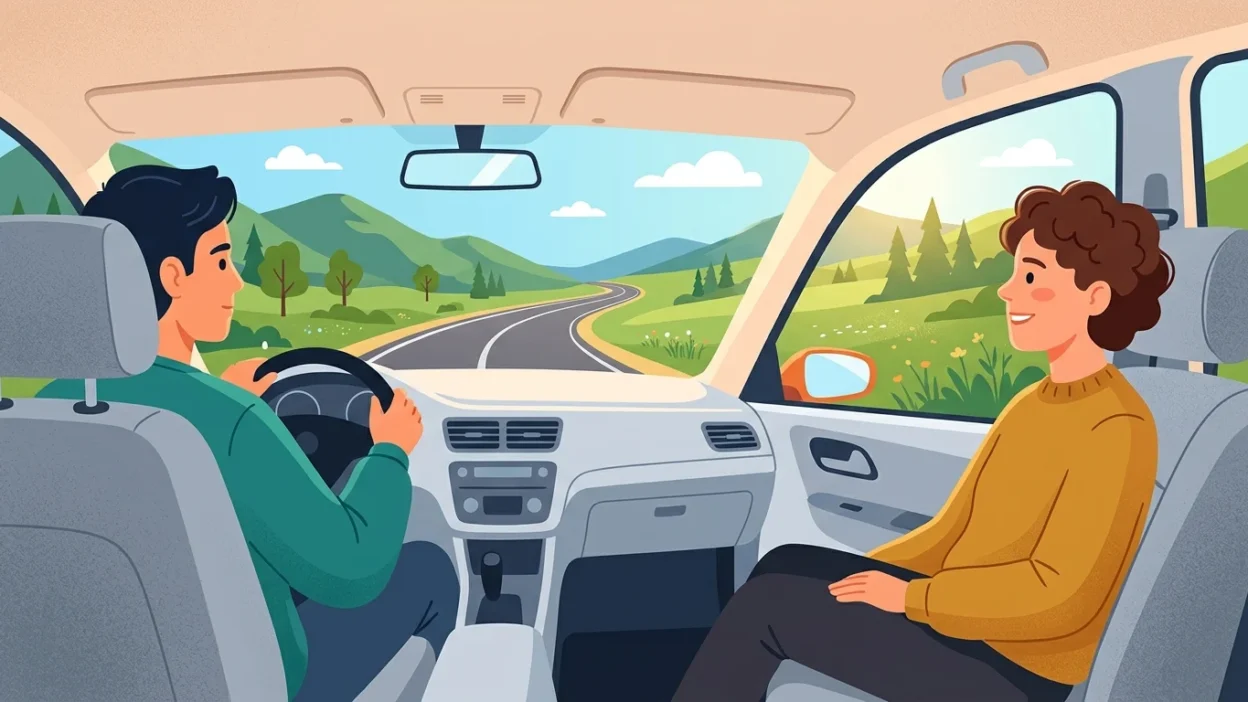
Memory Trick
Imagine sitting in the passenger seat while someone else is driving.
You are not controlling the car.
You are simply enjoying the journey.
That is the basic idea:
Along for the ride = Joining the journey without being the person in control.
American vs British English
“Along for the ride” is understood and used in both American English and British English.
The meaning is essentially the same.
It is informal and conversational in both varieties.
Similar Words and Phrases
| Expression | Meaning |
|---|---|
| Along for the ride | Participating without being in control |
| Tag along | Join someone casually |
| Go along with | Agree with or accept something |
| Join in | Participate in an activity |
| Come along | Accompany someone or make progress |
| Follow along | Follow someone’s activity or explanation |
| Be part of it | Participate in an experience |
Along for the Ride vs Tag Along
These expressions are similar but not identical.
Tag along means to join someone, often without being specifically invited or without having an important role.
“Can I tag along with you?”
Along for the ride emphasizes experiencing the journey or situation without being the main person responsible for it.
“I don’t know what they’re planning. I’m just along for the ride.”
Along for the Ride vs Go Along With
Go along with usually means agreeing with an idea, suggestion, or plan.
“She went along with his idea.”
Along for the ride means participating in an experience.
“She went along for the ride.”
The two expressions may look similar, but their meanings are different.
Final Verdict
“Along for the ride” means participating in an experience or situation without being the main person responsible for planning or controlling it.
It can describe a literal journey, but it is often used figuratively. The expression is informal, friendly, and common in everyday English.
Frequently Asked Questions
What does “along for the ride” mean?
It means being part of an experience without being the main person in control of it.
Is “along for the ride” an idiom?
Yes. It is a common informal expression that is often used figuratively.
Does “along for the ride” always mean traveling?
No. It can describe a physical journey or a figurative experience, such as a project, relationship, adventure, or life situation.
Is “along for the ride” positive or negative?
It depends on the context. It can sound positive when someone is enjoying an experience, but it can also suggest that someone has little responsibility or control.
What is another way to say “along for the ride”?
Depending on the context, you can say:
“Joining the experience.”
“Taking part.”
“Going along.”
“Tagging along.”
“Being part of the journey.”
Can I use “along for the ride” at work?
Yes, especially in casual workplace conversation.
For example:
“I am not leading the project. I am just along for the ride.”
What does “I’m just along for the ride” mean?
It means “I am participating, but I am not responsible for making the main decisions.”
Remember This
Along for the ride = Join the journey and see what happens.
Imagine yourself as a passenger while someone else drives. You are part of the journey, but someone else is in control.
Conclusion
“Along for the ride” is a useful informal expression for describing someone who participates in an experience without being the main person responsible for it.
It can be used for travel, adventures, projects, relationships, and many other situations. The person is involved, but another person may be making the important decisions.
The easiest way to remember this expression is to imagine sitting in the passenger seat of a car. Someone else is driving, while you enjoy the journey and see where it takes you.
In everyday English, saying “I’m just along for the ride” often means that you are happy to participate without worrying about being in control.

Charles Kevin is a passionate language writer and researcher at SimileHive, creating clear, engaging content about similes, idioms, metaphors, and figurative language to help readers improve English communication confidently every day.