
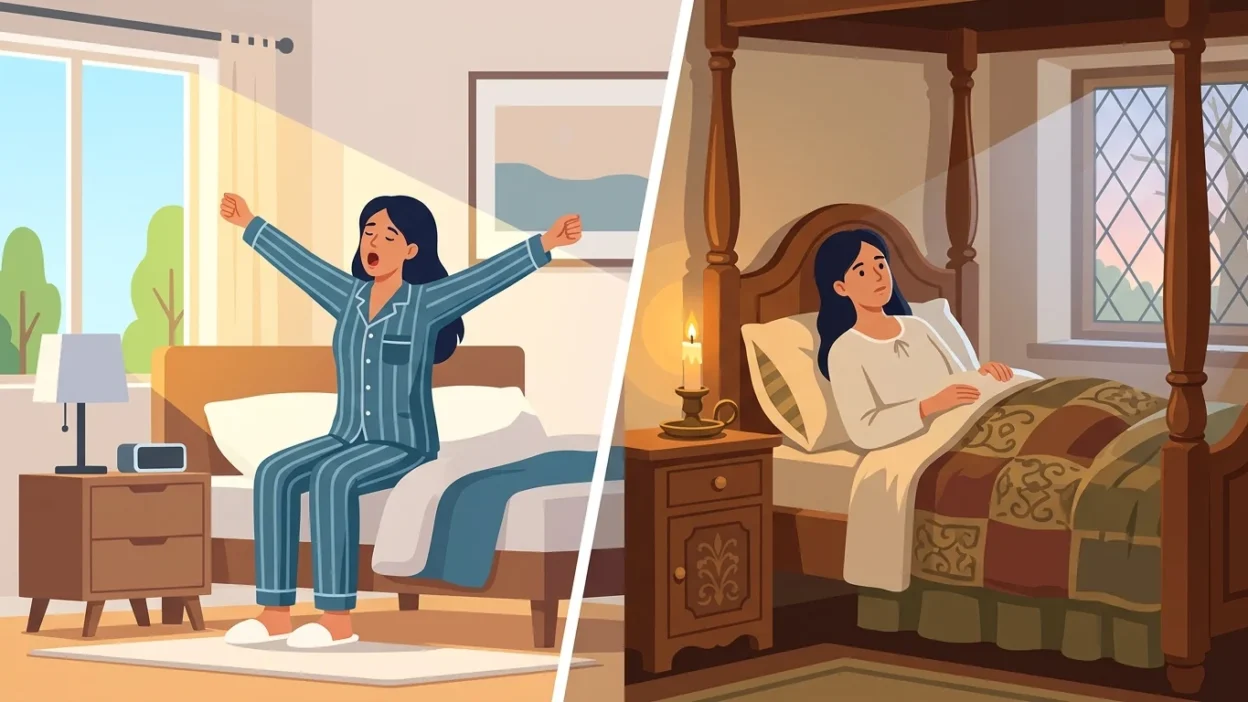
Awoke and woke are both past forms of the verb wake, and both can mean that someone stopped sleeping. The main difference is how they are used. Woke is the simple past form most commonly used in everyday English.
Awoke is also correct, but it is more formal or literary and is less common in casual conversation. For example, “I woke up at seven” sounds completely natural in everyday English, while “I awoke at seven” sounds more formal.
Both words can describe becoming conscious after sleeping. However, they can have slightly different patterns in a sentence. Woke is commonly followed by up, especially in everyday speech.
Awoke can also be followed by to when describing what someone became aware of after waking. Understanding this small difference will help you choose the most natural word.
Quick Answer
Woke and awoke are both past tense forms of wake. “Woke” is more common in everyday English, while “awoke” sounds more formal or literary. For example, “I woke up early” is more natural in casual conversation, while “I awoke to the sound of rain” has a more literary style.
Why People Confuse Them
People often confuse woke and awoke because both refer to waking from sleep.
They are both correct, but their usage is different.
Woke is the usual choice in everyday English.
Awoke is less common and often sounds more formal or literary.
Compare:
“I woke up at six.”
“I awoke at six.”
Both are correct, but the first sentence is more natural in everyday conversation.
First Word: Woke
Woke is the simple past form of wake.
The basic forms are:
Wake → woke → woken
Examples:
“I wake up early.”
“I woke up early yesterday.”
“I have woken up early all week.”
In everyday English, woke up is extremely common.
Second Word: Awoke
Awoke is also a past tense form of wake.
It means became awake or stopped sleeping.
For example:
“She awoke at dawn.”
This means:
“She became awake at dawn.”
Awoke is grammatically correct, but it is less common in casual speech than woke.
Awoke vs Woke Comparison
| Word | Meaning | Common Usage | Example |
|---|---|---|---|
| Woke | Became awake | Very common | I woke up early. |
| Awoke | Became awake | Less common, more formal or literary | I awoke at dawn. |
When to Use Each
Use “woke” in everyday English
Use woke when speaking naturally about waking up.
Examples:
“I woke up late.”
“She woke up at seven.”
“We woke up because of the noise.”
This is the most common choice in normal conversation.
Use “awoke” for a more formal or literary style
Awoke can be useful when writing stories, descriptions, or formal prose.
For example:
“The prince awoke from a deep sleep.”
“The traveler awoke to the sound of birds.”
It can give writing a slightly more traditional or literary feeling.
12 Examples of “Woke”
1. I woke up at six this morning.
I stopped sleeping at six.
2. She woke up because of the loud noise.
The noise caused her to become awake.
3. We woke up early for the trip.
We became awake early because we had to travel.
4. He woke up feeling tired.
He became awake while still feeling tired.
5. I woke up in the middle of the night.
I stopped sleeping during the night.
6. They woke up when the alarm rang.
The alarm caused them to wake.
7. My brother woke up late today.
My brother became awake later than usual.
8. She woke up to the sound of rain.
She became awake and heard the rain.
9. I woke up suddenly.
I became awake very quickly.
10. He woke up from a strange dream.
He stopped sleeping after the dream.
11. We woke up before sunrise.
We became awake before the sun came up.
12. The baby woke up crying.
The baby became awake and started crying.
10 Examples of “Awoke”
1. I awoke at dawn.
I became awake at dawn.
2. She awoke to the sound of birds.
She became awake and heard birds.
3. He awoke from a deep sleep.
He stopped sleeping after a deep sleep.
4. The child awoke suddenly.
The child became awake suddenly.
5. We awoke to a beautiful morning.
We became awake and found that it was a beautiful morning.
6. The traveler awoke before sunrise.
The traveler became awake before sunrise.
7. She awoke feeling refreshed.
She became awake feeling rested.
8. He awoke to the smell of fresh coffee.
He became awake and noticed the smell of coffee.
9. I awoke in the middle of the night.
I became awake during the night.
10. The king awoke from his sleep.
The king stopped sleeping.
Common Mistakes
Mistake 1: Thinking “awoke” is the only correct past tense
Incorrect idea:
“Woke” is informal and therefore wrong.
This is not true.
Woke is completely correct and is the most common simple past form of wake.
Mistake 2: Using “woken” as the simple past
Incorrect:
“I woken up early yesterday.”
Correct:
“I woke up early yesterday.”
Woken is the past participle and normally needs an auxiliary verb.
For example:
“I have woken up early every day this week.”
Mistake 3: Saying “I awoke up”
This is generally not the standard construction.
Use:
“I woke up.”
Or:
“I awoke.”
The word awoke already contains the idea of becoming awake.
Mistake 4: Thinking “awoke” and “woke” have completely different meanings
They both describe becoming awake.
The main difference is usage and style, not basic meaning.
Memory Trick
Think:
Wake → Woke → Woken
This is the easiest pattern to remember.
For everyday English, choose:
I woke up.
For a more literary style, you can choose:
I awoke.
American vs British English
Woke and awoke are understood in both American English and British English.
The main difference is frequency and style rather than meaning.
In both varieties, woke is very common in everyday speech.
Awoke is less common and can sound more formal, traditional, or literary.
Similar Words
| Word | Meaning |
|---|---|
| Wake | Become conscious after sleeping |
| Woke | Simple past of wake |
| Woken | Past participle of wake |
| Awoke | Another past form of wake |
| Awake | Not sleeping |
| Awaken | Cause someone to become awake or become awake |
Woke vs Awoke vs Awakened
These words are closely related.
Woke is the most common everyday past form.
“I woke up early.”
Awoke is another past form that sounds more formal or literary.
“I awoke early.”
Awakened can also mean became awake or caused someone to become awake.
“The sound awakened me.”
Woke Up vs Awoke
The most useful distinction is simple:
Woke up is natural and conversational.
Awoke is more formal or literary.
Compare:
“I woke up to the sound of thunder.”
This sounds natural in everyday conversation.
“I awoke to the sound of thunder.”
This sounds more literary and descriptive.
Final Verdict
Woke and awoke are both correct past forms of wake. Woke is much more common in everyday English and is usually the best choice for conversation and informal writing.
Awoke is less common and often gives a sentence a more formal, traditional, or literary tone. If you are simply talking about when you stopped sleeping, woke is usually the natural choice.
Frequently Asked Questions
Is “awoke” correct?
Yes. Awoke is a correct past form of wake.
Is “woke” the past tense of “wake”?
Yes. The basic forms are wake, woke, woken.
Which is more common, “woke” or “awoke”?
Woke is much more common, especially in everyday English.
Can I say “I awoke up”?
It is better to say “I woke up” or “I awoke.”
Is “I woke up” correct?
Yes. “I woke up” is completely correct and very common.
Is “awoke” more formal than “woke”?
Generally, yes. Awoke can sound more formal or literary, while woke is more natural in everyday speech.
What is the difference between “woke” and “woken”?
Woke is the simple past form.
“I woke up early.”
Woken is the past participle.
“I have woken up early.”
Remember This
Woke = common everyday past form
Awoke = less common, more formal or literary past form
Remember the main verb pattern:
Wake → Woke → Woken
For everyday conversation, “I woke up” is usually the safest and most natural choice.
Conclusion
The words woke and awoke both describe becoming awake after sleeping. The biggest difference is their style and frequency. Woke is the common simple past form used in everyday conversation, while awoke is less common and can sound more formal or literary.
If you are talking naturally with friends, family, or coworkers, “I woke up” is usually the best choice. If you are writing a story or want a more traditional style, “I awoke” can work very well. Also remember that woken is the past participle, so “wake, woke, woken” is the basic verb pattern to remember.

Adam Aaron is a language enthusiast and content writer at SimileHive, creating clear, engaging guides on similes, idioms, metaphors, and figurative language to help readers improve English confidently every day.