“Hit a snag” is an informal English idiom that means to encounter an unexpected problem, difficulty, or delay while trying to do something. If someone says, “We hit a snag with the project,” they mean that the project was going well, but an unexpected problem appeared and caused difficulty or delay.
The word snag literally refers to something that catches, tears, or blocks something. In the idiom, it has a figurative meaning. You can use “hit a snag” when talking about work, plans, travel, projects, relationships, or everyday situations. It is common in both American and British English and is especially useful in casual conversations and workplace communication.
Quick Answer
“Hit a snag” means to encounter an unexpected problem, obstacle, or delay. For example, “We hit a snag while building the website” means that an unexpected problem came up during the work. It is an informal and very common English idiom.
Why People Confuse It
People sometimes misunderstand “hit a snag” because snag does not always mean a problem.
Literally, a snag can be something that catches or tears something.
For example:
“My sweater caught on a snag.”
But in the idiom “hit a snag,” the word means an unexpected difficulty or obstacle.
So:
Hit a snag = Run into a problem
First Word: “Hit”
The word hit normally means to strike something.
For example:
“He hit the ball.”
But “hit” can also be used figuratively in many English expressions.
In “hit a snag,” it means to encounter or come across something, especially a problem.
Second Word: “Snag”
A snag can literally mean something that catches or obstructs movement.
In informal English, snag can also mean a small problem, difficulty, or complication.
Therefore:
Hit a snag = Encounter a problem
Hit a Snag Meaning
When you hit a snag, something prevents your plan or activity from going as smoothly as expected.
It does not necessarily mean that the entire plan has failed.
Usually, it suggests that there is a problem that needs to be solved before you can continue.
Example
“We were almost finished, but we hit a snag.”
This means:
“We were almost finished, but we encountered an unexpected problem.”
Hit a Snag Comparison
| Expression | Meaning | Example |
|---|---|---|
| Hit a snag | Encounter a problem or delay | We hit a snag with the project. |
| Run into a problem | Experience a difficulty | We ran into a problem. |
| Face an obstacle | Encounter something that makes progress difficult | We faced an obstacle. |
| Have a setback | Experience something that slows progress | We had a setback. |
| Get stuck | Be unable to continue | We got stuck on the final step. |
When to Use “Hit a Snag”
Use “hit a snag” when an unexpected problem interrupts progress.
You can use it for:
- Work projects
- Travel plans
- Construction
- School assignments
- Technology
- Business plans
- Personal plans
- Everyday tasks
It is especially natural when the problem is temporary and you expect to continue after solving it.
12 Examples of “Hit a Snag”
1. We hit a snag while planning the event.
An unexpected problem appeared during the planning.
2. The project hit a snag because some materials were missing.
The missing materials caused a delay.
3. I hit a snag while trying to install the software.
I encountered a problem during installation.
4. Our travel plans hit a snag because of the weather.
The weather created an unexpected difficulty.
5. We were making good progress until we hit a snag.
Everything was going well until a problem appeared.
6. The construction project hit a snag.
The construction work encountered an unexpected problem.
7. I hit a snag with my application.
I experienced a problem with my application.
8. The team hit a snag during testing.
The team discovered an unexpected problem during testing.
9. We hit a snag when the website stopped working.
The website problem interrupted our progress.
10. She hit a snag while organizing the meeting.
She encountered a difficulty while making the arrangements.
11. The plan hit a snag at the last minute.
An unexpected problem appeared shortly before the plan was carried out.
12. We may hit a snag if the supplier cannot deliver on time.
The supplier’s delay could create a problem.
Common Mistakes
Mistake 1: Thinking “hit a snag” means complete failure
“We hit a snag” usually means we encountered a problem, not that everything has failed.
For example:
“We hit a snag, but we solved it the next day.”
This is perfectly natural.
Mistake 2: Using “hit snag” without an article
Incorrect:
“We hit snag during the project.”
Correct:
“We hit a snag during the project.”
The usual expression is hit a snag.
Mistake 3: Using it only for physical objects
“Hit a snag” is normally figurative when it means encountering a problem.
You can use it for plans, projects, work, travel, technology, and many other situations.
Mistake 4: Thinking “snag” always means a serious problem
A snag can be a relatively small problem or temporary complication.
For a major disaster, stronger expressions may be more appropriate.
Memory Trick
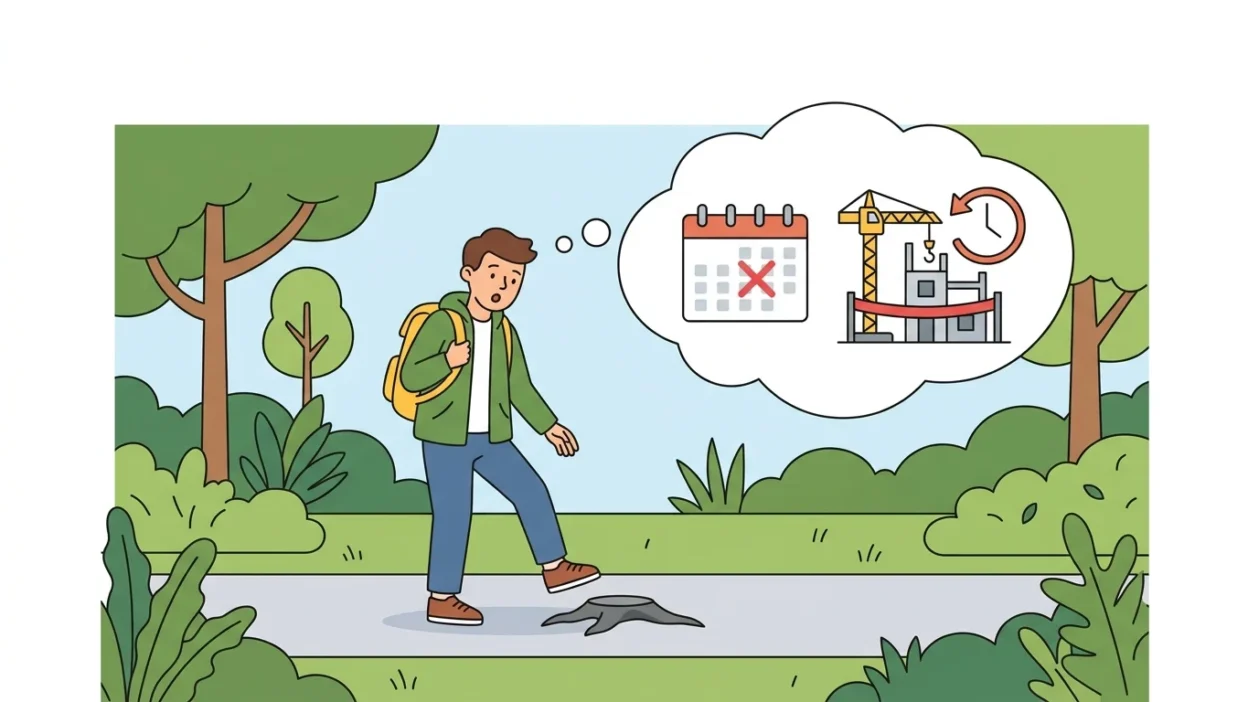
Think of walking along a path and suddenly getting caught on something.
You were moving forward, but something stopped you.
That is the idea behind:
Hit a snag = Your progress gets caught by a problem.
American vs British English
“Hit a snag” is common in both American English and British English.
There is no important difference in meaning between the two varieties.
For example:
“We hit a snag with the project.”
This sentence sounds natural in both American and British English.
Similar Words and Phrases
| Phrase | Meaning |
|---|---|
| Hit a snag | Encounter an unexpected problem |
| Run into trouble | Experience difficulty |
| Run into a problem | Encounter a problem |
| Face a setback | Experience something that slows progress |
| Come across an obstacle | Encounter something that blocks progress |
| Get stuck | Be unable to continue |
| Encounter a difficulty | Experience a problem |
Hit a Snag vs Run Into a Problem
These expressions are very similar.
Hit a snag often suggests a temporary or unexpected complication.
Run into a problem is broader and can describe almost any kind of difficulty.
For example:
“We hit a snag while preparing the report.”
“We ran into a problem with the report.”
Both sentences are correct.
Final Verdict
“Hit a snag” means to encounter an unexpected problem, obstacle, or delay.
It is an informal and common idiom used when something does not go according to plan. It usually suggests that the problem can be solved and that progress can continue.
Remember:
Hit a snag = Run into a problem
Frequently Asked Questions
What does “hit a snag” mean?
It means to encounter an unexpected problem, difficulty, or delay.
Is “hit a snag” an idiom?
Yes. “Hit a snag” is a common informal English idiom.
Is “hit a snag” negative?
Usually, yes. It describes an unexpected problem or difficulty. However, it does not necessarily suggest a serious or permanent failure.
What is another way to say “hit a snag”?
You can say:
“Run into a problem.”
“Run into trouble.”
“Face an obstacle.”
“Experience a setback.”
“Get stuck.”
Can I use “hit a snag” at work?
Yes. It is very common in workplace communication.
For example:
“We hit a snag with the new system.”
Is “hit a snag” formal or informal?
It is generally informal to neutral. It is perfectly acceptable in everyday conversation and many workplace situations.
What is an example of “hit a snag”?
“We hit a snag while organizing the event.”
This means the organizers encountered an unexpected problem.
Remember This
Hit a snag = Encounter an unexpected problem.
If something is going smoothly and then a problem suddenly interrupts your progress, you can say:
“We hit a snag.”
Conclusion
“Hit a snag” is a useful English idiom for describing an unexpected problem or delay. It is commonly used when a project, plan, task, or activity is progressing normally but suddenly faces a difficulty. The problem may be small or temporary, so the expression does not necessarily mean that the entire plan has failed.
You can easily remember the expression by imagining something catching on your clothing while you are walking. You are moving forward until something gets in the way. In the same way, when you hit a snag, a problem gets in the way of your progress.

Charles Kevin is a passionate language writer and researcher at SimileHive, creating clear, engaging content about similes, idioms, metaphors, and figurative language to help readers improve English communication confidently every day.