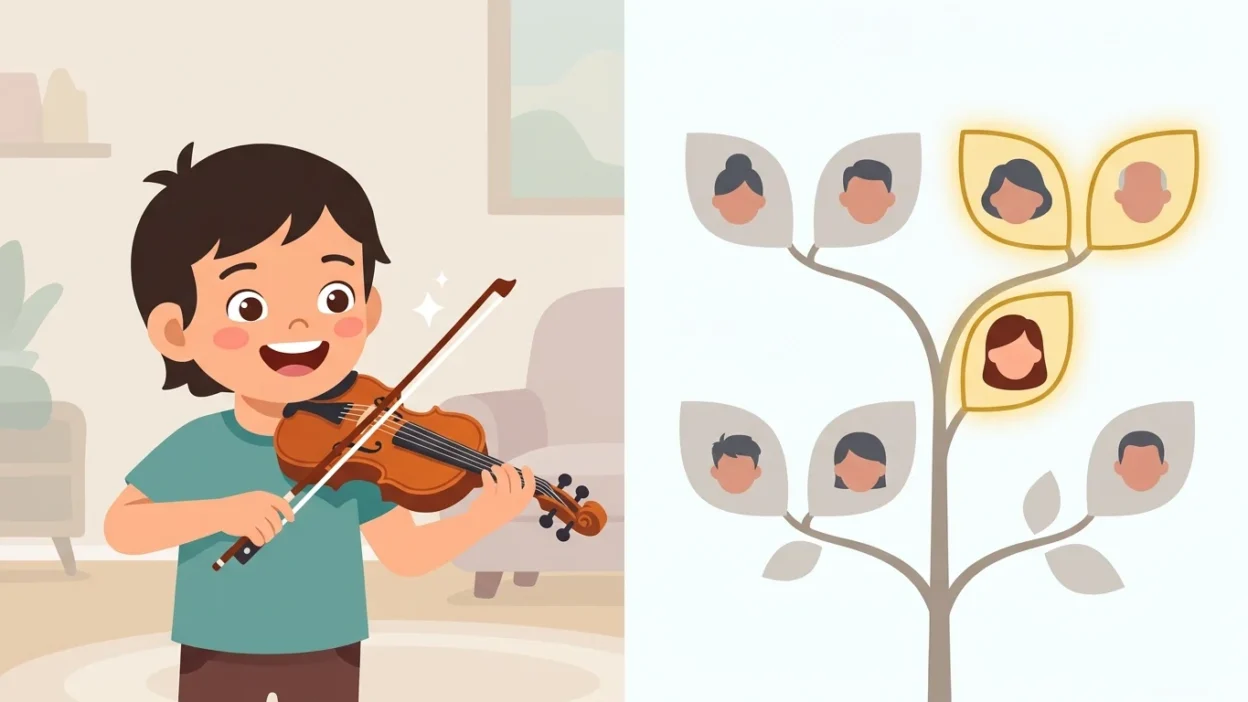
Innate and enate look and sound similar, but they have completely different meanings. Innate is a common English word that means something you are born with naturally rather than something you learn.
For example, “She has an innate talent for music” means her musical ability seems natural to her. Enate, on the other hand, is a rare technical word used mainly in biology and botany. It describes something related to a sister or something that grows from the same mother or source.
The difference is important because innate is widely used in everyday English, while enate is mostly found in specialized scientific writing. If you are writing a general sentence, you probably need innate. Learning the meaning, pronunciation, examples, and usage of both words will help you avoid confusing them.
Quick Answer
Innate means natural or present from birth, such as an innate ability or innate quality. Enate is a rare scientific term relating to sisters or structures that arise from the same source. In ordinary English, innate is the word you will almost always need.
Why People Confuse Them
People confuse innate and enate because they look very similar and have similar sounds.
However, their meanings are very different.
Innate relates to something that is naturally present.
Enate is a specialized word related to sisters or common maternal origin.
In normal conversation, writing, schoolwork, and most professional communication, innate is much more common.
First Word: Innate
Innate is an adjective.
It means natural, inborn, or present from birth.
It describes something that a person or animal has naturally rather than something they developed through learning or training.
Examples
“She has an innate ability to understand mathematics.”
This means her ability seems natural.
“Humans have an innate desire to communicate.”
This means the desire is naturally part of human behavior.
Second Word: Enate
Enate is a rare adjective and noun used mainly in specialized contexts.
As an adjective, it can describe a relationship through the female or maternal line, especially a relationship between sisters or relatives connected through the mother.
In botanical terminology, enate can also describe structures that arise from the same source or are connected in a particular way.
Because the word is uncommon, most English learners will rarely need to use it.
Innate vs Enate Comparison
| Word | Meaning | Common Usage | Example |
|---|---|---|---|
| Innate | Natural or present from birth | Very common | She has an innate talent for art. |
| Enate | Related through the female or maternal line; used in specialized contexts | Rare | The term is mainly found in technical writing. |
When to Use Each
Use “innate” for natural abilities or qualities
Use innate when something seems naturally present rather than learned.
Examples include:
Innate talent
Innate ability
Innate intelligence
Innate curiosity
Innate instinct
Innate sense of humor
Use “enate” only in specialized contexts
Use enate when discussing a technical subject where the word has a specific scientific or genealogical meaning.
For general writing, using enate when you mean “natural” would be incorrect.
12 Examples of “Innate”
1. She has an innate talent for singing.
Her singing ability seems natural.
2. Curiosity is an innate part of childhood.
Children naturally tend to be curious.
3. He has an innate ability to solve difficult problems.
Problem solving seems natural to him.
4. Some animals have an innate fear of predators.
The fear is naturally present rather than learned.
5. She showed an innate understanding of music.
She understood music naturally and easily.
6. Leadership may involve both learned skills and innate qualities.
Some leadership qualities may be natural.
7. The child displayed an innate curiosity about the world.
The curiosity appeared naturally.
8. Humans have an innate need for social connection.
The need is naturally part of human behavior.
9. His innate creativity helped him become a successful artist.
His creativity seemed natural to him.
10. The athlete has an innate sense of balance.
His natural ability to maintain balance is strong.
11. She seems to have an innate gift for languages.
Her ability with languages appears natural.
12. Some people have an innate ability to recognize patterns.
They naturally notice patterns easily.
Examples of “Enate”
Because enate is uncommon, its examples are mainly found in specialized contexts.
1. The researchers examined enate relationships.
Here, the word refers to relationships through the maternal line.
2. The study focused on enate relatives.
This refers to relatives connected through the female or maternal side.
3. The botanical description used the term enate.
Here, the word is being used in a specialized botanical context.
Common Mistakes
Mistake 1: Using “enate” instead of “innate”
Incorrect:
“She has an enate talent for painting.”
Correct:
“She has an innate talent for painting.”
Mistake 2: Thinking “innate” means learned
Innate means natural or inborn.
If something is learned through education, practice, or experience, it is not usually described as innate.
For example:
“He developed his writing skills through practice.”
You could not normally call the learned skill innate simply because he became very good at it.
Mistake 3: Using “innate” for everything natural
Although innate means natural or inborn, it is especially useful when talking about qualities, abilities, instincts, tendencies, or characteristics that exist naturally.
For example:
“She has an innate ability to draw.”
This sounds natural.
Memory Trick
Think:
Innate = In you from birth.
The beginning of innate can remind you of something that is in you naturally.
Enate = specialized and uncommon.
If you mean a natural talent, ability, quality, or instinct, choose innate.
American vs British English
There is no important difference in the meaning or spelling of innate between American English and British English.
Innate is commonly understood and used in both varieties.
Enate remains a rare technical term in both American and British English.
Similar Words
| Word | Meaning |
|---|---|
| Innate | Natural or present from birth |
| Inborn | Existing from birth |
| Natural | Not artificially created or learned |
| Instinctive | Done naturally without conscious thought |
| Inherent | Naturally existing as part of something |
| Acquired | Developed through learning or experience |
| Learned | Gained through education or experience |
| Enate | A rare term connected with maternal or specialized relationships |
Innate vs Inborn
Innate and inborn are very close in meaning.
“She has an innate ability to understand people.”
“She has an inborn ability to understand people.”
Both suggest that the ability is naturally present rather than learned.
However, innate is often used more broadly in academic, psychological, and formal writing.
Innate vs Instinctive
These words are related but not identical.
Innate means naturally present.
Instinctive describes an action or reaction that happens naturally and often without conscious thought.
For example:
“Humans have an innate desire to communicate.”
“She made an instinctive movement to protect the child.”
Final Verdict
Innate means natural, inborn, or present from birth. It is a common and useful English word that appears in everyday, academic, and professional writing.
Enate is a rare specialized word associated with maternal relationships and certain technical uses. If you are talking about a natural talent, ability, quality, or instinct, innate is almost certainly the correct word.
Frequently Asked Questions
What does innate mean?
Innate means natural, inborn, or present from birth.
What does enate mean?
Enate is a rare technical term that can refer to relationships through the female or maternal line and has specialized scientific uses.
Is innate a common word?
Yes. Innate is a common English word, especially when discussing natural abilities, qualities, instincts, or tendencies.
Is enate a common English word?
No. Enate is uncommon and is mainly used in specialized contexts.
Is innate the same as natural?
They can be very similar. Innate specifically suggests that something is naturally present rather than acquired through learning.
What is the opposite of innate?
Depending on the context, possible opposites include learned, acquired, or developed.
What is an example of innate?
“She has an innate talent for drawing.”
This means her drawing ability appears to be natural.
Remember This
Innate means natural or present from birth.
Enate is a rare specialized term connected with maternal relationships or technical contexts.
For everyday English, school writing, and most general communication, remember:
Natural ability = innate
Conclusion
The main difference between innate and enate is their meaning and frequency. Innate describes something natural, inborn, or present from birth. It is the word you should use when talking about natural abilities, talents, instincts, qualities, or tendencies.
Enate is much less common and belongs mainly to specialized vocabulary. It can describe relationships through the maternal line and has technical uses in scientific contexts. When you mean that someone naturally has a certain ability or quality, choose innate.

Adam Aaron is a language enthusiast and content writer at SimileHive, creating clear, engaging guides on similes, idioms, metaphors, and figurative language to help readers improve English confidently every day.