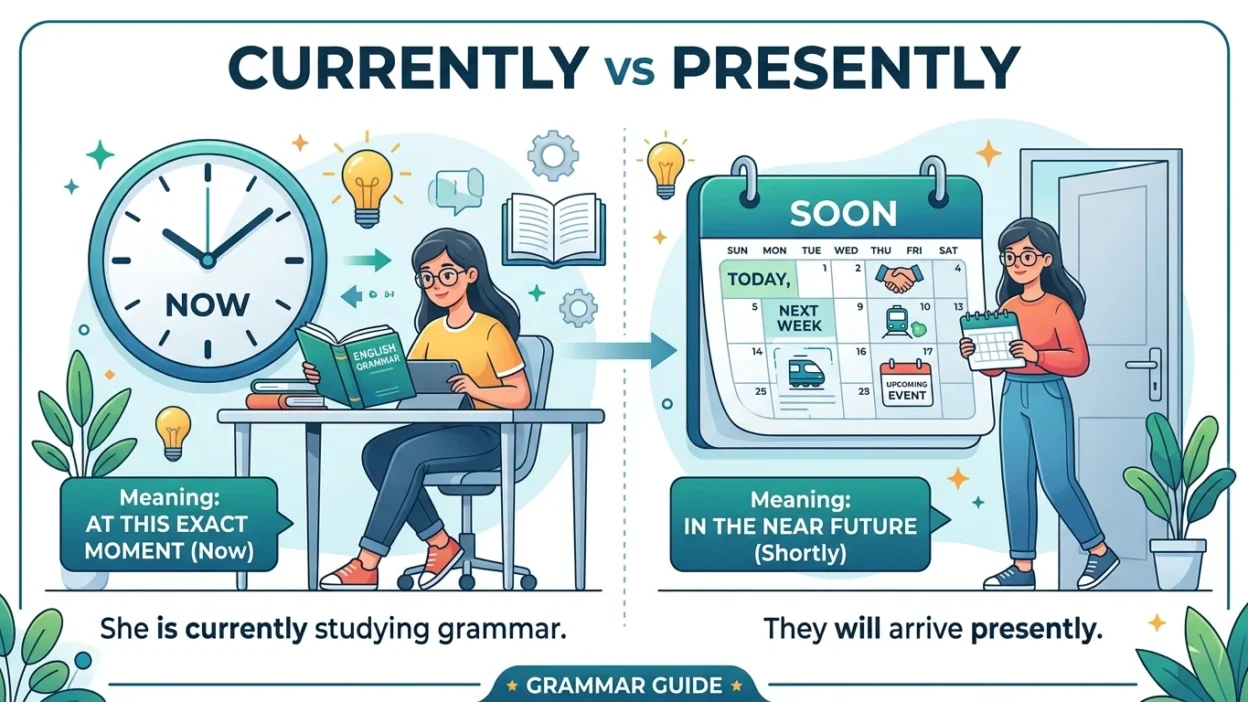
Currently and presently can both refer to something happening around the present time, but they are not always used in exactly the same way. Currently usually means “now” or “at the present time,” while presently can mean either “soon” or “at the present time,” depending on the context and variety of English. For example, “She is currently working” clearly means she is working now.
The main source of confusion is that presently has two established meanings. In modern American English, it can mean “now,” although it can also mean “soon.” In many contexts, especially traditional or formal British usage, presently commonly means “soon” or “in a short while.” Because currently has a more direct and consistent meaning of “now,” it is often the clearer choice when you want to describe something happening at this moment or during the current period.
Quick Answer
Currently usually means “now” or “at the present time.” Presently can mean “now” or “soon,” depending on context. For example, “The manager is currently in a meeting” means the manager is in a meeting now. “The manager will be here presently” usually means the manager will arrive soon.
Why Do People Confuse “Currently” and “Presently”?
The confusion comes from their overlapping meanings.
Both words can sometimes describe the present:
She is currently living in London.
She is presently living in London.
Both can mean that she is living in London now.
However, presently has another meaning:
The doctor will see you presently.
Here, presently means soon or in a short while.
This second meaning can cause confusion because someone unfamiliar with the context might interpret it as “the doctor is seeing you now.”
Currently does not normally have this ambiguity.
First Word: Currently
Currently is an adverb meaning now, at present, or during the current period.
It is used to describe something that is true or happening at the present time.
Examples
I am currently studying English.
She is currently working from home.
The store is currently closed.
He is currently looking for a new job.
The word is especially useful when you want to contrast the present situation with the past or future.
I currently live in Lahore, but I may move next year.
Second Word: Presently
Presently is an adverb with two main meanings.
Meaning 1: Now
In some varieties of English, especially modern American English, presently can mean now or at the present time.
The company is presently reviewing the application.
This means:
The company is currently reviewing the application.
Meaning 2: Soon
Presently can also mean soon, shortly, or in a little while.
The doctor will see you presently.
This means:
The doctor will see you soon.
This meaning is particularly important because it can change the meaning of a sentence.
Currently vs Presently
| Word | Common Meaning | Example | Meaning |
|---|---|---|---|
| currently | now; at present | She is currently working. | She is working now. |
| presently | now | She is presently working. | She is working now. |
| presently | soon; shortly | She will arrive presently. | She will arrive soon. |
The safest choice for “now” is usually currently because its meaning is less ambiguous.
When Should You Use “Currently”?
Use currently when you clearly mean now or at the present time.
It works well in:
- everyday conversation
- emails
- professional writing
- academic writing
- reports
- formal communication
Examples
I am currently unavailable.
The company is currently hiring.
She is currently studying medicine.
The website is currently unavailable.
We are currently working on the project.
If you want your meaning to be immediately clear, currently is often the better choice.
When Should You Use “Presently”?
Use presently when the context clearly supports either now or soon.
When it means now, it is often more formal than currently:
The matter is presently under investigation.
When it means soon, it often appears with a future or arrival verb:
He will return presently.
The manager will speak to you presently.
In these examples, presently means soon.
Can “Currently” and “Presently” Be Used Interchangeably?
Sometimes.
When presently means now, you can often replace it with currently.
The company is presently reviewing the application.
The company is currently reviewing the application.
Both sentences mean that the review is happening now.
However, you cannot replace presently with currently when presently means soon.
The manager will arrive presently.
Here, presently means soon.
The manager will arrive currently.
This is not a natural use of currently.
15 Examples of “Currently”
- I am currently studying English.
- She is currently working from home.
- The store is currently closed.
- We are currently looking for a new apartment.
- He is currently visiting his family.
- The company is currently hiring employees.
- The website is currently unavailable.
- They are currently discussing the issue.
- I am currently reading a new book.
- The project is currently under review.
- She is currently living abroad.
- We are currently accepting applications.
- The road is currently being repaired.
- He is currently working on a new project.
- The restaurant is currently serving breakfast.
15 Examples of “Presently”
“Presently” meaning “now”
- She is presently working on the report.
- The company is presently reviewing the proposal.
- He is presently employed by a technology company.
- The matter is presently under discussion.
- They are presently living in the city.
- The building is presently being renovated.
- The organization is presently examining the issue.
“Presently” meaning “soon”
- The doctor will see you presently.
- She will return presently.
- The manager will speak with you presently.
- He will be here presently.
- The guests will arrive presently.
- The results will be announced presently.
- We will discuss the matter presently.
- The train will arrive presently.
Currently vs Presently in Professional Writing
In professional writing, currently is often clearer when you mean now.
For example:
We are currently reviewing your application.
This clearly tells the reader that the review is happening now.
Using presently could introduce some ambiguity:
We are presently reviewing your application.
Many readers will understand this as “now,” but currently leaves less room for confusion.
If you mean soon, however, presently can work:
We will contact you presently.
For maximum clarity, you could also simply write:
We will contact you shortly.
Comparison Table: Meaning and Clarity
| Feature | Currently | Presently |
|---|---|---|
| Means “now” | Yes | Yes |
| Means “soon” | No | Yes |
| Meaning can be ambiguous | Rarely | Sometimes |
| Common in modern English | Yes | Yes |
| Suitable for formal writing | Yes | Yes |
| Best simple synonym | now | now / soon |
| Safest choice for “now” | Yes | Not always |
Common Mistakes
1. Assuming “presently” always means “now”
This is the biggest mistake.
The manager will arrive presently.
Here, presently may mean soon, not necessarily “now.”
2. Using “currently” to mean “soon”
Currently means now or during the present period.
Incorrect:
The doctor will see you currently.
Better:
The doctor will see you presently.
Or:
The doctor will see you soon.
3. Thinking “presently” is always more formal than “currently”
Both can be used formally.
The more important difference is that presently has two meanings, while currently has a much more consistent meaning.
4. Using “currently” for a completed event
Currently describes something that is true or happening now.
Incorrect:
I currently finished the report.
Better:
I have finished the report.
Or:
I am currently finishing the report.
5. Adding “at” before “currently”
Normally, simply say:
She is currently working.
Not:
She is at currently working.
Memory Trick
Remember:
Currently = current = now
The word currently is connected to current, so think:
Currently → current time → now
For presently, remember:
Presently → present or soon
This helps you remember that presently can have two meanings.
American vs British English
Both currently and presently are used in American and British English, but presently can differ in meaning and frequency.
In modern American English, presently can commonly mean now:
The company is presently investigating the matter.
In British English, presently can also mean soon, especially in more traditional or formal usage:
The manager will see you presently.
Because of this potential ambiguity, currently is often a clearer choice when you simply mean now, regardless of the variety of English.
Similar Words
Now
The simplest word for the present moment.
I am working now.
At present
A formal expression meaning now.
She is at present working abroad.
At the moment
Common in everyday English.
He is busy at the moment.
Nowadays
Refers to the current period in general rather than necessarily this exact moment.
People communicate differently nowadays.
Shortly
Means soon or in a short time.
The manager will arrive shortly.
Soon
Means in a short time.
The train will arrive soon.
Which Is Better: Currently or Presently?
If you mean now, currently is usually the clearer choice.
We are currently working on the problem.
If you mean soon, presently can be used:
We will solve the problem presently.
However, if you want to avoid any possible confusion, use soon or shortly for the second meaning.
For example:
The doctor will see you shortly.
This is immediately clear.
Final Verdict
Currently and presently can both mean now, but presently can also mean soon.
Use currently when you want to clearly say that something is happening or is true now.
Use presently when the context clearly indicates either now or soon. Because it has two meanings, it can sometimes be less clear than currently.
For everyday and professional writing, currently is often the safest choice when you mean at the present time.
Frequently Asked Questions
What is the difference between “currently” and “presently”?
Currently usually means now. Presently can mean either now or soon, depending on the context.
Does “presently” mean “now” or “soon”?
It can mean either. In sentences such as “She is presently working,” it can mean now. In “She will arrive presently,” it commonly means soon.
Is “currently” more formal than “presently”?
Neither word is simply more formal. Currently is widely used in both everyday and formal English, while presently can sound more formal or traditional in some contexts.
Is “currently” the same as “now”?
Yes, in most contexts. Currently means now or at the present time.
Can I use “presently” instead of “currently”?
Often, yes, when presently means now. However, be aware that presently can also mean soon.
Which is clearer, “currently” or “presently”?
When you mean now, currently is usually clearer because it does not normally carry the second meaning of soon.
Is “presently” common in American English?
Yes. In modern American English, presently can mean now, although it can also retain the meaning soon.
Can “currently” mean “soon”?
No. Currently refers to the present or current period. It does not normally mean soon.
Remember This
Currently = now
Presently = now or soon
If you mean now, you can safely choose:
I am currently working.
If you mean soon, you can say:
I will return presently.
When clarity matters, use currently for “now” and soon or shortly for “in a short time.”
Conclusion
The difference between currently and presently is small but important. Currently has a straightforward meaning: it refers to something happening or being true now or during the current period. Presently, on the other hand, has two established meanings. It can mean now, but it can also mean soon, particularly when used with a future action such as “will arrive presently.”
Because of this difference, currently is often the clearest choice when you simply want to say “now.” Presently remains correct, but readers may need to use the context to determine whether you mean “now” or “soon.” If there is any possibility of confusion, choosing currently, soon, or shortly can make your meaning immediately clear.

Adam Aaron is a language enthusiast and content writer at SimileHive, creating clear, engaging guides on similes, idioms, metaphors, and figurative language to help readers improve English confidently every day.