
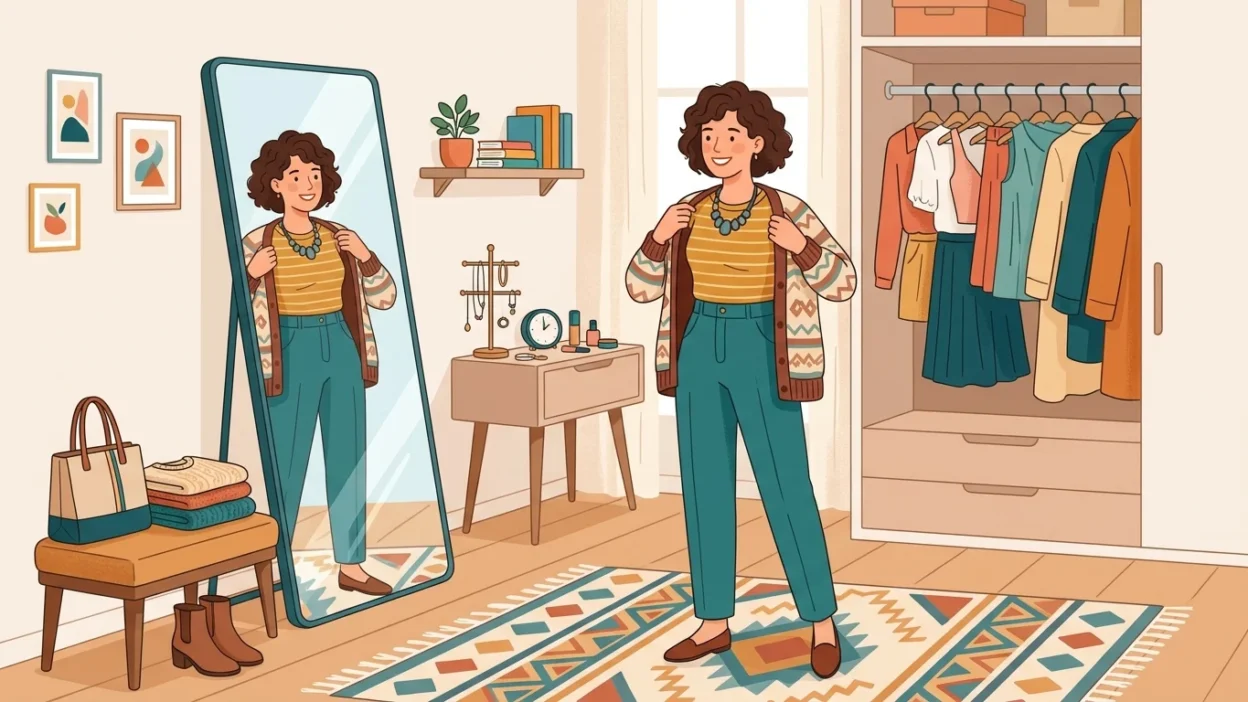
If someone says, “She got all gussied up for the party,” they mean she dressed up or made herself look more attractive, stylish, or impressive. Gussied up is an informal expression used when a person, place, or thing has been made more attractive or fancy than usual.
The phrase is often used in casual American English. You can use it for people who put on nicer clothes, style their hair, or add makeup before a special event. You can also use it for things and places that have been decorated, improved, or made to look more impressive.
For example, a simple room can be “gussied up” with new furniture and decorations. The expression is usually playful and friendly, although the exact tone depends on the context.
Quick Answer
Gussied up means dressed up, decorated, improved, or made to look more attractive or impressive. It is an informal expression, especially common in American English. You might say, “He gussied himself up for the wedding” or “They gussied up the old house.”
Why Do People Say “Gussied Up”?
The expression gussied up is informal and often has a playful tone.
It usually suggests that something has been changed from its ordinary appearance to look better, cleaner, fancier, or more attractive.
For example:
She gussied up before going to dinner.
This means she took extra time to look nice before going out.
The phrase can also describe objects:
They gussied up the kitchen with new cabinets.
Here, gussied up means the kitchen was improved or decorated to look better.
What Does “Gussied Up” Mean?
Gussied up means made to look more attractive, stylish, fancy, or impressive.
When talking about a person, it often means:
• Dressed in nicer clothes
• Wearing makeup or accessories
• Having hair styled
• Making an extra effort to look attractive
When talking about a place or thing, it can mean:
• Decorated
• Cleaned up
• Improved
• Made more attractive
• Given a more impressive appearance
Simple Examples
She got gussied up for the wedding.
Meaning: She dressed nicely and made herself look attractive for the wedding.
They gussied up the living room before the guests arrived.
Meaning: They decorated or improved the living room.
Is “Gussied Up” Positive or Negative?
Usually, gussied up is neutral to positive and often humorous.
It can show that someone or something has been made more attractive or fancy.
However, depending on the speaker’s tone, it can sometimes suggest that the improvement is unnecessary or a little exaggerated.
For example:
She gussied herself up for the party.
This can simply mean she dressed nicely.
But:
They really gussied up the old car.
This could mean they made the car look much fancier than it normally does.
The expression itself is not normally insulting.
Gussied Up for a Person
When gussied up describes a person, it usually means that the person has dressed nicely or made an extra effort with their appearance.
Examples
- Maria got gussied up for her birthday dinner.
- He gussied himself up before the job interview.
- We all got gussied up for the wedding.
- She was completely gussied up for the evening.
- The children got gussied up for the school concert.
- I need to get gussied up before we leave.
Gussied Up for a Place or Thing
The phrase can also describe something that has been decorated or improved.
Examples
- They gussied up the house before putting it on the market.
- We gussied up the backyard for the summer party.
- The restaurant was gussied up for the holiday season.
- He gussied up his old truck with new seats and paint.
- They gussied up the office with new furniture.
- A few decorations really gussied up the room.
Gussied Up vs Dressed Up
These expressions are closely related, but they are not always interchangeable.
| Expression | Meaning | Common Use |
|---|---|---|
| Gussied up | Made more attractive or fancy | People, places, things |
| Dressed up | Wearing nicer or formal clothes | Mostly people |
| Dolled up | Made especially attractive or stylish | Usually people |
| Spruced up | Made cleaner, neater, or more attractive | People, places, things |
Dressed up is more common and neutral.
Gussied up sounds more informal and playful.
Examples
She got dressed up for the party.
This simply means she wore nicer clothes.
She got gussied up for the party.
This suggests she made extra effort to look attractive or fancy.
Gussied Up vs Spruced Up
These expressions can overlap, especially when talking about places and things.
Spruced up often focuses on making something cleaner, neater, or more attractive.
Gussied up often has a more playful sense of making something fancy or impressive.
| Gussied Up | Spruced Up |
|---|---|
| More informal and playful | Common and informal |
| Can suggest something fancy | Often suggests cleaner or neater |
| Used for people and things | Used for people, places, and things |
| Often focuses on appearance | Often focuses on improvement |
For example:
They gussied up the restaurant.
The restaurant was made fancier or more attractive.
They spruced up the restaurant.
The restaurant was cleaned, repaired, or made more attractive.
12 Examples of “Gussied Up”
Here are some natural examples:
- She got gussied up for the concert.
- He gussied himself up before the interview.
- We should get gussied up for the wedding.
- The hotel was all gussied up for the holidays.
- They gussied up the old house before selling it.
- She really gussied up the dining room.
- The car looked completely different after they gussied it up.
- I got gussied up and went out for dinner.
- They gussied up the garden with lights and flowers.
- He gussied up his office before the important meeting.
- The little shop was gussied up for the festival.
- We got all gussied up and headed downtown.
Common Mistakes With “Gussied Up”
Mistake 1: Thinking it only describes clothing
It can describe clothing and appearance, but it can also describe places and objects.
Correct:
She gussied herself up for dinner.
Correct:
They gussied up the living room.
Mistake 2: Using it in very formal writing
Gussied up is informal.
For formal writing, use words such as dressed up, decorated, improved, enhanced, or made more attractive.
Mistake 3: Thinking “gussied” means dirty or messy
It means almost the opposite.
Gussied up suggests something has been made more attractive, fancy, or impressive.
Memory Trick
Think:
Gussied up = made fancy
If someone gussies themselves up, they make themselves look nicer.
If someone gussies up a room, they make the room look nicer.
A simple memory sentence is:
Gussied up means dressed up or made fancy.
American vs British English
Gussied up is especially associated with American English and is informal.
British speakers may understand the expression, but they are more likely to use expressions such as:
• Dressed up
• Dolled up
• Spruced up
• Done up
• Made more presentable
The phrase can appear in American movies, television shows, novels, and everyday conversations.
Similar Expressions
Here are some expressions with similar meanings:
| Expression | Meaning |
|---|---|
| Dressed up | Wearing nicer or more formal clothes |
| Dolled up | Made especially attractive |
| Spruced up | Made cleaner or more attractive |
| Done up | Decorated or arranged attractively |
| Glammed up | Made more glamorous |
| Made over | Given a new appearance |
| Polished up | Improved or made more presentable |
The best choice depends on the situation and the tone you want.
Final Verdict
Gussied up is an informal expression meaning dressed up, decorated, improved, or made more attractive or fancy.
It is especially common in American English and often has a playful or humorous feeling.
Use it for people:
She got gussied up for the party.
Use it for things or places:
They gussied up the old house.
If you want a more neutral expression, dressed up, decorated, improved, or spruced up may be better choices.
Frequently Asked Questions
What does “gussied up” mean?
Gussied up means dressed up, decorated, improved, or made more attractive or fancy.
Is “gussied up” slang?
It is an informal expression. It is not usually considered highly offensive or crude, but it is more casual than standard formal vocabulary.
Is “gussied up” American English?
Yes. The expression is strongly associated with informal American English, although speakers elsewhere may understand it.
Can you use “gussied up” for a house?
Yes. For example:
They gussied up the house before selling it.
This means they improved or decorated the house to make it look better.
Can “gussied up” describe a man?
Yes. It can describe anyone.
He got gussied up for the wedding.
This means he dressed nicely and made an extra effort with his appearance.
Is “gussied up” positive?
Usually, yes. It normally means something has been made more attractive or impressive. However, the speaker’s tone can make it sound humorous or slightly teasing.
What is another word for “gussied up”?
Depending on the context, you can use dressed up, decorated, spruced up, dolled up, glammed up, improved, or made more attractive.
Remember This
Gussied up = dressed up, decorated, or made more attractive.
For a person:
She got gussied up for the party.
For a thing:
They gussied up the old house.
It is informal, playful, and especially common in American English.
Conclusion
The phrase gussied up is a fun informal expression that means making someone or something look nicer, fancier, or more attractive. When it describes a person, it usually means dressing nicely or taking extra care with appearance. When it describes a place or object, it can mean decorating, improving, or giving it a more impressive appearance.
You can use gussied up in casual conversations, stories, and informal writing. For formal situations, simpler words such as dressed up, decorated, improved, or enhanced may be more appropriate. Once you remember that gussied up means made fancy or attractive, the phrase becomes easy to understand and use.

Adam Aaron is a language enthusiast and content writer at SimileHive, creating clear, engaging guides on similes, idioms, metaphors, and figurative language to help readers improve English confidently every day.