Klutz is an informal noun meaning a person who is often clumsy, awkward, or likely to drop things, bump into things, or make small physical mistakes. If someone frequently spills a drink, trips over their own feet, or accidentally knocks things over, you might jokingly call them a klutz. The word is usually used in a lighthearted or teasing way.
For example, you might say, “I’m such a klutz. I just dropped my phone again.” The speaker is not necessarily saying they are incapable or careless. They are simply joking about being physically clumsy. Klutz is common in informal American English and is generally not a serious insult. However, because it describes a person negatively, it is best used carefully, especially when you do not know how the other person will react.
Quick Answer
Klutz means a person who is clumsy or awkward, especially someone who often drops, breaks, or bumps into things accidentally. It is an informal word that is often used humorously or affectionately. For example, “I’m such a klutz. I spilled coffee on my shirt again.”
What Does “Klutz” Mean?
A klutz is someone who is physically clumsy.
They might:
• Drop things frequently
• Trip or stumble
• Knock things over
• Bump into furniture
• Spill drinks
• Break things accidentally
• Have trouble handling objects smoothly
The word usually describes physical awkwardness, rather than a lack of intelligence.
Simple Example
I’m a total klutz in the kitchen.
This means:
I often make small accidents or mistakes while working in the kitchen.
The speaker is usually being humorous rather than seriously criticizing themselves.
Is “Klutz” an Insult?
Klutz can be mildly insulting, but it is often used playfully.
The tone is important.
If a friend drops a plate and says:
“I’m such a klutz!”
They are probably joking about themselves.
If someone says:
“You’re such a klutz.”
It could be friendly teasing, but it could also sound critical depending on the relationship and situation.
Because of this, klutz is usually safest in casual conversations and situations where the tone is clearly friendly.
Klutz for a Man or Woman
Klutz can describe anyone.
It is not specifically a male or female word.
Examples:
He is such a klutz.
She is such a klutz.
I’m a complete klutz today.
The word does not change depending on gender.
Klutz vs Clumsy
Klutz and clumsy are closely related, but they are different parts of speech.
Clumsy is usually an adjective.
She is clumsy.
Klutz is a noun.
She is a klutz.
The meanings are very similar.
| Word | Part of Speech | Example |
|---|---|---|
| Klutz | Noun | He is a klutz. |
| Clumsy | Adjective | He is clumsy. |
| Clumsily | Adverb | He moved clumsily. |
| Clumsiness | Noun | His clumsiness caused the accident. |
12 Examples of “Klutz”
- I’m such a klutz. I dropped my keys again.
- He’s a bit of a klutz when he plays sports.
- She’s a real klutz in the kitchen.
- I felt like a klutz when I spilled water everywhere.
- My brother is such a klutz that he trips over everything.
- Don’t worry about breaking it. I’m the bigger klutz here.
- I’m a complete klutz when I try to dance.
- He accidentally knocked over the lamp because he’s such a klutz.
- She laughed and called herself a klutz.
- I can be a klutz when I’m tired.
- The little boy was a lovable klutz who kept dropping his toys.
- I’m not usually a klutz, but today has been different.
Common Situations Where You Might Hear “Klutz”
Dropping Things
You dropped your phone again? You’re such a klutz!
The speaker is probably teasing the person.
Tripping
I tripped over the step. I’m such a klutz.
The speaker is making fun of their own clumsiness.
Spilling Something
I spilled juice all over the table. What a klutz I am.
The person is joking about making a small accident.
Breaking Something
I accidentally broke the cup. I’m such a klutz.
Again, the word refers to physical clumsiness.
Klutz vs Other Similar Words
| Word | Meaning | Tone |
|---|---|---|
| Klutz | A clumsy person | Informal, often playful |
| Clumsy | Physically awkward | Neutral |
| Awkward | Uncomfortable or lacking ease | Neutral |
| Butterfingers | Someone who often drops things | Informal, playful |
| Bumbler | Someone who handles things awkwardly | Informal |
| Oaf | A large or awkward person | More insulting |
| Blunderer | Someone who makes frequent mistakes | More serious |
Klutz is usually lighter and friendlier than words such as oaf.
Klutz vs Butterfingers
These words overlap, but they are not exactly the same.
A klutz can be clumsy in many ways.
A person with butterfingers especially has trouble holding or catching things.
For example:
I dropped my phone again. I’m such a klutz.
This is natural.
He has butterfingers. He dropped the ball again.
This especially focuses on dropping or failing to catch something.
Common Mistakes
Mistake 1: Thinking “klutz” means stupid
A klutz is usually physically clumsy.
It does not necessarily mean someone is unintelligent.
Mistake 2: Using “klutz” as an adjective
❌ She is very klutz.
✅ She is a klutz.
Or:
✅ She is very clumsy.
Klutz is normally a noun.
Mistake 3: Forgetting the article
Because klutz is a singular countable noun, you normally need an article or another determiner.
✅ He is a klutz.
✅ She is such a klutz.
❌ He is klutz.
Mistake 4: Assuming it is always insulting
The word can be teasing, affectionate, or self deprecating.
The meaning depends heavily on context and tone.
Where Does “Klutz” Come From?
Klutz entered English from Yiddish, related to a word meaning a clumsy or awkward person. It became established in American English and is now a familiar informal word.
You do not need to know its origin to use the word correctly, but its history helps explain why it has long been associated with clumsiness and awkwardness.
American vs British English
Klutz is especially common in American English.
British speakers may understand it, but words such as clumsy, awkward, or butterfingers may be more familiar depending on the situation.
For example:
American English:
I’m such a klutz.
More widely understood:
I’m so clumsy.
Synonyms for Klutz
Depending on the situation, you can use:
• Clumsy person
• Butterfingers
• Bumbler
• Oaf
• Awkward person
• Clumsy fool
• Blunderer
The tone varies considerably.
Clumsy person is more neutral.
Klutz is informal and often playful.
Oaf is generally more insulting.
Memory Trick
Think:
Klutz = clumsy person
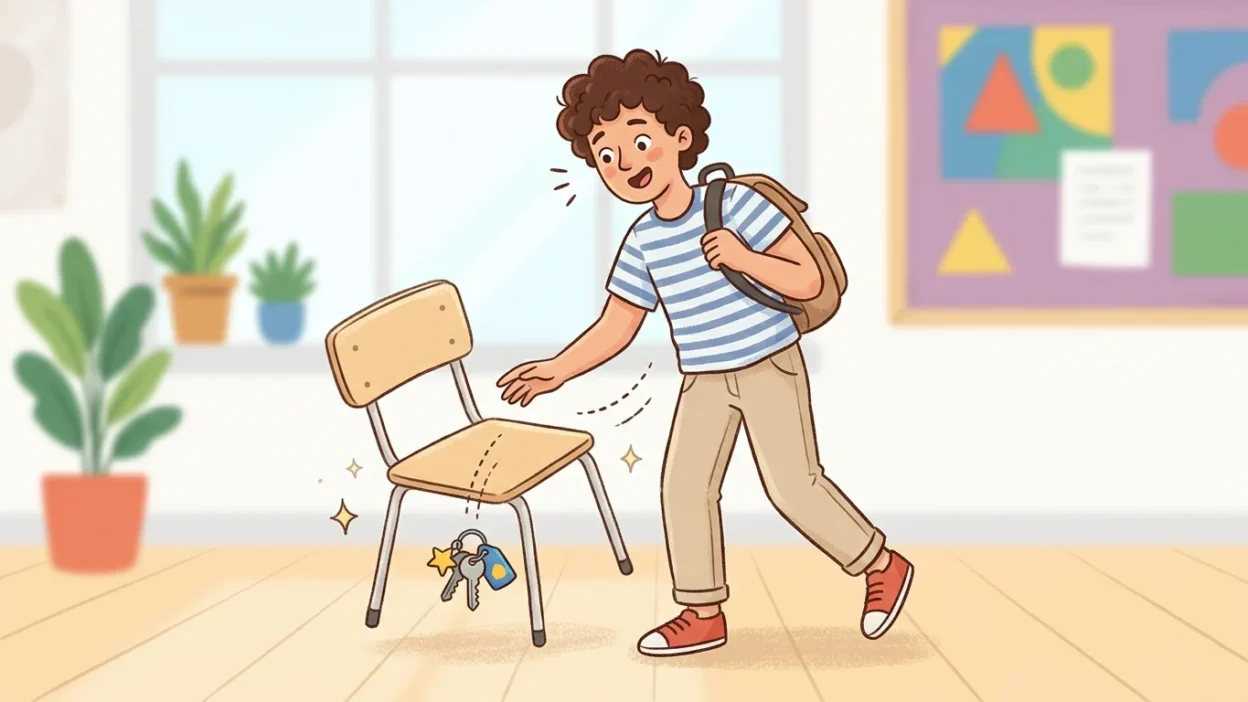
Imagine someone dropping their keys, bumping into a chair, and spilling their drink.
You can remember:
A klutz is someone who keeps having little accidents.
Final Verdict
Klutz means a clumsy or physically awkward person.
It is an informal noun and is often used humorously or playfully.
For example:
I’m such a klutz. I dropped my phone again.
It usually refers to physical clumsiness, not intelligence.
If you want a more neutral word, use clumsy:
She is clumsy.
If you want a casual, playful noun, you can say:
She is a klutz.
Frequently Asked Questions
What does “klutz” mean?
Klutz means a person who is clumsy or physically awkward, especially someone who often drops or knocks things over.
Is “klutz” a bad word?
No. It is not a swear word or vulgar expression. However, it can be mildly insulting because it describes someone as clumsy.
Is “klutz” an insult?
It can be, but it is often used jokingly or affectionately. Context and tone matter.
Can I call myself a klutz?
Yes. This is very common.
I’m such a klutz!
People often use the word about themselves when they make a small accident.
Is “klutz” a noun or adjective?
Klutz is a noun.
He is a klutz.
The adjective is clumsy.
He is clumsy.
Is “klutz” American slang?
It is an informal word strongly associated with American English. It originated from Yiddish.
What is the difference between “klutz” and “clumsy”?
Klutz is a noun meaning a clumsy person.
Clumsy is an adjective describing someone or something that lacks physical coordination.
What is a synonym for “klutz”?
Common alternatives include clumsy person, butterfingers, bumbler, and oaf, although their tones are different.
Remember This
Klutz = a clumsy person.
It is:
• An informal noun
• Usually about physical clumsiness
• Often playful or humorous
• Common in American English
Example:
“I’m such a klutz. I dropped my keys again.”
Conclusion
The word klutz is a useful informal English word for someone who is physically clumsy or awkward. It often describes a person who drops things, trips, spills things, bumps into objects, or has small accidents. The word is frequently used humorously, especially when people describe their own mistakes.
Remember that klutz is a noun, while clumsy is an adjective. You can say “He is a klutz” or “He is clumsy.” Although klutz can sometimes sound mildly insulting, it is often friendly and playful in casual conversation. When you want a more neutral expression, clumsy is usually the safer choice.

Lucas Luke is a passionate language writer and content creator at SimileHive, specializing in similes, idioms, metaphors, and figurative language. He enjoys making complex English expressions simple, engaging, and easy to understand for students, writers, and language enthusiasts through well-researched, practical content.