Children bring energy, joy, curiosity, and hope into the world. Because of these special qualities, writers often use metaphors to describe them in creative ways. Learning metaphors for children can improve creative writing, help students understand figurative language, and make stories more interesting.
In this article, you will learn 20 original metaphors for children, their meanings, explanations, and example sentences. These examples are written in simple English, making them perfect for students, ESL learners, teachers, and parents.
Quick Answer
Metaphors for children are figurative expressions that compare children to something else to highlight qualities such as innocence, energy, growth, or happiness.
Examples include Children are little suns, Children are fresh buds, and Children are open books. These metaphors make writing more colorful and easier to imagine.
What Are Metaphors for Children?
A metaphor says that one thing is another thing to create a strong image.
Example: Children are little stars.
This does not mean children are real stars. It means they shine brightly and bring happiness to others.
Metaphors are important literary devices used in poems, stories, speeches, and everyday conversation.
20 Original Metaphors for Children
1
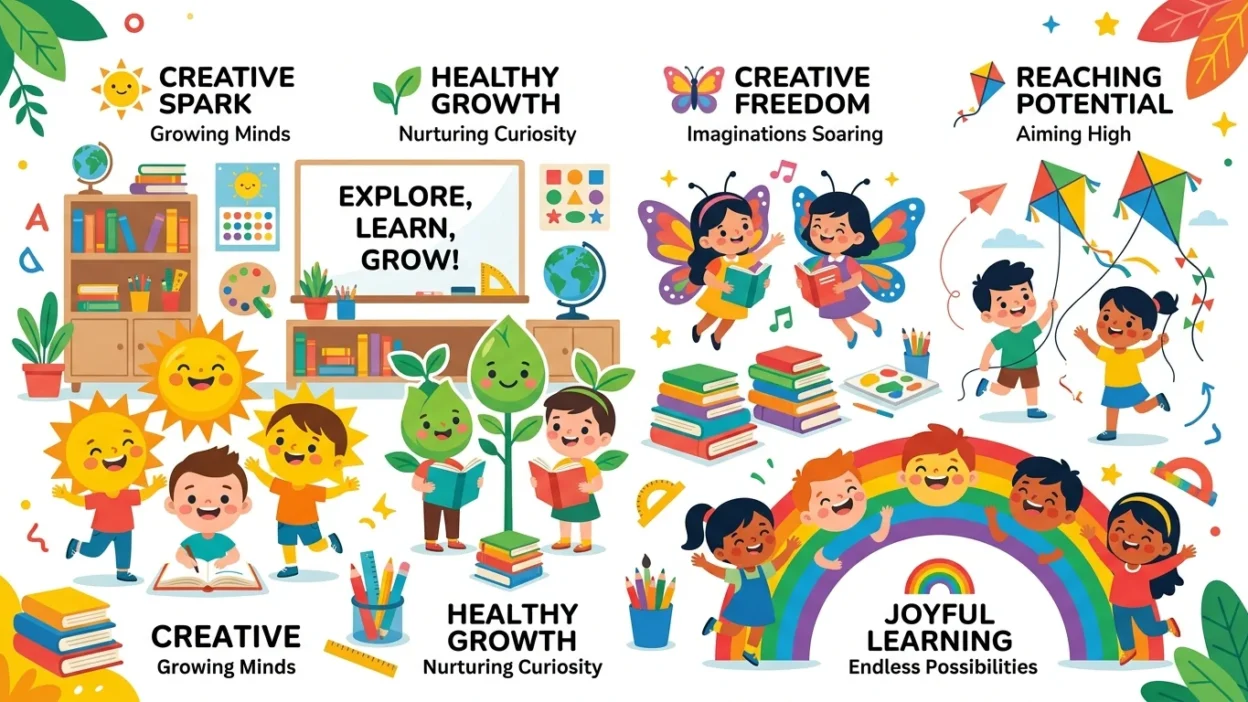
Children are little suns
Meaning: Children bring warmth and happiness.
Explanation: Just as the sun brightens the day, children brighten the lives of people around them.
Example sentences:
- The classroom felt cheerful because the children were little suns.
- Her grandchildren are little suns in her life.
2
Children are fresh buds
Meaning: Children are growing and full of potential.
Explanation: A bud has not fully opened yet, just like a child is still developing.
Example sentences:
- The teacher cared for her students as if they were fresh buds.
- Fresh buds need love and guidance to grow.
3
Children are open books
Meaning: Their feelings are easy to see.
Explanation: Children often express emotions honestly.
Example sentences:
- The little boy was an open book after losing his toy.
- Children are open books that reveal their hearts.
4
Children are spring gardens
Meaning: They are full of life and growth.
Explanation: A spring garden is colorful and lively.
Example sentences:
- The playground became a spring garden of laughter.
- Her classroom was a spring garden of young minds.
5
Children are tiny explorers
Meaning: They love discovering new things.
Explanation: Children are naturally curious.
Example sentences:
- The museum was filled with tiny explorers.
- Children are tiny explorers searching for answers.
6
Children are butterflies
Meaning: They grow and change beautifully.
Explanation: A butterfly represents transformation.
Example sentences:
- Over the years, the children became butterflies.
- Each student was a butterfly learning to fly.
7
Children are fireworks
Meaning: They are energetic and exciting.
Explanation: Fireworks burst with color and movement.
Example sentences:
- The birthday party was full of fireworks.
- Those children are fireworks at every celebration.
8
Children are seeds of tomorrow
Meaning: They represent the future.
Explanation: Seeds grow into something important later.
Example sentences:
- Children are the seeds of tomorrow’s world.
- Every child is a seed of tomorrow.
9
Children are rainbows
Meaning: They add color and joy.
Explanation: Rainbows symbolize beauty and happiness.
Example sentences:
- The neighborhood’s children were rainbows after the storm.
- Her laughter made the children seem like rainbows.
10
Children are clocks of curiosity
Meaning: Their minds keep asking questions.
Explanation: Curiosity keeps moving, just like a clock.
Example sentences:
- Children are clocks of curiosity that never stop.
- The class ticked with questions from those clocks of curiosity.
11
Children are morning songs
Meaning: They bring freshness and hope.
Explanation: Morning songs create a cheerful beginning.
Example sentences:
- The kindergarten echoed with morning songs.
- Those children are morning songs in our community.
12
Children are blank canvases
Meaning: They are ready for learning and experiences.
Explanation: A blank canvas can become many things.
Example sentences:
- Teachers help shape those blank canvases.
- Every child is a blank canvas of possibility.
13
Children are dancing leaves
Meaning: They are playful and active.
Explanation: Leaves move freely in the breeze.
Example sentences:
- The park was filled with dancing leaves.
- Those children became dancing leaves during recess.
14
Children are treasure chests
Meaning: They contain valuable talents and ideas.
Explanation: A treasure chest holds precious things.
Example sentences:
- Every student is a treasure chest of talents.
- Parents discover new treasures in their children each day.
15
Children are gentle rivers
Meaning: They keep moving and growing.
Explanation: A river flows forward continuously.
Example sentences:
- The children were gentle rivers of learning.
- Young minds are gentle rivers seeking knowledge.
16
Children are lanterns
Meaning: They bring light to others.
Explanation: Lanterns brighten dark places.
Example sentences:
- Her children were lanterns during difficult times.
- The school’s students acted like lanterns of kindness.
17
Children are puzzle pieces
Meaning: Each child is unique and important.
Explanation: A puzzle is incomplete without every piece.
Example sentences:
- Every student is a puzzle piece in the classroom.
- Families are stronger when all the puzzle pieces are together.
18
Children are kites
Meaning: They rise higher with support.
Explanation: A kite needs guidance to fly well.
Example sentences:
- Good teachers help children become kites.
- Those kites soared with encouragement.
19
Children are musical notes
Meaning: They create harmony together.
Explanation: Different notes make beautiful music.
Example sentences:
- The class was a collection of musical notes.
- Those children created a joyful melody together.
20
Children are sparks of wonder
Meaning: They inspire amazement and imagination.
Explanation: A spark starts something bright and exciting.
Example sentences:
- The museum was full of sparks of wonder.
- Children are sparks of wonder that keep the world curious.
Common Mistakes When Using Metaphors for Children
| Mistake | Better Choice |
|---|---|
| Mixing metaphor and simile | “Children are stars,” not “Children are like stars” |
| Using too many metaphors together | Choose one clear image |
| Making the metaphor confusing | Use simple, familiar objects |
| Repeating the same metaphor often | Use different creative comparisons |
Similar Expressions
- Children are stars
- Children are flowers
- Children are rays of light
- Children are young trees
- Children are drops of hope
- Children are wings of the future
Creative Writing Tips
- Choose a quality you want to describe, such as joy, curiosity, growth, or kindness.
- Think of an object that has the same quality.
- Write “Children are…” followed by the object.
- Check whether the comparison creates a clear picture.
- Use the metaphor naturally inside a sentence.
Example:
Quality: Curiosity
Object: Explorers
Metaphor: Children are tiny explorers.
Practice Questions
1. What does “Children are little suns” suggest?
Answer: They bring warmth and happiness.
2. Which metaphor shows growth and potential?
Answer: Children are fresh buds.
3. Which metaphor describes honesty?
Answer: Children are open books.
4. Which metaphor represents the future?
Answer: Children are seeds of tomorrow.
5. Which metaphor shows curiosity?
Answer: Children are tiny explorers.
6. Which metaphor means children change beautifully over time?
Answer: Children are butterflies.
7. Which metaphor suggests children are valuable?
Answer: Children are treasure chests.
8. Which metaphor means children bring color and joy?
Answer: Children are rainbows.
9. Which metaphor shows children need support to rise higher?
Answer: Children are kites.
10. Which metaphor inspires imagination and wonder?
Answer: Children are sparks of wonder.
FAQs
What is a metaphor for children?
A metaphor for children is a figurative expression that compares children to another object or idea to highlight a special quality.
Are metaphors and similes the same?
No. A metaphor says children are something, while a simile says children are like something.
Why do writers use metaphors for children?
Writers use them to make descriptions more vivid, emotional, and memorable.
Can students use these metaphors in essays?
Yes. These metaphors are suitable for school essays, stories, poems, and creative writing assignments.
What is the easiest metaphor for beginners?
Children are little stars. It is simple and easy to understand.
How do I create my own metaphor?
Choose a quality of children, such as joy or curiosity, and compare it to something that has the same quality.
Can a metaphor have a deeper meaning?
Yes. For example, Children are seeds of tomorrow suggests that children will shape the future.
Which metaphor is best for creative writing?
Children are sparks of wonder works well because it creates a strong and imaginative picture.
Conclusion
Metaphors for children make writing more colorful, meaningful, and engaging. Instead of simply saying that children are happy, curious, or growing, metaphors create vivid images that readers can easily imagine.
Expressions such as children are little suns, children are fresh buds, and children are sparks of wonder help writers show emotions and ideas in a creative way.
By learning these 20 original metaphors for children, students can improve their understanding of figurative language and develop stronger creative writing skills.
The key is to choose a metaphor that matches the quality you want to describe and use it naturally in your sentence. With practice, these literary devices will make your stories, essays, and poems much more interesting to read.

Charles Kevin is a passionate language writer and researcher at SimileHive, creating clear, engaging content about similes, idioms, metaphors, and figurative language to help readers improve English communication confidently every day.