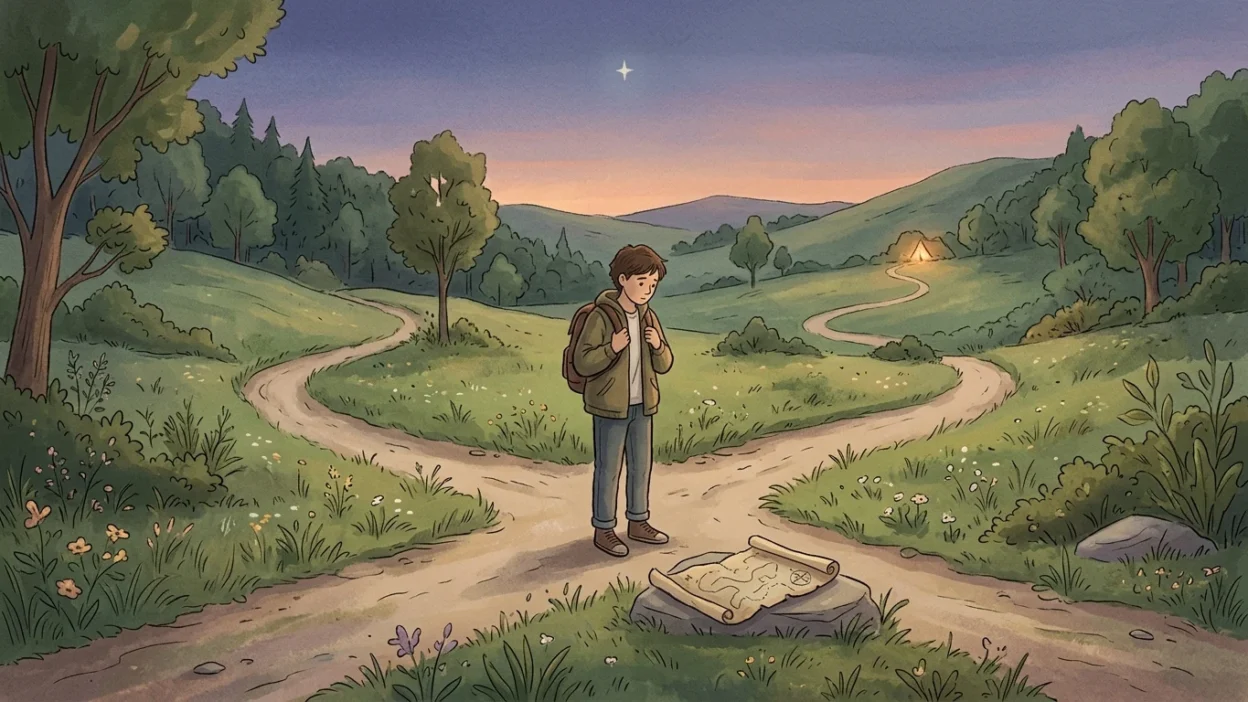
Sometimes, the word lost means more than not knowing where you are. A person can feel lost when they do not know what to do, where to go, or what choice to make.
Someone can also feel lost after losing a friend, a dream, an important chance, or something they deeply cared about. Metaphors for lost help us describe these feelings in a stronger and more colorful way.
Instead of simply saying, “I feel lost,” we can say, “I am a ship without a compass.” This creates a clear picture in the reader’s mind. The reader can imagine a ship moving across a huge ocean without knowing which way to go.
These metaphors are useful in everyday sentences, stories, poems, speeches, and creative writing. They can show confusion, loneliness, sadness, uncertainty, or the feeling of being without direction.
In this article, you will find 20 original metaphors for lost, along with simple meanings, explanations, and example sentences.
Quick Answer
Metaphors for lost describe a person, feeling, place, or situation as something without direction or a clear path. Common images include a ship without a compass, a forgotten road, a fading star, a broken map, and a boat drifting at sea. These comparisons make the feeling of being lost easier to picture.
What Are Metaphors for Lost?
Metaphors for lost are comparisons that describe being lost without using the words “like” or “as.”
They connect the feeling of being lost to something people can easily imagine. For example:
“He was a ship without a compass.”
This does not mean the person is really a ship. It means he does not know which direction to take.
The word lost can describe several different situations:
- Being unable to find a place
- Feeling confused about a decision
- Feeling alone
- Losing hope
- Losing someone important
- Not knowing what to do next
- Feeling separated from your goals
Metaphors make each of these ideas easier to understand.
What Can Lost Symbolize?
The idea of being lost can symbolize many feelings and situations.
| Symbol | What It Can Represent |
|---|---|
| A broken map | Confusion |
| A dark road | Uncertainty |
| A drifting boat | Lack of direction |
| A fading star | Losing hope |
| A locked door | Feeling stuck |
| An empty room | Loneliness |
| A missing key | Not knowing the answer |
| A maze | A difficult situation |
| A vanished path | Losing your way |
| A cloudy sky | Unclear thoughts |
The best metaphor depends on the feeling you want to show.
20 Metaphors for Lost
1. Lost Was a Ship Without a Compass
Meaning: This describes someone who has no clear direction.
Explanation: A ship needs a compass to help it know where to go. Without one, it can move without reaching the right place. This makes it a strong metaphor for someone who feels unsure about life or a decision.
Example sentences:
- After leaving school, he felt like a ship without a compass.
- Without a clear goal, she was a ship without a compass.
2. Lost Was a Road Without Signs
Meaning: This describes a situation where there is no clear guidance.
Explanation: Road signs help travelers know where they are going. Without signs, a person may not know which direction to choose.
Example sentences:
- My future felt like a road without signs.
- The difficult decision left him on a road without signs.
3. Lost Was a Broken Map
Meaning: This describes having no useful plan or guidance.
Explanation: A map normally shows the way, but a broken map cannot help a traveler. It represents confusion and uncertainty.
Example sentences:
- Her plans for the future were a broken map.
- After everything changed, his old plan became a broken map.
4. Lost Was a Boat Drifting at Sea
Meaning: This describes someone moving without knowing where they are going.
Explanation: A drifting boat moves wherever the water takes it. It has no clear destination.
Example sentences:
- Without a goal, he felt like a boat drifting at sea.
- After the sudden change, she became a boat drifting at sea.
5. Lost Was a Fading Star
Meaning: This represents losing hope or direction.
Explanation: A star can guide travelers in stories and old navigation methods. A fading star suggests that the guidance is slowly disappearing.
Example sentences:
- His dream became a fading star.
- Hope was a fading star in the middle of her sadness.
6. Lost Was a Maze Without an Exit
Meaning: This describes feeling trapped and unable to find a solution.
Explanation: A maze has many paths, but finding the exit can be difficult. It is a useful metaphor for confusing problems.
Example sentences:
- My thoughts were a maze without an exit.
- The problem felt like a maze without an exit.
7. Lost Was a Key Without a Lock
Meaning: This describes having something useful but not knowing how to use it.
Explanation: A key is made to open a lock. Without the right lock, the key has no clear purpose.
Example sentences:
- His skills felt like a key without a lock.
- She had many ideas, but they were keys without locks.
8. Lost Was a Forgotten Path
Meaning: This describes losing the direction you once knew.
Explanation: A path shows where someone can travel. A forgotten path represents a direction that has disappeared from memory.
Example sentences:
- His old dream was a forgotten path.
- After many years, she felt she was walking a forgotten path.
9. Lost Was a Candle in a Cave
Meaning: This describes someone who has very little guidance in a difficult situation.
Explanation: A candle gives light, but inside a huge cave, its small light may not show the whole way.
Example sentences:
- His small hope was a candle in a cave.
- Her single idea was a candle in a cave of confusion.
10. Lost Was a Letter Without an Address
Meaning: This describes something that has no clear destination.
Explanation: A letter needs an address to reach the right person. Without one, it may never arrive.
Example sentences:
- His dreams felt like a letter without an address.
- Her words were a letter without an address.
11. Lost Was a Footprint Washed Away
Meaning: This represents losing a clear path or connection to the past.
Explanation: Footprints can show where someone has walked. When they disappear, it becomes harder to follow the same path.
Example sentences:
- His old plans were footprints washed away.
- The memories felt like footprints washed away by time.
12. Lost Was a Clock Without Hands
Meaning: This describes having no sense of direction or progress.
Explanation: A clock without hands cannot show the time. It represents a person who does not know where they are in their journey.
Example sentences:
- After the failure, he felt like a clock without hands.
- Her life seemed like a clock without hands.
13. Lost Was a Door in the Dark
Meaning: This describes uncertainty about what choice to make.
Explanation: A door can lead somewhere new, but in darkness, you cannot see what is beyond it.
Example sentences:
- Every choice felt like a door in the dark.
- His future was a door in the dark.
14. Lost Was a Leaf in the Wind
Meaning: This describes someone being moved around without control.
Explanation: A leaf can be carried in different directions by the wind. It does not choose where it goes.
Example sentences:
- After the sudden change, she felt like a leaf in the wind.
- He was a leaf in the wind, unsure where he would land.
15. Lost Was a Voice in an Empty Room
Meaning: This describes feeling alone, unheard, or disconnected.
Explanation: A voice in an empty room has no one to answer it. The image creates a strong feeling of loneliness.
Example sentences:
- His thoughts were a voice in an empty room.
- She felt like a voice in an empty room after everyone left.
16. Lost Was a Train Without a Station
Meaning: This describes moving forward without knowing where you will stop.
Explanation: A train normally follows a route and reaches stations. A train without a station has no clear destination.
Example sentences:
- His life felt like a train without a station.
- Without a plan, she was a train without a station.
17. Lost Was a Shadow Looking for Its Owner
Meaning: This represents feeling separated from your identity or purpose.
Explanation: A shadow normally follows its owner. A shadow searching for its owner creates an image of something that has lost its connection.
Example sentences:
- After years of change, he felt like a shadow looking for its owner.
- She wandered through the city like a shadow looking for its owner.
18. Lost Was a Puzzle With a Missing Piece
Meaning: This describes something that feels incomplete or difficult to understand.
Explanation: A puzzle cannot be fully completed when an important piece is missing. It represents confusion and a lack of understanding.
Example sentences:
- His future was a puzzle with a missing piece.
- The strange situation felt like a puzzle with a missing piece.
19. Lost Was a Bridge to Nowhere
Meaning: This describes a path that does not lead to a clear destination.
Explanation: A bridge normally connects two places. A bridge to nowhere represents effort without a clear result.
Example sentences:
- His old plan became a bridge to nowhere.
- Without a goal, the journey felt like a bridge to nowhere.
20. Lost Was a Starless Night
Meaning: This describes deep confusion, sadness, or a lack of hope.
Explanation: Stars can provide light in the night sky. A starless night feels darker and gives no clear point to follow.
Example sentences:
- After losing his dream, life felt like a starless night.
- Her thoughts became a starless night of confusion.
Comparison Table
| Metaphor | Main Meaning | Feeling |
|---|---|---|
| Ship without a compass | No direction | Confusion |
| Road without signs | No guidance | Uncertainty |
| Broken map | No useful plan | Confusion |
| Boat drifting at sea | No control | Uncertainty |
| Fading star | Losing hope | Sadness |
| Maze without an exit | Feeling trapped | Frustration |
| Key without a lock | No clear purpose | Confusion |
| Forgotten path | Lost direction | Sadness |
| Candle in a cave | Little guidance | Fear |
| Letter without an address | No destination | Uncertainty |
| Footprint washed away | Lost connection | Sadness |
| Clock without hands | No sense of progress | Confusion |
| Door in the dark | Unknown choice | Fear |
| Leaf in the wind | No control | Uncertainty |
| Voice in an empty room | Loneliness | Sadness |
| Train without a station | No destination | Confusion |
| Shadow looking for its owner | Lost identity | Loneliness |
| Puzzle with a missing piece | Incomplete understanding | Confusion |
| Bridge to nowhere | No clear result | Frustration |
| Starless night | No hope or direction | Sadness |
How to Use Metaphors for Lost
Metaphors for lost work best when they match the exact feeling you want to describe.
For confusion
Use images such as:
- A broken map
- A maze without an exit
- A puzzle with a missing piece
- A road without signs
Example:
“His thoughts were a maze without an exit.”
For loneliness
Use images such as:
- A voice in an empty room
- A shadow looking for its owner
- A starless night
Example:
“She felt like a voice in an empty room.”
For uncertainty
Use images such as:
- A boat drifting at sea
- A door in the dark
- A leaf in the wind
Example:
“His future was a door in the dark.”
For losing hope
Use images such as:
- A fading star
- A candle in a cave
- A starless night
Example:
“Hope was a fading star.”
Common Mistakes When Using Metaphors for Lost
1. Making the metaphor too complicated
A metaphor should be easy to understand.
Weak:
“My feelings were an invisible mathematical puzzle inside an endless universe.”
Better:
“My feelings were a maze.”
2. Using the wrong image
Make sure the image matches the feeling.
If you want to describe confusion, a maze works well. If you want to describe loneliness, an empty room may work better.
3. Explaining the metaphor too much
Let the image do some of the work.
Instead of writing:
“He was a ship without a compass, which means he did not know what direction to take.”
In creative writing, you can simply write:
“He was a ship without a compass.”
4. Mixing several metaphors
Avoid putting many unrelated images into one sentence.
Confusing:
“She was a ship, a candle, a road, and a broken clock.”
Choose one strong metaphor instead.
Similar Expressions for Lost
Several expressions are close to the idea of being lost.
| Expression | Meaning |
|---|---|
| At a crossroads | Unsure which choice to make |
| Without direction | Not knowing what to do |
| In the dark | Lacking information |
| Off the path | Moving away from the right direction |
| Going in circles | Making no progress |
| In a maze | Facing confusion |
| Drifting | Moving without a clear goal |
| At sea | Confused or uncertain |
These expressions can also make writing more interesting.
Metaphors for Lost in Creative Writing
Metaphors can make a story feel more emotional. They help readers see what a character is experiencing.
For example:
“After his best friend moved away, the city became a maze without an exit.”
The city is not really a maze. The metaphor shows that the character feels confused and alone.
Another example is:
“Her future was a road without signs.”
This tells readers that she does not know what direction her life should take.
In poems, metaphors can be even shorter:
“I am a boat drifting at sea.”
This simple line can suggest confusion, loneliness, and uncertainty at the same time.
Metaphors also help writers avoid repeating the word lost again and again.
Tips for Creating Your Own Metaphors for Lost
1. Think about the exact feeling
Ask yourself:
What kind of lost do I mean?
Is it sadness, confusion, loneliness, fear, or uncertainty?
2. Choose something people know
Use familiar objects and places such as:
- Roads
- Maps
- Boats
- Doors
- Stars
- Keys
- Rooms
- Clocks
- Puzzles
- Paths
3. Connect the object to the feeling
For example, a map gives direction.
So:
“I was a broken map.”
This can represent a person who has lost their sense of direction.
4. Keep it simple
The strongest metaphors are often easy to picture.
“I was a leaf in the wind.”
Readers can quickly understand the feeling of having little control.
5. Make the image fit your sentence
A metaphor should support your message instead of distracting from it.
Practice Questions
1. Which metaphor best shows a person with no direction?
A. A bright window
B. A ship without a compass
C. A warm blanket
D. A full basket
Answer: B
Explanation: A ship without a compass does not know which direction to follow.
2. Which metaphor best represents loneliness?
A. A voice in an empty room
B. A strong bridge
C. A sunny garden
D. A locked suitcase
Answer: A
Explanation: A voice in an empty room suggests that someone is alone and has no one to answer.
3. What does “a broken map” represent?
A. Happiness
B. Clear direction
C. Confusion
D. Friendship
Answer: C
Explanation: A broken map cannot properly guide a traveler, so it represents confusion.
4. What does “a fading star” suggest?
A. Growing hope
B. Losing hope
C. Great success
D. Strong friendship
Answer: B
Explanation: A fading star becomes less visible, so it can represent hope slowly disappearing.
5. Which metaphor shows a lack of control?
A. A leaf in the wind
B. A locked door
C. A bright lamp
D. A strong tree
Answer: A
Explanation: A leaf can be carried in different directions by the wind.
6. What does “a puzzle with a missing piece” suggest?
A. Everything is clear
B. Something is incomplete
C. Someone is successful
D. A journey is finished
Answer: B
Explanation: A missing puzzle piece keeps the picture incomplete.
7. Which metaphor best shows uncertainty about a choice?
A. A door in the dark
B. A golden crown
C. A warm fire
D. A quiet garden
Answer: A
Explanation: A door in the dark represents a choice when you cannot see what is ahead.
8. What does “a boat drifting at sea” suggest?
A. Clear direction
B. No clear destination
C. Complete success
D. Strong friendship
Answer: B
Explanation: A drifting boat moves without a planned destination.
9. Which metaphor can represent deep sadness and a lack of hope?
A. A starless night
B. A bright window
C. A growing tree
D. A golden key
Answer: A
Explanation: A starless night creates an image of darkness and little guidance.
10. Write your own metaphor for feeling lost.
Possible answer: “My future was a road without signs.”
Explanation: A road without signs gives no clear information about which direction to take, so it works well for uncertainty.
Frequently Asked Questions
What is a metaphor for feeling lost?
A useful metaphor is “I am a ship without a compass.” It shows that a person does not know which direction to take.
What is a metaphor for being lost in life?
“My life was a road without signs” is a simple metaphor for feeling unsure about the future or not knowing which path to choose.
What is a metaphor for feeling lost and alone?
“I was a voice in an empty room” works well because it combines the ideas of being alone and feeling unheard.
What is a metaphor for losing hope?
“Hope was a fading star” is a strong metaphor. It shows that hope is slowly becoming weaker.
What is a metaphor for confusion?
“My thoughts were a maze without an exit” clearly shows confusion and difficulty finding an answer.
Can metaphors for lost be used in poems?
Yes. Metaphors are very useful in poems because they can express deep feelings with a few simple words.
Can I use these metaphors in an essay?
Yes, especially in personal essays, stories, or descriptive writing. Choose a metaphor that fits the subject and tone of your writing.
Why are metaphors useful for describing lost feelings?
They turn an invisible feeling into a picture that readers can imagine. This makes writing clearer, stronger, and more emotional.
Conclusion
Metaphors for lost help us describe feelings that can be difficult to explain with simple words. Being lost can mean feeling confused, lonely, uncertain, without hope, or unsure about the future.
A ship without a compass can show a lack of direction. A voice in an empty room can show loneliness. A fading star can represent disappearing hope. A maze without an exit can show deep confusion.
The best metaphor depends on the exact feeling you want to express. Keep your comparisons simple, clear, and easy to picture. With the right metaphor, a short sentence can create a strong image in the reader’s mind.

Lucas Luke is a passionate language writer and content creator at SimileHive, specializing in similes, idioms, metaphors, and figurative language. He enjoys making complex English expressions simple, engaging, and easy to understand for students, writers, and language enthusiasts through well-researched, practical content.