
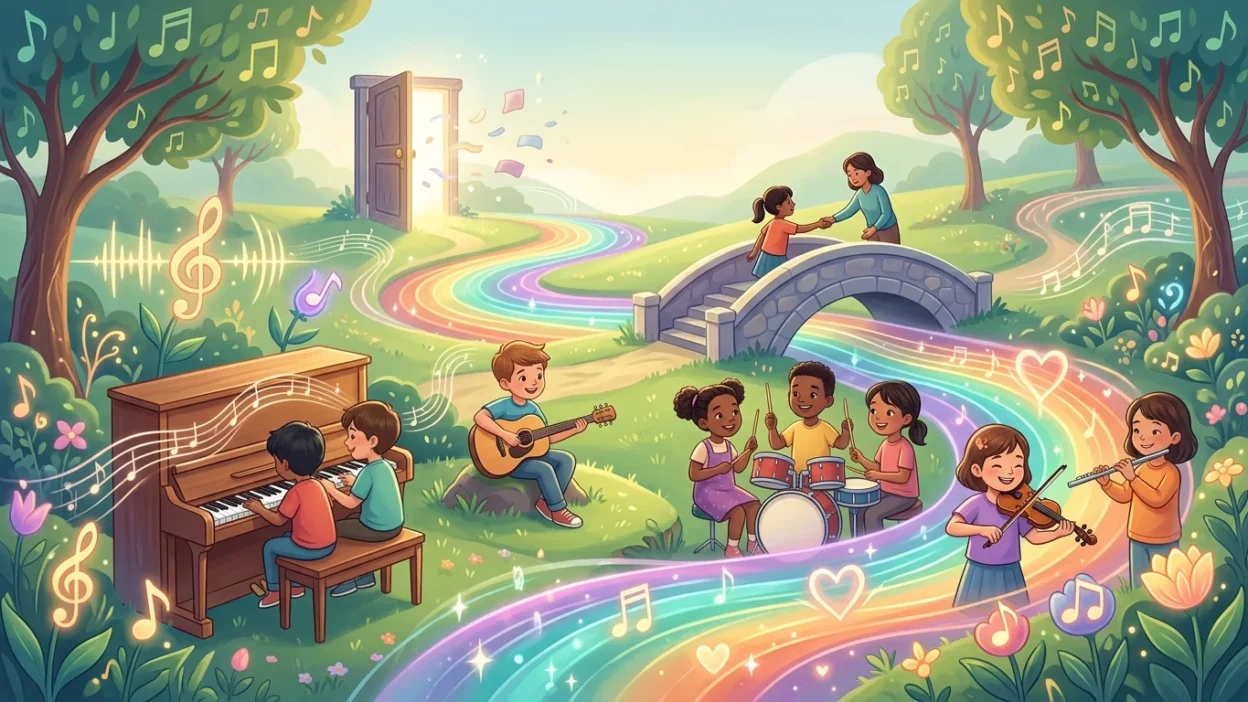
Music is more than a collection of sounds. It can carry feelings, tell stories, create memories, and bring people together. A gentle song can make someone feel calm, while a powerful beat can fill a room with energy. Because music can create so many feelings, writers often use metaphors to describe it in creative ways.
Metaphors for music compare songs, sounds, melodies, or rhythms to familiar things. For example, saying “Music is a river” does not mean music is actually made of water. It means the music can flow smoothly from one note to another. These comparisons help readers imagine how music sounds and feels.
Music metaphors are useful in poems, stories, essays, speeches, song reviews, and creative writing. They can describe music as a voice, a journey, a painting, a heartbeat, or a doorway to memories. In this article, you will find 20 original metaphors for music, each with a meaning, explanation, and two example sentences. You will also learn how to use music metaphors and create your own.
Quick Answer
Metaphors for music describe music by comparing it to something familiar. Music can be a river, a heartbeat, a storyteller, a rainbow, or a doorway. These comparisons help readers understand the sound, mood, rhythm, and emotional power of music in a simple and memorable way.
What Are Metaphors for Music?
Metaphors for music are comparisons that describe music as something else. They do not use the words “like” or “as.” Instead, they directly connect music with another image.
For example:
“Music is a river.”
Music is not literally a river. The metaphor suggests that music can flow smoothly, change direction, and carry listeners from one feeling to another.
Music can be described through many different images. A fast song might become a racing horse, while a peaceful melody might become a soft cloud. A sad song might become a rainy window, while an exciting song might become a burst of fireworks.
These metaphors are a type of figurative language. They make descriptions more colorful and help readers imagine sounds that they cannot see.
What Can Music Symbolize?
Music can symbolize many ideas and emotions.
Music Can Symbolize Emotion
Music can express happiness, sadness, love, excitement, fear, hope, and many other feelings.
Music Can Symbolize Memories
A familiar song can bring back memories of people, places, or special moments.
Music Can Symbolize Freedom
Music allows people to express thoughts and feelings in creative ways.
Music Can Symbolize Connection
People from different backgrounds can enjoy the same song and feel connected through it.
Music Can Symbolize Life
Music has rhythm, pauses, changes, and different moments, much like life itself.
Music Can Symbolize Storytelling
A song can tell a story without using many words. Its melody and rhythm can help carry the message.
20 Metaphors for Music
1. Music Is a River
Meaning: Music flows smoothly from one moment to another.
Explanation: A river moves continuously along its path. Music can also flow from note to note, carrying listeners through different emotions.
Example sentences:
- The melody was a river carrying me into a peaceful dream.
- Her piano music became a river of gentle sounds.
2. Music Is a Heartbeat
Meaning: Music can feel alive and full of emotion.
Explanation: A heartbeat gives rhythm to life. Music also has rhythm, making the heartbeat a natural metaphor for its energy and movement.
Example sentences:
- The drum was the heartbeat of the song.
- Music became a heartbeat that filled the quiet room.
3. Music Is a Storyteller
Meaning: Music can tell a story or communicate feelings.
Explanation: A storyteller uses words to share experiences. Music can tell stories through melody, rhythm, instruments, and lyrics.
Example sentences:
- The violin was a storyteller without words.
- Every note became a storyteller of her childhood.
4. Music Is a Color Palette
Meaning: Music contains many different moods and feelings.
Explanation: A painter uses different colors to create an image. A musician uses sounds, instruments, rhythms, and tones to create a musical picture.
Example sentences:
- The song was a color palette of joy and sadness.
- The orchestra painted a color palette of rich sounds.
5. Music Is a Doorway
Meaning: Music can lead us into another emotional or imaginative experience.
Explanation: A doorway allows us to enter another place. Music can make listeners feel as if they have entered another world or memory.
Example sentences:
- The old song was a doorway to her childhood.
- The melody became a doorway into a peaceful world.
6. Music Is a Blanket of Sound
Meaning: Music can surround and comfort us.
Explanation: A blanket provides warmth and comfort. Gentle music can create a similar feeling by surrounding the listener with soft sounds.
Example sentences:
- The quiet piano was a blanket of sound around the room.
- Her favorite song became a blanket of sound on a lonely evening.
7. Music Is a Sunrise
Meaning: Music can bring hope, energy, and a fresh feeling.
Explanation: A sunrise marks the beginning of a new day. Uplifting music can create a similar feeling of freshness and hope.
Example sentences:
- The cheerful song was a sunrise after a difficult day.
- Her voice became a sunrise in the silent room.
8. Music Is a Journey
Meaning: Music takes listeners through different sounds and emotions.
Explanation: A journey has a beginning, middle, and end. A song can also take listeners through changing moods and musical sections.
Example sentences:
- The symphony was a journey through joy, fear, and hope.
- Every song on the album was a journey to a different place.
9. Music Is a Bridge
Meaning: Music can connect people and cultures.
Explanation: A bridge connects two places. Music can connect people who may speak different languages or come from different backgrounds.
Example sentences:
- Music was a bridge between two very different cultures.
- The song became a bridge between strangers in the crowd.
10. Music Is a Flame
Meaning: Music can create passion, energy, and strong feelings.
Explanation: A flame gives light and warmth. Powerful music can create a similar sense of energy inside a person.
Example sentences:
- The guitar solo was a flame of pure energy.
- Music kept the flame of her passion alive.
11. Music Is a Mirror
Meaning: Music can reflect our feelings and experiences.
Explanation: A mirror reflects what is placed in front of it. Music can reflect emotions that we may have difficulty expressing ourselves.
Example sentences:
- That sad song was a mirror of his feelings.
- Music became a mirror for everything she could not say.
12. Music Is a Rainbow
Meaning: Music contains many different moods, tones, and emotions.
Explanation: A rainbow contains many colors. Music can also contain many emotional and musical colors.
Example sentences:
- The concert was a rainbow of sounds and emotions.
- Her voice painted a rainbow across the song.
13. Music Is a Gentle Breeze
Meaning: Music can feel soft, peaceful, and calming.
Explanation: A gentle breeze moves quietly and creates a soothing feeling. Soft music can have the same effect.
Example sentences:
- The acoustic melody was a gentle breeze through the room.
- Her quiet singing felt like a gentle breeze on a summer evening.
14. Music Is a Firework
Meaning: Music can be exciting, powerful, and full of surprises.
Explanation: Fireworks burst into bright displays of light and sound. Energetic music can create a similar feeling.
Example sentences:
- The final song was a firework of sound.
- The drummer turned the concert into a firework of energy.
15. Music Is a Time Machine
Meaning: Music can bring back memories from the past.
Explanation: A time machine is imagined as something that can take us to another time. Familiar songs can make us remember earlier moments in our lives.
Example sentences:
- That old song was a time machine to my school days.
- Her mother’s favorite melody became a time machine filled with memories.
16. Music Is a Conversation
Meaning: Music can communicate ideas and emotions between people.
Explanation: A conversation allows people to share thoughts. Instruments and voices can also seem to answer one another within a song.
Example sentences:
- The piano and violin were having a conversation.
- The entire orchestra sounded like a conversation between many voices.
17. Music Is an Ocean
Meaning: Music can be deep, wide, and full of different experiences.
Explanation: An ocean is vast and contains many layers. Music can also contain countless styles, sounds, emotions, and meanings.
Example sentences:
- She wanted to dive into the ocean of music.
- The world of music was an ocean of endless possibilities.
18. Music Is a Feather
Meaning: Music can feel light, soft, and gentle.
Explanation: A feather is light and delicate. Quiet melodies can create the same feeling of softness.
Example sentences:
- The piano notes were feathers floating through the air.
- Her voice was a feather resting on the melody.
19. Music Is a Compass
Meaning: Music can guide our emotions and thoughts.
Explanation: A compass helps people find direction. Music can guide us toward a certain mood or help us through difficult moments.
Example sentences:
- Music became a compass during his difficult journey.
- Her favorite songs were a compass that helped her find peace.
20. Music Is a Garden of Sounds
Meaning: Music contains many different sounds growing together beautifully.
Explanation: A garden contains different plants, colors, and shapes. Music can combine different instruments, voices, rhythms, and melodies into one beautiful experience.
Example sentences:
- The orchestra created a garden of sounds.
- Every instrument added another flower to the garden of music.
Comparison Table of Metaphors for Music
| Metaphor | What It Represents | Main Idea |
|---|---|---|
| River | Flow | Smooth movement |
| Heartbeat | Rhythm | Life and energy |
| Storyteller | Communication | Telling a story |
| Color palette | Emotion | Different moods |
| Doorway | Imagination | Entering another experience |
| Blanket of sound | Comfort | Feeling surrounded |
| Sunrise | Hope | Fresh energy |
| Journey | Experience | Moving through emotions |
| Bridge | Connection | Bringing people together |
| Flame | Passion | Strong emotion |
| Mirror | Reflection | Showing feelings |
| Rainbow | Variety | Many emotions |
| Gentle breeze | Peace | Calm sounds |
| Firework | Excitement | Energy and surprise |
| Time machine | Memory | Returning to the past |
| Conversation | Communication | Musical interaction |
| Ocean | Depth | Endless possibilities |
| Feather | Softness | Gentle sound |
| Compass | Guidance | Emotional direction |
| Garden of sounds | Beauty | Different sounds together |
How to Use Metaphors for Music
Music metaphors can be used in many types of writing. The best metaphor depends on what you want to say about the music.
In Creative Writing
Use music metaphors to describe the sound without simply saying that it is beautiful.
For example:
“The violin was a storyteller, telling a sad tale without words.”
This gives the music a personality.
In Essays
Metaphors can make essays about music more interesting.
For example:
“Music is a bridge that connects people across languages and cultures.”
This clearly explains how music can bring people together.
In Poetry
Music metaphors are especially useful in poems because they can create strong emotional images.
For example:
“Your song is a river,
flowing through my memories.”
In Song Reviews
Instead of simply saying that a song is exciting, you can write:
“The final chorus is a firework of sound.”
This creates a stronger picture for the reader.
In Everyday Conversation
You can use simple metaphors when describing music to friends.
For example:
“That song is a time machine.”
This means the song brings back strong memories.
Common Mistakes When Using Metaphors for Music
1. Choosing a Metaphor That Does Not Match the Song
A soft lullaby may not be a good match for a metaphor about fireworks. Think about the mood and energy of the music first.
2. Making the Comparison Too Complicated
A simple metaphor is usually easier to understand.
For example:
“Music is a river.”
This is clear and memorable.
3. Using Too Many Metaphors at Once
Avoid comparing one song to an ocean, a fire, a train, a bird, and a storm in the same sentence. Choose one strong image.
4. Forgetting the Mood
Think about whether the music is happy, sad, peaceful, exciting, mysterious, or powerful. Your metaphor should match that mood.
5. Explaining the Metaphor Too Much
Give readers enough information to understand the comparison, but allow them to imagine the image themselves.
Similar Expressions for Music
There are many creative expressions that can be used when talking about music.
- A song of joy
- A melody of memories
- A rhythm of life
- A voice of the heart
- A world of sound
- A language without borders
- A wave of emotion
- A song of hope
- A dance of notes
- A symphony of feelings
- A rhythm of freedom
- A voice for the soul
These expressions can make descriptions of music more creative and emotional.
Metaphors for Music in Creative Writing
Music metaphors can turn simple descriptions into memorable writing.
Simple Description
“The music was beautiful.”
Metaphorical Description
“The music was a garden of sounds blooming in the quiet room.”
The second sentence gives readers a picture of the music.
Here is another example:
Simple description:
“The song reminded her of childhood.”
Metaphorical description:
“The song was a time machine that carried her back to childhood.”
This metaphor makes the memory feel stronger.
Music can also be used to represent emotions:
- Sad music is a rainy window.
- Happy music is a room full of sunlight.
- Peaceful music is a soft cloud.
- Exciting music is a burst of fireworks.
- Romantic music is a letter from the heart.
- Powerful music is thunder in the soul.
Tips for Creating Your Own Metaphors for Music
Think About How the Music Moves
Does it flow, bounce, race, or drift?
You might compare it to:
- A river
- A wave
- A bird
- A racing horse
Think About How the Music Feels
Does it feel warm, peaceful, exciting, or sad?
You might compare it to:
- A blanket
- A sunrise
- A flame
- A quiet room
Think About What the Music Does
Does it bring memories, connect people, or tell a story?
You might compare it to:
- A time machine
- A bridge
- A storyteller
- A doorway
Think About Its Sound
Is it loud, soft, fast, slow, bright, or deep?
Choose an image that has a similar quality.
Keep the Metaphor Clear
A strong metaphor does not need many words.
For example:
“Music is a heartbeat.”
This simple comparison immediately connects music with rhythm, life, and emotion.
Practice Questions
1. What does “Music is a river” mean?
Answer: It means music can flow smoothly from one sound to another.
Explanation: A river moves continuously, making it a useful metaphor for the movement of music.
2. What does “Music is a heartbeat” represent?
Answer: It represents rhythm and life.
Explanation: A heartbeat has a steady rhythm, just as music often has a beat.
3. Complete the sentence: “Music is a _____ that connects people.”
Answer: Bridge.
Explanation: A bridge connects two places, while music can connect people and cultures.
4. Which metaphor is best for music that brings back memories?
Answer: Music is a time machine.
Explanation: A familiar song can make someone remember a past experience.
5. What does “Music is a storyteller” mean?
Answer: It means music can communicate stories and feelings.
Explanation: Music can express ideas and emotions through melody, rhythm, instruments, and words.
6. Which metaphor best represents peaceful music?
Answer: Music is a gentle breeze.
Explanation: A gentle breeze is soft and calming, just like peaceful music can be.
7. What does “Music is a firework” suggest?
Answer: It suggests that the music is exciting, energetic, and powerful.
Explanation: Fireworks are bright, dramatic, and full of energy.
8. Write your own metaphor for sad music.
Answer: “Sad music is a rainy window.”
Explanation: A rainy window can create a quiet and emotional image that fits the mood of sad music.
9. What does “Music is a mirror” mean?
Answer: It means music can reflect our emotions.
Explanation: A mirror reflects an image, while music can reflect feelings that are inside us.
10. Why do writers use metaphors for music?
Answer: Writers use them to make descriptions of music more vivid and emotional.
Explanation: Music cannot be seen, so metaphors give readers images that help them imagine how it sounds and feels.
Frequently Asked Questions
What is a good metaphor for music?
“Music is a river” is a good metaphor because it shows how music can flow smoothly from one note to another.
What is a metaphor for beautiful music?
“Beautiful music is a garden of sounds” is a useful metaphor because it suggests that different sounds come together to create something pleasing.
What is a metaphor for music and emotions?
“Music is a mirror” is a strong metaphor because music can reflect feelings such as happiness, sadness, love, and hope.
What is a metaphor for music that brings back memories?
“Music is a time machine” works well because familiar songs can take our thoughts back to important moments from the past.
Can I use music metaphors in an essay?
Yes. Music metaphors can make essays more interesting and help explain the emotional, cultural, or creative power of music.
What is a metaphor for a song?
A song can be described as “a storyteller,” “a doorway,” “a river,” or “a journey,” depending on what the song communicates.
How do you describe music in creative writing?
You can describe music by comparing it to things that have similar qualities. For example, soft music can be a gentle breeze, while energetic music can be a firework.
Why are music metaphors important?
Music metaphors help readers imagine sounds and emotions that cannot easily be described with ordinary words. They make writing more creative and memorable.
Conclusion
Metaphors for music give writers a creative way to describe sounds, feelings, memories, and musical experiences. Music can be a river that flows through the mind, a heartbeat that gives rhythm to life, a storyteller that speaks without words, or a time machine that brings back old memories. Each metaphor highlights a different quality of music.
When creating your own music metaphors, think about the sound and feeling you want to describe. Peaceful music may be a gentle breeze, while powerful music may be a flame or firework.
A meaningful song may be a mirror of the heart, and music that brings people together can be a bridge. With simple and clear comparisons, you can make your essays, poems, stories, and descriptions of music much more vivid.

Charles Kevin is a passionate language writer and researcher at SimileHive, creating clear, engaging content about similes, idioms, metaphors, and figurative language to help readers improve English communication confidently every day.