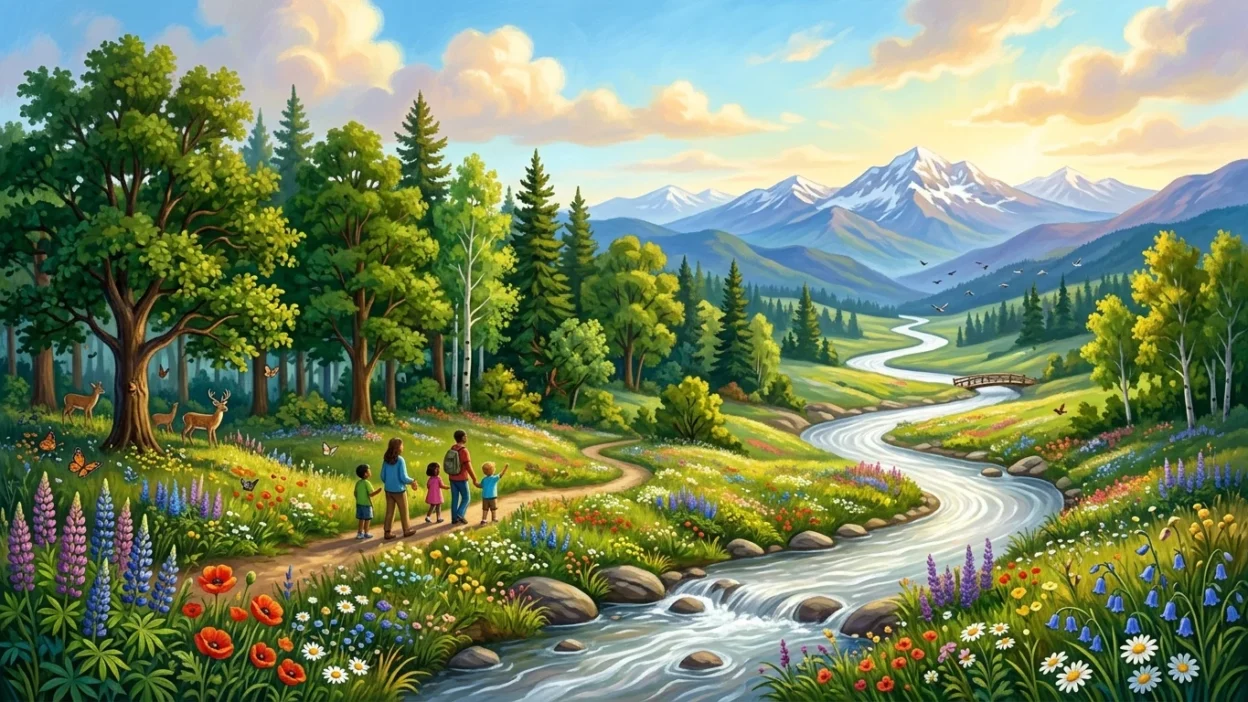
Nature is full of beauty, movement, color, and life. From tall trees and flowing rivers to bright flowers, quiet forests, and wide oceans, nature gives us many wonderful images to describe the world around us.
Writers often use metaphors to make these images more powerful and interesting. Instead of saying that a forest is very quiet, a writer might say, “The forest is a sleeping giant.” This does not mean the forest is really a giant. It creates a picture in the reader’s mind and gives the forest a special feeling.
Metaphors for nature are useful in stories, poems, essays, speeches, and everyday writing. They can help describe beauty, strength, peace, change, danger, growth, and mystery. Nature itself gives us many ideas for figurative language because natural things often remind us of human feelings and experiences.
In this article, you will find 20 original metaphors for nature, along with their meanings, explanations, and example sentences. You will also learn how to use nature metaphors in creative writing and how to create your own.
Quick Answer
Metaphors for nature describe natural things by comparing them directly to something else. For example, “The forest is a green cathedral” compares the forest to a peaceful and beautiful place of wonder. Nature metaphors can express beauty, peace, strength, growth, mystery, freedom, and change.
What Are Metaphors for Nature?
Metaphors for nature are examples of figurative language that describe the natural world in an imaginative way. A metaphor says that one thing is another thing to show a shared quality.
For example:
“The river is a silver ribbon.”
The river is not actually made of silver, and it is not a ribbon. The metaphor compares the river to a ribbon because both can look long, narrow, and shining.
Nature metaphors can describe:
- Trees
- Flowers
- Rivers
- Mountains
- Oceans
- Forests
- Clouds
- Sunlight
- Wind
- Seasons
- Animals
- The natural world as a whole
These comparisons make simple descriptions more vivid and memorable.
What Can Nature Symbolize?
Nature can symbolize many ideas and feelings. The meaning depends on the image a writer chooses.
| Natural Image | Possible Symbolic Meaning |
|---|---|
| Tree | Strength, growth, stability |
| River | Change, movement, life |
| Mountain | Strength, challenge, success |
| Flower | Beauty, growth, hope |
| Forest | Mystery, adventure, peace |
| Ocean | Freedom, depth, power |
| Sun | Hope, happiness, energy |
| Moon | Mystery, calmness, dreams |
| Wind | Change, freedom, movement |
| Seed | Potential, beginnings, growth |
Because nature has so many different forms, it can represent almost any idea in creative writing.
20 Metaphors for Nature
1. Nature is a living painting
Meaning: Nature is full of beautiful colors, shapes, and scenes.
Explanation: A painting is created from colors and images. Nature also creates beautiful views through flowers, trees, mountains, rivers, skies, and animals.
Example sentences:
- Nature is a living painting filled with green forests and bright flowers.
- As we walked through the valley, it felt like we had entered a living painting.
2. Nature is the Earth’s heartbeat
Meaning: Nature is the life and energy that keeps the planet alive.
Explanation: A heartbeat shows that a living body is alive. This metaphor presents nature as the life force of Earth.
Example sentences:
- The sound of birds and flowing water felt like the Earth’s heartbeat.
- Protecting forests means protecting the Earth’s heartbeat.
3. The forest is a green cathedral
Meaning: A forest can feel peaceful, grand, and sacred.
Explanation: A cathedral is often a large and beautiful place where people feel quiet and thoughtful. Tall trees can create a similar feeling.
Example sentences:
- The quiet forest was a green cathedral filled with tall trees.
- We stood silently inside the green cathedral of the forest.
4. The river is a silver ribbon
Meaning: A river can look long, narrow, and shining.
Explanation: A ribbon can stretch across a surface in a long, smooth shape. When sunlight reflects on water, a river may look like a silver ribbon.
Example sentences:
- The river was a silver ribbon winding through the valley.
- From the hill, we could see the silver ribbon of water below.
5. The mountain is Earth’s shoulder
Meaning: A mountain is a strong and solid part of the land.
Explanation: A shoulder supports part of the body. This metaphor gives the mountain a strong and dependable quality.
Example sentences:
- The huge mountain rose like Earth’s shoulder above the village.
- Clouds rested gently on Earth’s rocky shoulder.
6. The ocean is a blue wilderness
Meaning: The ocean is a vast, wild, and largely unexplored place.
Explanation: A wilderness is a natural area that has not been greatly changed by people. The ocean can feel just as wide, powerful, and mysterious.
Example sentences:
- The ocean is a blue wilderness filled with hidden life.
- The sailors traveled deep into the blue wilderness.
7. The sun is nature’s golden lamp
Meaning: The sun gives light and warmth to the world.
Explanation: A lamp provides light in a dark place. The sun does something similar on a much larger scale.
Example sentences:
- Nature’s golden lamp rose above the hills.
- When the golden lamp appeared, the valley became bright.
8. The wind is nature’s messenger
Meaning: The wind carries movement, sounds, scents, and changes from one place to another.
Explanation: A messenger travels from one place to another carrying something. The wind can carry the smell of flowers, the sound of leaves, or a feeling of changing conditions.
Example sentences:
- The wind was nature’s messenger, carrying the smell of pine trees.
- Nature’s messenger whispered through the open window.
9. Flowers are nature’s smiles
Meaning: Flowers bring beauty, happiness, and brightness to the world.
Explanation: A smile often shows joy. Colorful flowers can create a similar feeling of happiness.
Example sentences:
- The garden was filled with nature’s smiles.
- Tiny flowers appeared like nature’s smiles after spring arrived.
10. The sky is a giant canvas
Meaning: The sky constantly displays changing colors and shapes.
Explanation: Artists use a canvas to create paintings. The sky seems to do the same naturally through clouds, sunlight, stars, and sunsets.
Example sentences:
- The sunset turned the giant canvas of the sky orange and pink.
- Clouds moved slowly across the giant canvas above us.
11. Trees are the lungs of the land
Meaning: Trees help support life on Earth by producing oxygen and supporting healthy ecosystems.
Explanation: Lungs help a body breathe. This metaphor compares trees to lungs because they play an important role in supporting life.
Example sentences:
- The forest stood like the lungs of the land.
- We must protect the trees because they are the lungs of the land.
12. The moon is a night lantern
Meaning: The moon gives gentle light during the night.
Explanation: A lantern provides light in darkness. The moon can seem like a natural lantern hanging high above the Earth.
Example sentences:
- The moon was a quiet lantern above the sleeping village.
- The night lantern reflected softly on the lake.
13. Nature is a wise teacher
Meaning: Nature can teach people important lessons about life.
Explanation: Nature shows cycles of growth, change, patience, survival, and renewal. These can help people understand life.
Example sentences:
- Nature is a wise teacher that shows us how to accept change.
- By watching the seasons, I learned from nature’s lessons.
14. The rain is nature’s drummer
Meaning: Rain creates rhythmic sounds as it falls.
Explanation: A drummer makes repeated beats with an instrument. Rain can create a similar rhythm when it hits roofs, windows, leaves, and the ground.
Example sentences:
- Nature’s drummer played softly against the roof.
- The rain became a loud drummer during the evening.
15. The meadow is a green carpet
Meaning: A meadow can look like a wide, soft, green surface.
Explanation: A carpet covers a floor with a smooth surface. A grassy meadow can look like a giant natural carpet spread across the land.
Example sentences:
- The meadow looked like a green carpet beneath the hills.
- Children ran across the green carpet of grass.
16. Autumn is nature’s artist
Meaning: Autumn creates beautiful changes in the colors of leaves.
Explanation: An artist changes a blank surface by adding colors. Autumn seems to paint trees with red, orange, yellow, and brown leaves.
Example sentences:
- Autumn was nature’s artist, painting the trees in warm colors.
- The forest showed the beautiful work of nature’s artist.
17. The desert is a sea of sand
Meaning: A desert can stretch across a huge area like an ocean.
Explanation: A sea is wide and seems to continue for a long distance. A desert can create a similar feeling because its sand stretches toward the horizon.
Example sentences:
- The travelers crossed the endless sea of sand.
- The desert looked like a golden sea of sand beneath the sun.
18. The garden is a treasure chest
Meaning: A garden contains many beautiful and valuable things.
Explanation: A treasure chest holds precious objects. A garden can hold colorful flowers, herbs, fruits, insects, and other forms of life.
Example sentences:
- The little garden was a treasure chest of colors and scents.
- Every corner of the garden revealed something from its treasure chest.
19. The dawn is nature’s new beginning
Meaning: Dawn represents a fresh start.
Explanation: Dawn begins a new day. It can therefore represent hope, renewal, opportunity, and a chance to begin again.
Example sentences:
- Dawn was nature’s new beginning after a long night.
- She watched the sunrise and thought of it as nature’s new beginning.
20. Nature is a giant storybook
Meaning: Nature contains countless stories, patterns, and lessons.
Explanation: A storybook contains many pages filled with different events and ideas. Nature also has endless things to discover, from animal life to changing seasons.
Example sentences:
- Nature is a giant storybook waiting to be explored.
- Every tree, river, and mountain seemed to be a page in nature’s storybook.
Comparison Table of Nature Metaphors
| Metaphor | Main Idea |
|---|---|
| Nature is a living painting | Beauty |
| Nature is the Earth’s heartbeat | Life |
| The forest is a green cathedral | Peace |
| The river is a silver ribbon | Movement |
| The mountain is Earth’s shoulder | Strength |
| The ocean is a blue wilderness | Mystery |
| The sun is nature’s golden lamp | Light |
| The wind is nature’s messenger | Change |
| Flowers are nature’s smiles | Happiness |
| The sky is a giant canvas | Beauty |
| Trees are the lungs of the land | Life |
| The moon is a night lantern | Calmness |
| Nature is a wise teacher | Learning |
| The rain is nature’s drummer | Rhythm |
| The meadow is a green carpet | Peace |
| Autumn is nature’s artist | Change |
| The desert is a sea of sand | Vastness |
| The garden is a treasure chest | Discovery |
| The dawn is nature’s new beginning | Hope |
| Nature is a giant storybook | Mystery and learning |
How to Use Metaphors for Nature
Nature metaphors can make your writing more colorful and meaningful. You can use them in many different types of writing.
In Creative Writing
Instead of writing:
“The forest was quiet.”
You could write:
“The forest was a sleeping giant.”
The second sentence creates a stronger picture in the reader’s mind.
In Poems
Metaphors are especially useful in poetry because they can express feelings through images.
For example:
“The moon was a silver lantern,
hanging above the quiet trees.”
The metaphor helps create a peaceful picture.
In Essays
Nature metaphors can make an essay more interesting when you are describing the environment, seasons, or human connections with nature.
For example:
“Forests are the lungs of the land, supporting countless forms of life.”
In Stories
A character can experience nature through metaphors.
For example:
“The river was a restless traveler, always moving toward somewhere new.”
This can make the setting feel alive.
Common Mistakes When Using Nature Metaphors
1. Making the comparison too confusing
A metaphor should help the reader understand an idea. If the connection is unclear, the metaphor may confuse the reader.
2. Using too many metaphors
One strong metaphor can be better than several weak ones. Too many comparisons can make writing difficult to follow.
3. Mixing different comparisons
Try not to begin with one comparison and suddenly change to another unrelated one.
For example:
“The river was a silver ribbon flying through the forest like a hungry lion.”
This combines several different images and becomes confusing.
4. Explaining the metaphor too much
Sometimes writers explain every part of a metaphor. Let the image speak for itself when possible.
5. Using the same common metaphor repeatedly
Try creating fresh comparisons instead of using the same images in every piece of writing.
Similar Expressions About Nature
Nature can also be described with similes, personification, and other forms of figurative language.
Here are a few examples:
Simile:
“The river moved like a silver ribbon.”
Metaphor:
“The river was a silver ribbon.”
Personification:
“The river whispered to the stones.”
Imagery:
“Cool water moved over smooth stones beneath the morning sun.”
These literary devices can work together to make writing more vivid.
Metaphors for Nature in Creative Writing
Nature is one of the best subjects for creative writing because it gives writers endless images.
A forest can become a mysterious kingdom. A river can become a traveler. A mountain can become a guardian. A flower can become a symbol of hope. A sunset can become a farewell.
For example:
“The old forest was a silent kingdom. Tall trees stood like watchful guards while sunlight slipped through the leaves. A narrow river moved between the roots, carrying tiny pieces of the sky with it.”
Notice how the metaphors make the forest feel almost like a character in the story.
You can also connect nature to emotions.
For example:
“Her sadness was a gray cloud hanging over the garden.”
Or:
“His hope was a small seed waiting beneath the soil.”
These comparisons allow writers to show feelings without simply naming them.
Tips for Creating Your Own Nature Metaphors
1. Choose one part of nature
Start with something simple, such as a tree, river, flower, cloud, mountain, or sunset.
2. Think about its qualities
Ask yourself what it looks like, sounds like, feels like, or does.
A river might be:
- Moving
- Shining
- Deep
- Quiet
- Powerful
3. Find something with similar qualities
A moving river might remind you of a traveler.
A shining river might remind you of a ribbon.
A powerful river might remind you of a strong horse.
4. Make a direct comparison
Instead of saying:
“The river moves quickly.”
Try:
“The river is a racing horse.”
5. Make sure the image fits
The best metaphor creates a clear picture and matches the feeling you want to express.
Practice Questions
1. What does the metaphor “The river is a silver ribbon” mean?
Answer: The river looks long, narrow, and shining.
Explanation: A ribbon can be long and narrow, while sunlight can make river water shine like silver.
2. What does “Nature is the Earth’s heartbeat” suggest?
Answer: Nature is an important source of life and energy.
Explanation: A heartbeat shows life in a living body. The metaphor compares nature to that vital rhythm.
3. Which metaphor best describes flowers as symbols of happiness?
A. Flowers are nature’s smiles.
B. Flowers are heavy stones.
C. Flowers are locked doors.
D. Flowers are dark caves.
Answer: A. Flowers are nature’s smiles.
Explanation: A smile often represents happiness, just as colorful flowers can bring joy.
4. What does “The sky is a giant canvas” mean?
Answer: The sky displays changing colors and shapes like a painting.
Explanation: A canvas is used by artists to create pictures. The sky can appear like a natural painting.
5. What does “The rain is nature’s drummer” describe?
Answer: The rhythm and sound of falling rain.
Explanation: Rain can make repeated beats as it falls on roofs, windows, leaves, and the ground.
6. What does “The garden is a treasure chest” suggest?
Answer: The garden contains many beautiful and valuable things.
Explanation: A treasure chest holds precious objects, while a garden can contain flowers, fruits, plants, and other natural treasures.
7. Which metaphor best represents hope?
A. The dawn is nature’s new beginning.
B. The ocean is a blue wilderness.
C. The desert is a sea of sand.
D. The rain is nature’s drummer.
Answer: A. The dawn is nature’s new beginning.
Explanation: A new day can represent a fresh start and renewed hope.
8. What does “The forest is a green cathedral” suggest?
Answer: The forest feels peaceful, grand, and special.
Explanation: The metaphor compares the tall trees and quiet space of a forest to the peaceful atmosphere of a cathedral.
9. Create a metaphor for a strong tree.
Answer: “The tree is an old warrior.”
Explanation: A strong tree can resemble a warrior because both can stand firmly through difficult conditions.
10. Create a metaphor for a beautiful sunset.
Answer: “The sunset is a golden curtain closing the day.”
Explanation: A curtain can close at the end of a performance. The sunset can seem to bring the day to an end in a beautiful way.
Frequently Asked Questions
What is a metaphor for nature?
A metaphor for nature is a direct comparison that describes a natural object or the natural world as something else. For example, “The forest is a green cathedral” compares a forest to a peaceful and grand place.
Why do writers use metaphors for nature?
Writers use nature metaphors to create strong mental pictures and express ideas such as beauty, peace, growth, strength, mystery, freedom, and change.
What is a good metaphor for the natural world?
“Nature is a living painting” is a simple and effective metaphor because nature contains many colors, shapes, sounds, and beautiful scenes.
What is a metaphor for a forest?
“The forest is a green cathedral” is a metaphor for a forest. It suggests that the forest is peaceful, beautiful, grand, and worthy of respect.
What is a metaphor for a river?
“The river is a silver ribbon” is a metaphor for a river. It describes the river as long, narrow, smooth, and shining.
What is a metaphor for the sun?
“The sun is nature’s golden lamp” is a metaphor for the sun because it gives light and warmth to the world.
Can nature metaphors be used in essays?
Yes. Nature metaphors can make essays more interesting and help explain ideas about the environment, life, growth, change, and beauty.
Are nature metaphors useful in poetry?
Yes. Nature metaphors are very useful in poetry because they allow poets to express emotions and ideas through beautiful natural images.
Conclusion
Metaphors for nature help us see the natural world in fresh and creative ways. A river can become a silver ribbon, a forest can become a green cathedral, and the sun can become a golden lamp. These comparisons do more than describe what we see. They can also express feelings, ideas, and deeper meanings.
When you use nature metaphors in your writing, think about the qualities of the natural object first. Then find another object or idea that shares those qualities. A good metaphor should create a clear picture in the reader’s mind.
if you are writing a poem, story, essay, or simple sentence, nature provides endless inspiration. Look closely at the world around you, and you will find countless metaphors waiting to be written.

Lucas Luke is a passionate language writer and content creator at SimileHive, specializing in similes, idioms, metaphors, and figurative language. He enjoys making complex English expressions simple, engaging, and easy to understand for students, writers, and language enthusiasts through well-researched, practical content.