“With regard to” and “with regards to” are commonly used expressions that mean about, concerning, or in relation to something. For example, “With regard to your request, we will respond tomorrow” simply means “Regarding your request, we will respond tomorrow.” Both expressions are widely understood, especially in professional and business communication.
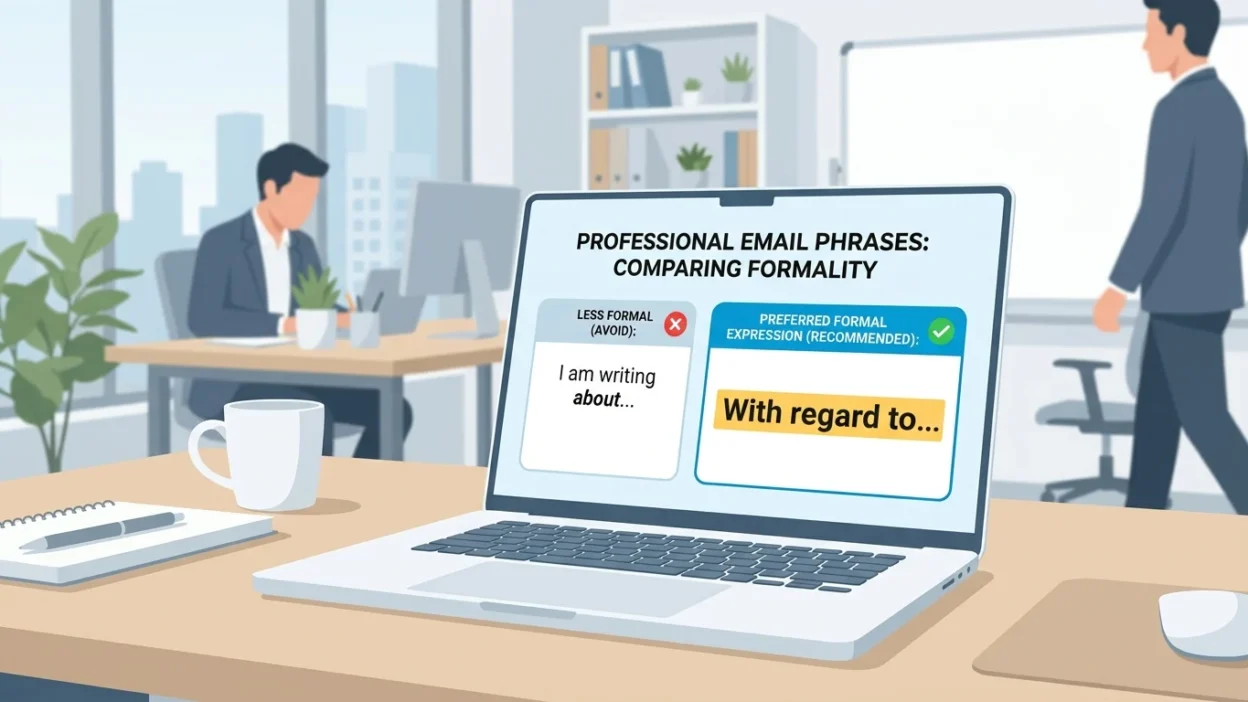
However, there is a small usage difference worth knowing. “With regard to” is the more traditional and generally preferred form when you mean “concerning” or “about.” “With regards to” is also commonly used, but many style guides and language experts consider it less standard in this particular expression.
The word “regards” is perfectly correct in other expressions, especially “give my regards” and “best regards.” Understanding this distinction can help you write clearer and more natural English.
Quick Answer
“With regard to” and “with regards to” can both mean “about” or “concerning,” but “with regard to” is generally the preferred form. Use “with regard to” in professional and formal writing when you mean “concerning.” “With regards” is also correct in expressions such as “Best regards.”
Why People Confuse Them
The confusion comes from the fact that both “regard” and “regards” are real English words.
We commonly see:
“With regard to your email…”
and:
“With regards to your email…”
Because both expressions are widely used, it can be difficult to know which one is preferred.
The easiest answer is:
With regard to = preferred for “concerning”
The expression uses regard in the singular.
With Regard To
“With regard to” means:
about
concerning
in relation to
It is often used in formal and professional communication.
Examples
“With regard to your application, we will contact you soon.”
Meaning:
“Regarding your application, we will contact you soon.”
Another example:
“I am writing with regard to your recent complaint.”
This means:
“I am writing concerning your recent complaint.”
With Regards To
“With regards to” is also widely used to mean “about” or “concerning.”
For example:
“With regards to your request, we need more information.”
Many English speakers use this expression naturally, and its meaning is clear.
However, when you want the most standard and polished form for formal writing, “with regard to” is generally the safer choice.
With Regard To vs With Regards To at a Glance
| Expression | Meaning | Usage |
|---|---|---|
| With regard to | About or concerning | Preferred |
| With regards to | About or concerning | Commonly used |
| Regarding | About or concerning | Very natural |
| In regard to | About or concerning | Correct |
| As regards | Concerning | Correct but more formal |
What Is the Main Difference?
The main difference is the number of the noun:
regard is singular.
regards is plural.
But the important point is that the established expression meaning “concerning” is traditionally “with regard to.”
So:
“With regard to your question, here is the answer.”
is the preferred form.
“With regards to” is commonly seen and understood, but it is often treated as a less standard variation of the expression.
When to Use “With Regard To”
Use “with regard to” when you want to introduce a topic or subject.
1. In Business Emails
“With regard to your order, we have confirmed the delivery date.”
2. In Formal Writing
“With regard to this issue, further discussion is necessary.”
3. When Answering a Question
“With regard to your question, the answer is yes.”
4. When Discussing a Request
“With regard to your request, we need additional information.”
5. When Referring to a Previous Message
“I am writing with regard to your previous email.”
When to Use “With Regards To”
You may encounter “with regards to” in everyday business writing and general communication.
For example:
“With regards to the meeting, I will send the details later.”
The meaning is clear, but if you want a more standard formal expression, use:
“With regard to the meeting, I will send the details later.”
You can also avoid the issue completely by using “regarding.”
“Regarding the meeting, I will send the details later.”
Two Useful Comparison Tables
| Phrase | Meaning | Formality |
|---|---|---|
| With regard to | About | Formal |
| With regards to | About | Formal, but less preferred |
| Regarding | About | Neutral and professional |
| In regard to | About | Formal |
| As regards | Concerning | Formal |
| Less Preferred | Preferred Alternative |
|---|---|
| With regards to your request | With regard to your request |
| With regards to the meeting | With regard to the meeting |
| With regards to your application | With regard to your application |
| With regards to this issue | With regard to this issue |
| With regards to your question | With regard to your question |
12 Examples
1. Your Request
“With regard to your request, we will respond shortly.”
This means “concerning your request.”
2. Your Application
“With regard to your application, we need one additional document.”
3. A Meeting
“With regard to tomorrow’s meeting, please arrive at 10 a.m.”
4. A Complaint
“I am writing with regard to your complaint.”
5. A Question
“With regard to your question, the answer is no.”
6. A Project
“With regard to the new project, we have several ideas to discuss.”
7. A Payment
“With regard to your payment, everything has been received.”
8. A Contract
“We have a few questions with regard to the contract.”
9. An Order
“With regard to your order, the items will arrive tomorrow.”
10. A Policy
“The company has introduced new rules with regard to employee safety.”
11. An Appointment
“With regard to your appointment, please confirm the date.”
12. A Previous Email
“I am contacting you with regard to your previous email.”
Common Mistakes
Mistake 1: Assuming “With Regards To” Is Always Wrong
“With regards to” is widely used and easily understood. The issue is mainly one of standard usage and preference.
If you want the more traditional form, choose:
“With regard to…”
Mistake 2: Confusing It With “Best Regards”
“Regards” is completely correct in:
“Best regards,”
Here, “regards” means good wishes or greetings.
This is different from:
“With regard to…”
which means “concerning.”
Mistake 3: Using “With Regard” Without “To”
When using this expression to mean “concerning,” the normal form is:
“With regard to your question…”
Not:
“With regard your question…”
The word to is needed.
Mistake 4: Overusing the Expression
“With regard to” is correct, but using it repeatedly can make your writing sound unnecessarily formal.
Instead of:
“With regard to the meeting, with regard to the schedule, and with regard to the venue…”
You can write:
“Regarding the meeting, schedule, and venue…”
This is shorter and more natural.
Memory Trick
Remember:
One topic = with regard to
Think of “regard” as meaning “consideration” or “attention.”
So:
“With regard to your question”
means:
“Concerning your question.”
For the safest formal choice, remember:
With regard to = preferred
American vs British English
“With regard to” is standard in both American English and British English.
“With regards to” is also encountered in both varieties, although “with regard to” is generally the more established form when the expression means “concerning.”
“Regarding” is also natural in both varieties and is often a simple alternative.
Similar Expressions
Regarding
“Regarding” means “about” or “concerning.”
“Regarding your application, we need more information.”
This is concise and natural.
In Regard To
“In regard to” also means “concerning.”
“In regard to your request, we will contact you soon.”
As Regards
“As regards” means “concerning.”
“As regards your proposal, we have several questions.”
It sounds more formal.
Concerning
“Concerning” can directly replace the expression.
“Concerning your application, we need more information.”
About
“About” is the simplest alternative.
“I am writing about your recent request.”
With Regard To vs Regarding
Both expressions have the same basic meaning.
“With regard to your application, we need more information.”
“Regarding your application, we need more information.”
“Regarding” is shorter and often sounds more natural in modern professional writing.
| Expression | Meaning | Style |
|---|---|---|
| With regard to | About | Formal |
| Regarding | About | Neutral and professional |
| About | About | Simple and everyday |
| Concerning | About | Formal |
Final Verdict
When you mean “about” or “concerning,” “with regard to” is the preferred form.
“With regards to” is widely used and understood, but “with regard to” is generally the safer choice for polished formal and professional writing.
Also remember that “Best regards” is completely correct. The word “regards” has a different function there.
FAQs
Is “with regard to” correct?
Yes. “With regard to” is a standard expression meaning “about” or “concerning.”
Is “with regards to” correct?
It is widely used and understood, but “with regard to” is generally preferred when the expression means “concerning.”
Which is more formal, “with regard to” or “with regards to”?
Both can sound formal, but “with regard to” is the more established form for formal writing.
Can I use “regarding” instead of “with regard to”?
Yes. “Regarding” has essentially the same meaning and is often shorter and more natural.
Is “with regard to” good for business emails?
Yes. It is commonly used in professional and business communication.
Is “best regards” correct?
Yes. “Best regards” is a standard polite closing in emails and letters. Here, “regards” means good wishes or greetings.
What is the simplest alternative to “with regard to”?
“Regarding” or “about” are simple alternatives.
Should I use “with regard to” or “with regards to” in formal writing?
Use “with regard to” if you want the more standard and traditional form.
Remember This
When “with regard to” means “about” or “concerning,” use:
With regard to
For example:
“With regard to your request, we will contact you soon.”
You can also use:
“Regarding your request…”
And remember:
Best regards
is a different expression and is perfectly correct.
Conclusion
“With regard to” and “with regards to” are commonly confused because both are used to introduce a subject or topic. They generally communicate the same idea, but “with regard to” is the more established and preferred form when you mean “about” or “concerning.”
For professional emails, formal writing, and situations where you want the safest standard choice, use “with regard to.” If you want a shorter and more natural alternative, “regarding” works very well. Just remember that “Best regards” is a separate expression, so the plural form “regards” is completely correct in that context.

Lucas Luke is a passionate language writer and content creator at SimileHive, specializing in similes, idioms, metaphors, and figurative language. He enjoys making complex English expressions simple, engaging, and easy to understand for students, writers, and language enthusiasts through well-researched, practical content.