
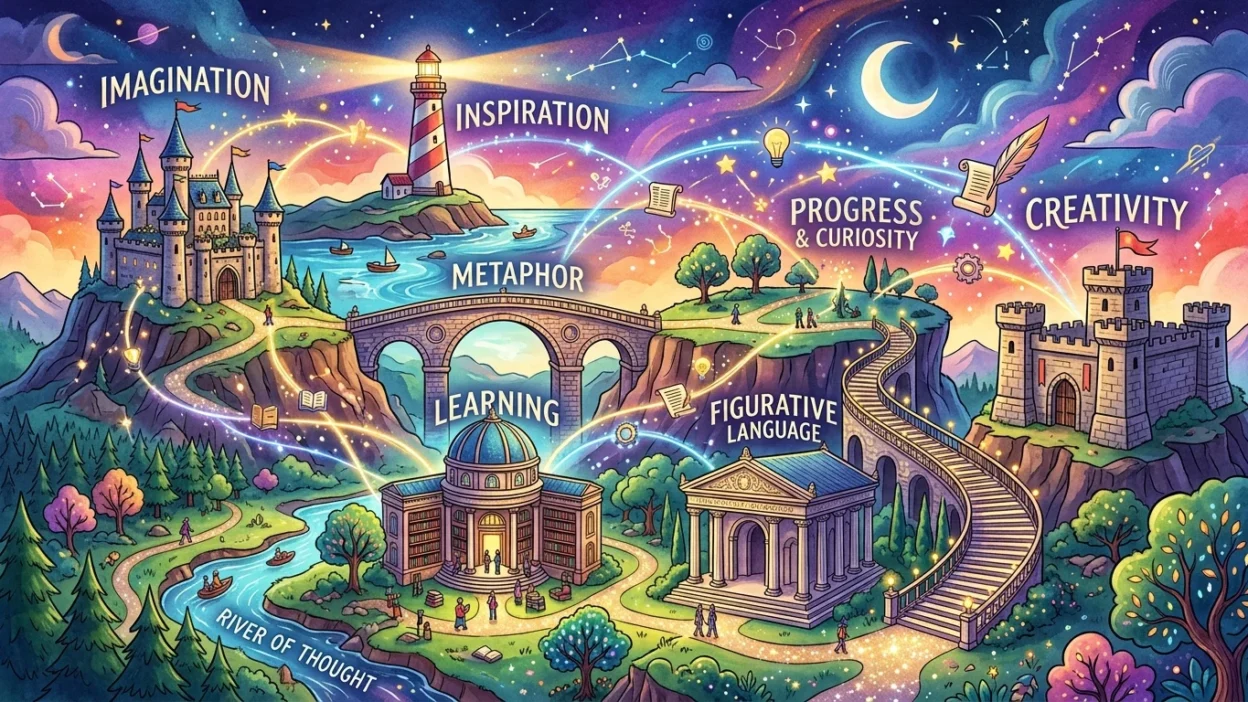
People often use metaphors for buildings in everyday speech, poetry, stories, and creative writing. Buildings are more than bricks and walls. They can represent strength, dreams, memories, protection, success, or even human emotions. Writers use building metaphors to make ideas easier to understand and more interesting to read.
For example, a person may be called a lighthouse in difficult times, a school may be described as a bridge to the future, or a family may be called a strong fortress. These comparisons help readers imagine ideas clearly. Metaphors are important literary devices because they add colour, emotion, and meaning to writing.
In this article, you will learn the meaning of metaphors for buildings, how to use them, and 20 original examples with explanations and sentences. You will also discover common mistakes, similar expressions, creative writing tips, practice questions, FAQs, and more.
Quick Answer
Metaphors for buildings are figurative expressions that compare people, places, ideas, or emotions to buildings without using words like as or like. They symbolize strength, growth, safety, support, memories, and dreams. Writers use these metaphors to create vivid images and make writing more powerful and meaningful.
What Are Metaphors for Buildings?
A metaphor is a figure of speech that says one thing is another thing to create a stronger image.
Buildings often symbolize:
- Strength
- Protection
- Stability
- Growth
- History
- Success
- Community
- Dreams
For example:
- Her heart is a castle.
- Education is a bridge to opportunity.
- Their friendship is a strong foundation.
These expressions do not mean exactly what they say. Instead, they create deeper meaning.
Why Writers Use Building Metaphors
Building metaphors help readers:
- Understand complex ideas
- Feel emotions more deeply
- Create strong mental pictures
- Add beauty to writing
- Make stories memorable
They are commonly used in:
- Poems
- Stories
- Speeches
- Articles
- Everyday conversations
20 Original Metaphors for Buildings
| Metaphor | Main Meaning |
|---|---|
| A fortress | Protection |
| A lighthouse | Guidance |
| A bridge | Connection |
| A tower | Ambition |
| A castle | Strength |
| A foundation | Support |
| A doorway | Opportunity |
| A window | Understanding |
| A shelter | Safety |
| A temple | Respect |
| A library | Knowledge |
| A prison | Restriction |
| A palace | Luxury |
| A workshop | Creativity |
| A staircase | Progress |
| A wall | Separation |
| A home | Comfort |
| A monument | Memory |
| A marketplace | Activity |
| A city | Complexity |
1. A Fortress
Meaning: Strong protection and security.
Explanation: A fortress keeps danger away, so it can represent a person or place that offers safety.
Example Sentences:
- My grandmother’s house is a fortress of love.
- Their friendship became a fortress during difficult times.
2. A Lighthouse
Meaning: Guidance and hope.
Explanation: A lighthouse helps people find the right path.
Example Sentences:
- The teacher was a lighthouse for her students.
- His advice became a lighthouse in uncertain times.
3. A Bridge
Meaning: Connection.
Explanation: Bridges join places together.
Example Sentences:
- Kindness is a bridge between people.
- Education is a bridge to success.
4. A Tower
Meaning: Ambition and achievement.
Explanation: Towers rise high, symbolizing goals.
Example Sentences:
- Her dreams became a tower reaching the sky.
- Hard work built a tower of success.
5. A Castle
Meaning: Strength and dignity.
Explanation: Castles represent power and protection.
Example Sentences:
- His confidence is a castle that fear cannot enter.
- Their family stood like a castle in difficult times.
6. A Foundation
Meaning: Support.
Explanation: Foundations hold buildings upright.
Example Sentences:
- Trust is the foundation of friendship.
- Honesty is the foundation of success.
7. A Doorway
Meaning: New opportunities.
Explanation: Doorways lead to new places.
Example Sentences:
- The scholarship became a doorway to a brighter future.
- Reading is a doorway to imagination.
8. A Window
Meaning: Understanding.
Explanation: Windows allow us to see clearly.
Example Sentences:
- Books are windows to different cultures.
- Science is a window into the natural world.
9. A Shelter
Meaning: Safety.
Explanation: Shelters protect people.
Example Sentences:
- Her kindness was a shelter during difficult days.
- Family is a shelter in life’s storms.
10. A Temple
Meaning: Respect and value.
Explanation: Temples are special places.
Example Sentences:
- The library is a temple of knowledge.
- The classroom became a temple of learning.
11. A Library
Meaning: Great knowledge.
Explanation: Libraries contain wisdom.
Example Sentences:
- My grandfather is a library of stories.
- Experience is a library filled with lessons.
12. A Prison
Meaning: Restriction.
Explanation: Prisons limit freedom.
Example Sentences:
- Fear is a prison of the mind.
- Negative thoughts became a prison.
13. A Palace
Meaning: Richness and beauty.
Explanation: Palaces symbolize luxury.
Example Sentences:
- Her imagination is a palace of ideas.
- The garden was a palace of colours.
14. A Workshop
Meaning: Creativity.
Explanation: Workshops are places where things are made.
Example Sentences:
- The classroom is a workshop of dreams.
- His mind is a workshop of inventions.
15. A Staircase
Meaning: Progress.
Explanation: Staircases lead upward.
Example Sentences:
- Learning is a staircase to success.
- Every mistake became a staircase to improvement.
16. A Wall
Meaning: Separation.
Explanation: Walls divide spaces.
Example Sentences:
- Fear built a wall between them.
- Misunderstanding became a wall in their friendship.
17. A Home
Meaning: Comfort and belonging.
Explanation: Homes represent warmth.
Example Sentences:
- Her smile is a home for happiness.
- Friendship is a home for trust.
18. A Monument
Meaning: Memory.
Explanation: Monuments honour important things.
Example Sentences:
- The old tree is a monument to history.
- Their work became a monument of kindness.
19. A Marketplace
Meaning: Activity and exchange.
Explanation: Marketplaces are full of movement.
Example Sentences:
- Social media is a marketplace of ideas.
- The classroom became a marketplace of creativity.
20. A City
Meaning: Complexity.
Explanation: Cities contain many parts.
Example Sentences:
- The human mind is a city of thoughts.
- History is a city filled with stories.
Meaning and Symbolism of Buildings in Figurative Language
Buildings often represent:
- Stability
- Protection
- Dreams
- Progress
- Memory
- Human relationships
- Community
- Wisdom
Because buildings are part of everyday life, readers understand these symbols easily.
Common Mistakes
Many learners make these mistakes:
Using Similes Instead of Metaphors
Incorrect:
- He is like a fortress.
Correct:
- He is a fortress.
Mixing Too Many Metaphors
Incorrect:
- Her heart was a castle, bridge, lighthouse, and staircase.
Choose one strong image instead.
Using Unclear Comparisons
Always make sure the metaphor fits the meaning.
Similar Expressions
You may also use:
- Pillar of strength
- Cornerstone of success
- Open doors
- Broken walls
- Strong foundation
- House of dreams
- Tower of hope
- Bridge of understanding
Creative Writing Tips
To use building metaphors well:
- Match the metaphor with the idea.
- Use familiar buildings.
- Keep the image clear.
- Avoid overusing metaphors.
- Use emotions to strengthen meaning.
Example:
Simple:
- She was helpful.
Creative:
- She was a lighthouse guiding everyone through darkness.
Practice Questions
1. What does a fortress symbolize?
Answer: Protection and strength.
2. What does a bridge represent?
Answer: Connection and unity.
3. Complete the sentence: Education is a ______ to opportunity.
Answer: Bridge.
4. Which metaphor means safety?
Answer: Shelter.
5. What does a staircase symbolize?
Answer: Progress.
6. Which metaphor represents knowledge?
Answer: Library.
7. What does a doorway represent?
Answer: Opportunity.
8. What does a wall symbolize?
Answer: Separation.
9. Which metaphor means guidance?
Answer: Lighthouse.
10. What is the foundation of friendship?
Answer: Trust.
Answers Explained
Buildings often represent human experiences. A bridge connects people, a fortress protects, and a foundation supports. These images make ideas easier to understand.
What are metaphors for buildings?
They are figurative expressions that compare people, ideas, emotions, or situations to buildings to create deeper meaning.
Why are building metaphors important?
They help readers imagine ideas clearly and make writing more interesting.
Are building metaphors used in poetry?
Yes. Poets often use building metaphors to describe emotions, memories, and relationships.
What is the difference between a metaphor and a simile?
A metaphor says something is another thing, while a simile uses words such as like or as.
Can students use building metaphors in essays?
Yes. They make essays and creative writing stronger and more engaging.
Which building metaphor means strength?
A fortress, castle, or strong foundation often symbolize strength.
Which metaphor means opportunity?
A doorway or bridge usually represents opportunity.
Can building metaphors be used in daily conversation?
Yes. People often say phrases such as “building a future” or “strong foundations.”
Conclusion
Metaphors for buildings are powerful literary devices that help writers explain ideas through familiar images. Buildings can symbolize safety, strength, progress, memories, dreams, and human relationships.
If you describe someone as a fortress, a lighthouse, or a bridge, these metaphors create vivid pictures that readers can easily understand.
Learning building metaphors can improve creative writing, poetry, speeches, and everyday communication. The key is to choose a clear image that matches your message. With practice, you can use these expressions naturally and make your writing more colourful, meaningful, and memorable.

Charles Kevin is a passionate language writer and researcher at SimileHive, creating clear, engaging content about similes, idioms, metaphors, and figurative language to help readers improve English communication confidently every day.