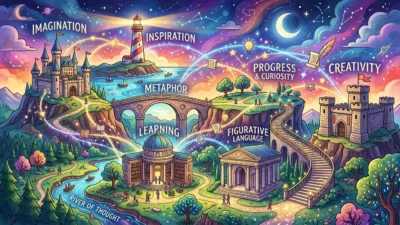

Wind is always moving. Sometimes it is soft and peaceful, while other times it is strong and powerful. Because it cannot be seen directly, writers often use metaphors for wind to describe emotions, ideas, change, freedom, and nature in a creative way.
A metaphor compares one thing directly to another without using the words like or as. Instead of saying the wind was strong, a writer might say The wind is a restless traveler.
This creates a vivid picture and makes writing more interesting. Metaphors help readers imagine scenes, understand feelings, and connect with a story on a deeper level.
Learning metaphors for wind can improve your vocabulary, creative writing, and understanding of figurative language. If you are writing a poem, story, speech, or school assignment, these examples will help you describe the movement, beauty, and power of the wind with confidence.
In this guide, you will discover the meaning of wind metaphors, twenty original examples, writing tips, common mistakes, practice questions, FAQs, and more.
Quick Answer
Metaphors for wind compare wind to another object or idea without using like or as. They help describe movement, freedom, power, and change in a creative way. Examples include Wind is a restless traveler, Wind is nature’s messenger, and Wind is an invisible dancer. These metaphors make writing more vivid and memorable.
Is “Metaphors for Wind” a Metaphor?
The keyword metaphors for wind is about metaphors.
A metaphor says one thing is another thing to create a stronger image or deeper meaning.
For example:
- Wind is an invisible dancer.
- Wind is a wandering musician.
- Wind is a playful child.
Each sentence compares wind to something else without using like or as.
What Does Wind Symbolize?
Wind can represent many ideas depending on the situation.
| Symbol | Meaning |
|---|---|
| Freedom | Moving without limits |
| Change | New beginnings or endings |
| Power | Great natural force |
| Hope | Fresh opportunities |
| Life | Energy and movement |
| Mystery | The unseen world |
| Voice | Nature speaking |
| Journey | Travel and adventure |
20 Original Metaphors for Wind
1. Wind is a restless traveler
Meaning: Wind is always moving from one place to another.
Explanation: It never stays in one place for long.
Example Sentences
The restless traveler crossed the valley before sunrise.
Wind became a restless traveler carrying fresh air through the village.
2. Wind is an invisible dancer
Meaning: Wind moves gracefully.
Explanation: It creates beautiful motion in trees and grass.
Example Sentences
The invisible dancer twirled through the flowers.
Wind became an invisible dancer across the open field.
3. Wind is nature’s messenger
Meaning: Wind brings signs of change.
Explanation: It carries scents, sounds, and seasons.
Example Sentences
Nature’s messenger carried the smell of rain.
The wind served as nature’s messenger before the storm arrived.
4. Wind is a playful child
Meaning: Wind is energetic and unpredictable.
Explanation: It moves happily from place to place.
Example Sentences
The playful child chased fallen leaves.
Wind became a playful child in the park.
5. Wind is a gentle whisper
Meaning: Wind is soft and quiet.
Explanation: It creates peaceful sounds.
Example Sentences
The gentle whisper passed through the trees.
Wind became a gentle whisper outside the window.
6. Wind is a wild horse
Meaning: Wind is powerful and difficult to control.
Explanation: Strong winds can move quickly and forcefully.
Example Sentences
The wild horse raced across the hills.
Wind became a wild horse during the storm.
7. Wind is a painter
Meaning: Wind changes the appearance of nature.
Explanation: It shapes sand, water, and clouds.
Example Sentences
The painter created waves across the lake.
Wind became a painter of the autumn leaves.
8. Wind is a storyteller
Meaning: Wind seems to share old stories.
Explanation: Its sounds inspire imagination.
Example Sentences
The storyteller spoke through the tall trees.
Wind became a storyteller on the quiet evening.
9. Wind is a silver flute
Meaning: Wind creates beautiful sounds.
Explanation: It whistles through branches and buildings.
Example Sentences
The silver flute echoed across the valley.
Wind became a silver flute in the forest.
10. Wind is a hidden artist
Meaning: Wind quietly shapes the world.
Explanation: Its work is often unnoticed.
Example Sentences
The hidden artist shaped the sand dunes.
Wind became a hidden artist beside the sea.
11. Wind is a free spirit
Meaning: Wind moves wherever it wishes.
Explanation: It represents independence.
Example Sentences
The free spirit crossed mountains without stopping.
Wind remained a free spirit across the countryside.
12. Wind is a silent sculptor
Meaning: Wind slowly changes nature.
Explanation: It shapes rocks, cliffs, and landscapes.
Example Sentences
The silent sculptor worked for centuries.
Wind became a silent sculptor of the cliffs.
13. Wind is a fast runner
Meaning: Wind moves quickly.
Explanation: It travels great distances in little time.
Example Sentences
The fast runner raced across the fields.
Wind became a fast runner before sunset.
14. Wind is a curious explorer
Meaning: Wind visits every place.
Explanation: It travels through forests, cities, and oceans.
Example Sentences
The curious explorer wandered through the valley.
Wind became a curious explorer around the village.
15. Wind is a healing hand
Meaning: Wind brings freshness and comfort.
Explanation: A cool breeze often feels refreshing.
Example Sentences
The healing hand cooled our faces.
Wind became a healing hand on the warm afternoon.
16. Wind is an open road
Meaning: Wind represents endless movement.
Explanation: It has no fixed destination.
Example Sentences
The open road stretched across the hills.
Wind became an open road through the fields.
17. Wind is a mighty drummer
Meaning: Wind creates loud natural sounds.
Explanation: Strong gusts beat against trees and buildings.
Example Sentences
The mighty drummer shook the old house.
Wind became a mighty drummer during the night.
18. Wind is a bridge
Meaning: Wind connects places.
Explanation: It carries seeds, scents, and sounds.
Example Sentences
The bridge carried the scent of flowers.
Wind became a bridge between the forest and the village.
19. Wind is a turning page
Meaning: Wind signals change.
Explanation: It reminds us that every moment moves forward.
Example Sentences
The turning page welcomed a new season.
Wind became a turning page in our journey.
20. Wind is a song without words
Meaning: Wind communicates without speaking.
Explanation: Its sound expresses emotion naturally.
Example Sentences
The song without words filled the valley.
Wind became a song without words beneath the stars.
How to Use Metaphors for Wind
You can use wind metaphors in:
- Stories
- Poems
- Essays
- Speeches
- Nature writing
- Creative writing
- School assignments
Choose a metaphor that matches the mood and message of your writing.
Common Mistakes
- Mixing several metaphors in one sentence.
- Choosing a metaphor that does not fit the scene.
- Explaining every metaphor too much.
- Repeating the same metaphor many times.
- Confusing metaphors with similes.
Similar Expressions
- The breeze carried hope.
- The air sang through the trees.
- Nature found its voice.
- The sky breathed softly.
- Leaves danced in the breeze.
- The air awakened the forest.
- The breeze welcomed a new season.
- The wind carried tomorrow.
Creative Writing Tips
- Match the metaphor to the mood of your story.
- Use simple and original comparisons.
- Think about how wind looks, sounds, or feels.
- Avoid overusing metaphors in one paragraph.
- Read your writing aloud to check its flow.
- Create fresh images instead of using common clichés.
Practice Questions
Questions
- What is a metaphor?
- Is Wind is a restless traveler a metaphor?
- Which metaphor represents freedom?
- Which metaphor suggests gentle movement?
- Write your own metaphor for wind.
- Which metaphor represents change?
- Why do writers use metaphors?
- Can one wind metaphor have different meanings?
- Which metaphor best fits a peaceful nature scene?
- Which metaphor best describes a strong wind?
Answers With Explanations
- A metaphor compares two different things without using like or as.
- Yes. It directly compares wind to a traveler.
- Wind is a free spirit because it moves without limits.
- Wind is a gentle whisper because it suggests calm movement.
- Sample answer: Wind is the earth’s quiet breath.
- Wind is a turning page because it represents new beginnings.
- They make writing more vivid, interesting, and imaginative.
- Yes. Readers may understand different meanings depending on the context.
- Wind is a gentle whisper because it creates a peaceful image.
- Wind is a wild horse because it shows strength and speed.
FAQs
What are metaphors for wind?
Metaphors for wind are creative comparisons that describe wind as another object or idea without using like or as.
Why do writers use wind metaphors?
They help readers imagine movement, emotion, nature, and change more clearly.
Can students use these metaphors in school writing?
Yes. They are suitable for essays, poems, stories, speeches, and creative writing activities.
How are metaphors different from similes?
A metaphor says something is another thing, while a simile uses like or as for comparison.
What does wind usually symbolize?
Wind often symbolizes freedom, change, hope, movement, life, and unseen power.
Can I create my own wind metaphors?
Yes. Think about how wind behaves, then compare it directly to something with similar qualities.
Are wind metaphors common in poetry?
Yes. Poets often use wind metaphors to express emotions, nature, freedom, and transformation.
Conclusion
Metaphors for wind make writing more colourful, expressive, and memorable. They help readers picture movement, freedom, strength, peace, and change through imaginative comparisons.
If you are writing a poem, story, essay, or speech, using original wind metaphors can bring your ideas to life and create stronger emotional connections with readers.
Keep your metaphors simple, choose comparisons that match your message, and practise creating your own. With time, you will use figurative language naturally and confidently in all kinds of writing.

Charles Kevin is a passionate language writer and researcher at SimileHive, creating clear, engaging content about similes, idioms, metaphors, and figurative language to help readers improve English communication confidently every day.