
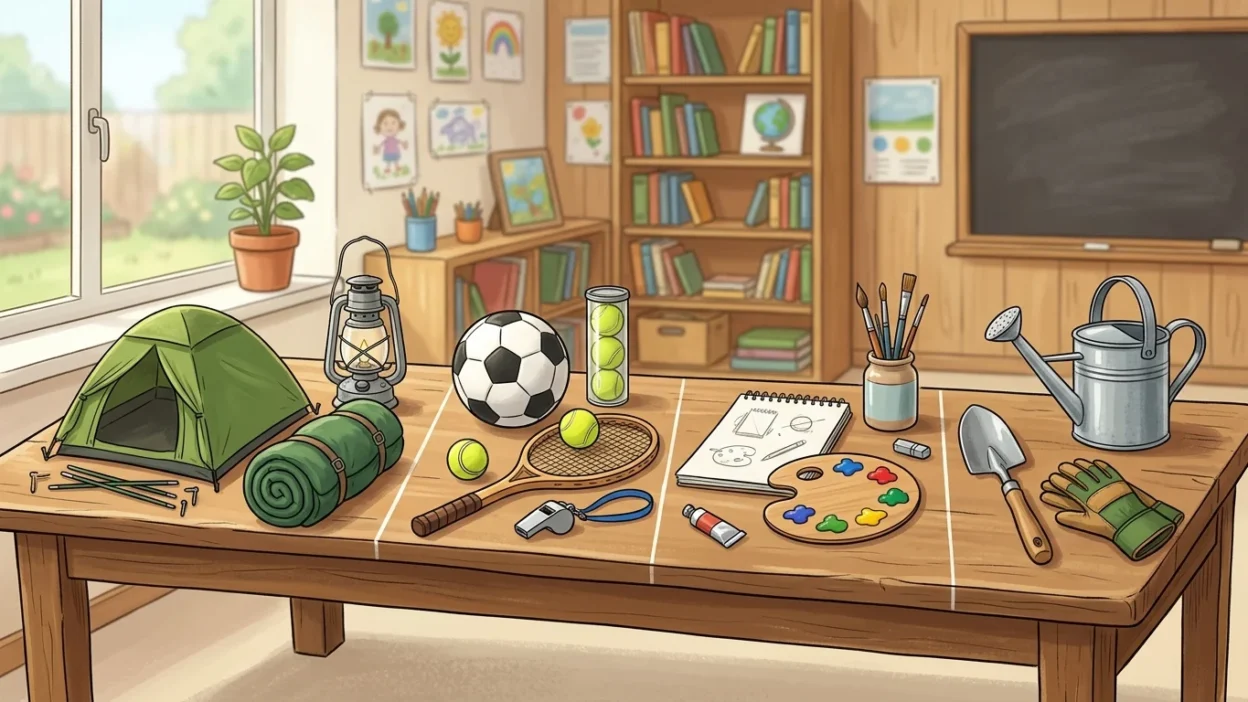
Paraphernalia is a noun that means a collection of items, tools, equipment, or personal belongings associated with a particular activity, person, or situation. It is often used when there are several related objects that go together.
For example, you might talk about the paraphernalia of a student, meaning the books, notebooks, pens, bags, and other things they use for studying. You could also mention the paraphernalia of a hobby, meaning all the equipment and accessories needed for that hobby. The word can sound slightly formal or humorous, depending on the context.
The meaning of paraphernalia can also change depending on the subject. In everyday English, it often simply means all the things connected with something. In some contexts, it can refer to equipment associated with illegal drugs or other activities. Therefore, context is important when understanding the word.
Quick Answer
Paraphernalia means a collection of things, equipment, tools, or accessories associated with a particular activity, person, or situation. For example, “camping paraphernalia” means the various items and equipment used for camping. The word is usually used for a group of related things.
Why Do People Confuse the Meaning of “Paraphernalia”?
“Paraphernalia” can be confusing because it does not name one specific object.
Instead, it describes a group or collection of objects connected with something.
For example:
“She packed all her camping paraphernalia.”
This means she packed all the various things she needed for camping.
The word can also sound more complicated than simpler alternatives such as:
- equipment
- gear
- belongings
- accessories
- supplies
- things
The best synonym depends on the context.
What Does “Paraphernalia” Mean?
Paraphernalia refers to a collection of objects associated with a particular activity, role, or situation.
For example:
“The photographer carried all his camera paraphernalia.”
This means the photographer carried his camera equipment and related accessories.
Another example:
“The room was filled with sports paraphernalia.”
This means the room contained many objects connected with sports, such as jerseys, posters, trophies, and other items.
Is “Paraphernalia” Singular or Plural?
This is an important grammar point.
Paraphernalia looks like a plural word, but in modern English it is commonly treated as a mass noun or uncountable noun.
We normally say:
“She has a lot of paraphernalia.”
Not:
“She has many paraphernalias.”
When you want to talk about individual objects, use:
- items
- pieces of equipment
- objects
- accessories
- things
For example:
“He bought several pieces of camping equipment.”
Paraphernalia Meaning at a Glance
| Word or Phrase | Meaning | Example |
|---|---|---|
| Paraphernalia | A collection of related items | She packed her camping paraphernalia. |
| Equipment | Tools or items needed for an activity | The sports equipment was expensive. |
| Gear | Equipment used for a particular activity | I bought new hiking gear. |
| Accessories | Extra items used with something | She bought camera accessories. |
| Belongings | Things owned by a person | He packed his personal belongings. |
| Supplies | Materials needed for an activity | We need school supplies. |
When Should You Use “Paraphernalia”?
Use paraphernalia when you want to refer to a collection of related objects.
1. Talking about hobbies
“He keeps all his fishing paraphernalia in the garage.”
2. Talking about sports
“The store sells football paraphernalia.”
3. Talking about work
“The artist brought all her painting paraphernalia.”
4. Talking about travel
“I packed my usual travel paraphernalia.”
5. Talking about personal items
“The desk was covered with his work paraphernalia.”
The word works especially well when there are many related objects.
12 Examples of “Paraphernalia” in Sentences
- She packed all her camping paraphernalia before leaving for the trip.
- The garage was filled with fishing paraphernalia.
- He keeps his photography paraphernalia in a large case.
- The room was decorated with football paraphernalia.
- The magician arrived with all his performance paraphernalia.
- She bought some new art paraphernalia for her studio.
- The desk was covered with office paraphernalia.
- He carried his hiking paraphernalia in a large backpack.
- The shop sells all kinds of gardening paraphernalia.
- Her travel paraphernalia included maps, chargers, notebooks, and a camera.
- The children collected science paraphernalia for their school project.
- His room was filled with musical paraphernalia.
Paraphernalia vs Equipment
These words are similar, but they are not exactly the same.
Equipment usually refers to the tools and machines needed for a particular activity.
Paraphernalia is broader and can include equipment, accessories, objects, decorations, and other related things.
For example:
“The gym has modern exercise equipment.”
This focuses on the machines and tools used for exercise.
“The room was filled with fitness paraphernalia.”
This could include exercise equipment, posters, clothing, accessories, bottles, and other related objects.
| Paraphernalia | Equipment |
|---|---|
| A collection of related things | Tools or items needed for an activity |
| Broader meaning | More specific meaning |
| Can include accessories and decorative objects | Usually functional |
| Can sound slightly humorous | Neutral and common |
| “Camping paraphernalia” | “Camping equipment” |
Paraphernalia vs Gear
Gear is an informal word for equipment used for a particular activity.
For example:
“I bought new hiking gear.”
This usually means clothing, shoes, bags, and equipment used for hiking.
“I bought some hiking paraphernalia.”
This sounds more playful or broad and could refer to all kinds of hiking related items.
In everyday conversation, gear is usually more natural.
Paraphernalia vs Accessories
Accessories are additional items used with something else.
For example:
“She bought several camera accessories.”
This could mean lenses, straps, cases, batteries, and other camera related items.
Paraphernalia is broader and can include accessories as well as other related objects.
Is “Paraphernalia” Formal?
Paraphernalia is a relatively formal or literary word, but it is also used in ordinary conversation.
It can sometimes sound humorous because it is a long word for something that could be described simply as “stuff” or “equipment.”
Compare:
“Bring your camping gear.”
This sounds simple and natural.
“Bring your camping paraphernalia.”
This sounds more colorful or slightly humorous.
Common Mistakes with “Paraphernalia”
Mistake 1: Thinking it means one object
Paraphernalia normally refers to a collection of related things.
“He packed his fishing paraphernalia.”
This means several fishing related items.
Mistake 2: Adding an “s”
In standard modern English, do not normally say:
“paraphernalias”
Instead, say:
“a lot of paraphernalia”
or:
“several pieces of paraphernalia”
Mistake 3: Assuming it always has a negative meaning
The word itself is not negative.
You can have:
- sports paraphernalia
- camping paraphernalia
- gardening paraphernalia
- photography paraphernalia
- office paraphernalia
However, the word is sometimes used in contexts involving illegal drugs, which can give it a negative association.
Mistake 4: Using it when “equipment” is clearer
Sometimes equipment, gear, or supplies is a better choice.
Use “paraphernalia” when you want to emphasize the collection of related things.
Memory Trick
Think:
Paraphernalia = all the stuff that goes with something.
For example:
Camping + tents + sleeping bags + lamps + cooking tools + other items = camping paraphernalia.
You can remember it as:
Paraphernalia means a collection of related things.
American English vs British English
Paraphernalia is used in both American English and British English.
The meaning is essentially the same in both varieties.
However, everyday speakers may often choose simpler words such as:
- stuff
- equipment
- gear
- belongings
- accessories
“Paraphernalia” can sound more formal, descriptive, or humorous.
Similar Words and Phrases
Depending on the context, synonyms for paraphernalia include:
- equipment: tools and items needed for an activity
- gear: equipment, especially in informal English
- accessories: additional items used with something
- supplies: materials needed for a task
- belongings: things owned by someone
- possessions: things that someone owns
- materials: things used to make or do something
- stuff: informal word for a collection of things
These words are related but do not always have exactly the same meaning.
Paraphernalia in Different Contexts
The word can be used with many different activities.
Sports
“The shop sells baseball paraphernalia.”
This could include shirts, caps, posters, balls, and other related items.
Hobbies
“Her sewing paraphernalia is stored in the cupboard.”
This could include needles, thread, fabric, scissors, and other supplies.
Travel
“He packed all his travel paraphernalia.”
This could include a passport holder, chargers, maps, bags, and other travel items.
Work
“The desk was covered with office paraphernalia.”
This could include notebooks, pens, folders, papers, and other office related objects.
Collections
“His room was filled with music paraphernalia.”
This might include records, posters, instruments, photographs, and other music related objects.
Final Verdict
Paraphernalia means a collection of things associated with a particular activity, person, role, or situation.
It is a useful word when you want to talk about several related objects without naming each one individually.
For everyday English, words such as equipment, gear, stuff, and accessories may sometimes sound more natural. However, paraphernalia is useful when you want to emphasize the whole collection of related things.
Remember that paraphernalia is normally treated as a mass noun, so you generally say “some paraphernalia” or “a lot of paraphernalia,” not “paraphernalias.”
FAQs About Paraphernalia
What does paraphernalia mean in simple English?
Paraphernalia means a collection of things, equipment, tools, or accessories connected with a particular activity or situation.
Is paraphernalia a negative word?
No. Paraphernalia is not inherently negative. It can describe ordinary things such as sports equipment, camping supplies, or hobby items. Its meaning depends on the context.
Is paraphernalia singular or plural?
In modern English, paraphernalia is generally treated as a mass noun. You can say “some paraphernalia” or “a lot of paraphernalia.”
Can I say “paraphernalias”?
Normally, no. The standard form is paraphernalia. If you need to count individual objects, say items of paraphernalia or simply items.
What is another word for paraphernalia?
Depending on the context, you can use equipment, gear, accessories, supplies, belongings, possessions, or stuff.
What does personal paraphernalia mean?
Personal paraphernalia means a collection of personal items or belongings associated with a person.
Is paraphernalia a formal word?
It can sound somewhat formal, literary, or humorous. In casual conversation, people often use simpler words such as stuff, gear, or equipment.
How do you pronounce paraphernalia?
It is commonly pronounced approximately as:
par uh fer NAY lee uh
The stress is usually placed on NAY.
Remember This
Paraphernalia = a collection of related things.
It can refer to equipment, accessories, belongings, tools, or other objects connected with an activity or situation.
For example:
“His camping paraphernalia was packed in the car.”
This means all the various camping related things were packed in the car.
Conclusion
The word paraphernalia is a useful way to describe a collection of objects connected with a particular activity, person, or situation. It can refer to completely ordinary things, such as camping equipment, sports items, gardening tools, or photography accessories. The word is broader than “equipment” because it can include many different types of related objects.
Although “paraphernalia” can sound formal or humorous, its basic meaning is simple. When you see this word, think “all the things that go with something.” If you want simpler everyday English, you can often replace it with gear, equipment, supplies, accessories, or stuff, depending on the context.

Charles Kevin is a passionate language writer and researcher at SimileHive, creating clear, engaging content about similes, idioms, metaphors, and figurative language to help readers improve English communication confidently every day.