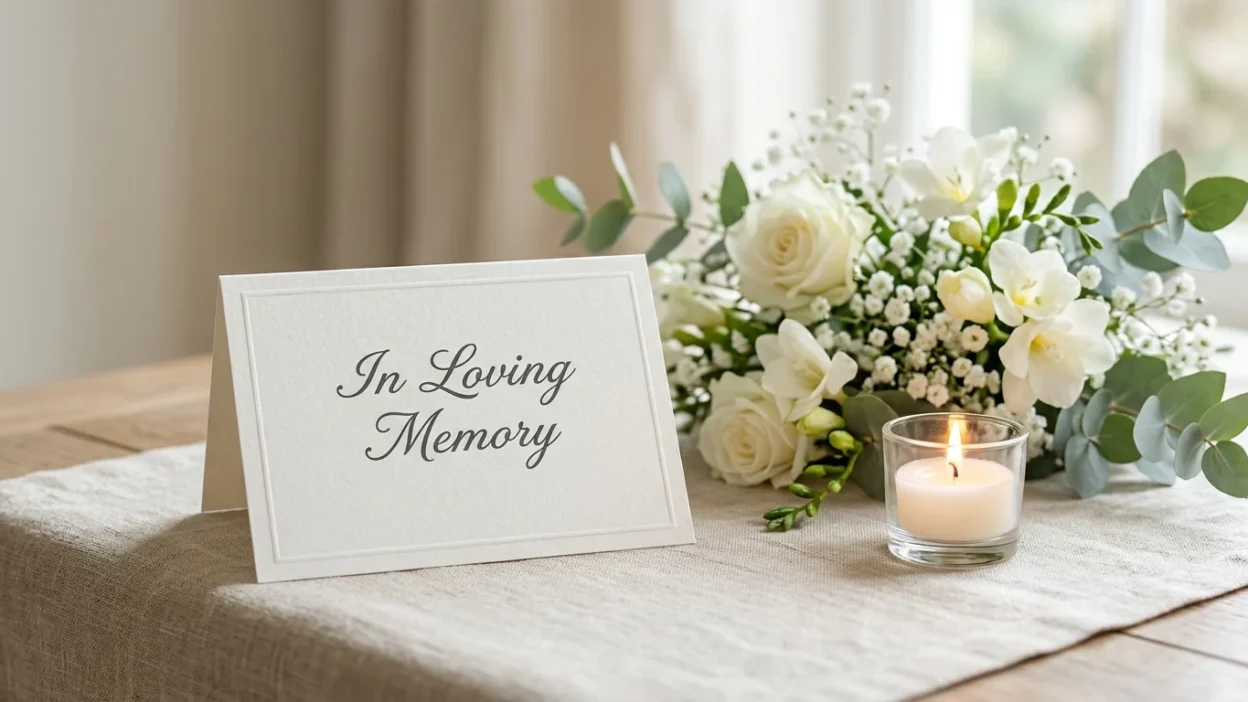
The phrase “in loving memory” is used to honor and remember someone who has passed away. It expresses love, respect, and affection for a person who remains important to the people who remember them. You may see this phrase on funeral programs, memorial plaques, sympathy cards, gravestones, social media posts, and anniversary tributes.
For example, “In loving memory of our beloved mother” is a heartfelt way to honor a mother who has died. The phrase reminds others that although a person is no longer physically present, the love and memories they shared continue to matter.
It is also common to see “in loving memory of” followed by the person’s name and sometimes their birth and death dates. Understanding the phrase can help you use it appropriately in a tribute, memorial message, or remembrance post.
Quick Answer: What Does “In Loving Memory” Mean?
“In loving memory” means remembering someone who has died with love, affection, and respect. It is commonly used in memorial messages, funeral services, inscriptions, and tribute posts. The phrase honors the person’s life and the lasting impact they had on family, friends, and others who cared about them.
Why Do People Use “In Loving Memory”?
People use “in loving memory” to express that someone who has died is still remembered and cherished. It communicates affection rather than focusing only on loss.
The phrase is appropriate for many kinds of remembrance, including:
- Memorial services and funeral programs
- Gravestones and memorial plaques
- Anniversary tributes
- Social media remembrance posts
- Dedications in books or other meaningful projects
- Donations or charitable events honoring someone who has died
It is a gentle, respectful expression that can be used for a family member, friend, partner, colleague, or another person who made a lasting difference.
What Does “In Loving Memory Of” Mean?
The phrase “in loving memory of” introduces the name of the person being remembered.
For example:
“In loving memory of Sarah Ahmed, a beloved mother, sister, and friend.”
The words honor Sarah and recognize the love people continue to feel for her after her death.
You can also include dates:
“In loving memory of Sarah Ahmed
1955 to 2024”
This format is often used on memorial cards, plaques, and tribute pages. Dates are optional and should be included only when appropriate.
Is It “In Loving Memory” or “In Loving Memories”?
“In loving memory” is the standard expression when honoring a person who has died.
The singular word “memory” refers to the act or state of remembering someone. The phrase is widely recognized as a traditional memorial expression.
“In loving memories” is possible in other contexts when referring to multiple memories, but it is not the usual wording for a memorial dedication.
Correct: In loving memory of our beloved grandfather.
Less conventional as a memorial heading: In loving memories of our beloved grandfather.
Examples of “In Loving Memory” Messages
Here are examples for different relationships and occasions.
For a mother
“In loving memory of my dear mother. Your love continues to guide me, and your memory will always live in my heart.”
For a father
“In loving memory of our beloved father, whose wisdom, kindness, and strength shaped our lives forever.”
For a grandmother
“In loving memory of a wonderful grandmother. Your warmth and love will never be forgotten.”
For a grandfather
“In loving memory of our dear grandfather. Thank you for the lessons, laughter, and precious memories you gave us.”
For a friend
“In loving memory of a beautiful soul and a cherished friend. You may be gone, but you will never be forgotten.”
For a husband
“In loving memory of my beloved husband. Our love remains a treasured part of my life, always and forever.”
For a wife
“In loving memory of my beloved wife. Your love and kindness will remain with me every day.”
For a child
“In loving memory of our precious child. You will always be loved, held close in our hearts, and remembered with tenderness.”
For a colleague
“In loving memory of a valued colleague and dear friend. Your kindness and dedication made a lasting difference.”
For a general memorial tribute
“In loving memory of someone who touched many lives and left behind a legacy of love, kindness, and beautiful memories.”
Short “In Loving Memory” Quotes
If you need a brief message for a memorial card, photograph, plaque, or social media caption, consider one of these options.
- In loving memory, forever in our hearts.
- Gone from our sight, never from our hearts.
- Forever loved, forever remembered.
- Your memory will always be a blessing.
- Loved beyond words and missed beyond measure.
- Always remembered with love.
- Your light continues to shine in our hearts.
- Though absent, you are never forgotten.
- Cherished memories, endless love.
- Always in our hearts, today and always.
These messages can stand alone or accompany a photograph, name, or memorial date.
How to Use “In Loving Memory” in a Sentence
The phrase is usually used as a dedication or introductory expression, but it can also appear in a complete sentence.
Examples:
- We held a small gathering in loving memory of our grandmother.
- This garden was created in loving memory of those we have lost.
- The family established a scholarship in loving memory of their father.
- She shared a photograph in loving memory of her childhood friend.
- The concert was organized in loving memory of the late musician.
- They planted a tree in loving memory of their beloved son.
The phrase does not need to be followed by a person’s name in every sentence. It can refer to a memorial event, place, or project.
Should “In Loving Memory” Be Capitalized?
Capitalization depends on where the phrase appears.
As a heading or inscription:
In Loving Memory of Our Beloved Mother
Title case is common on memorial plaques, printed tributes, and commemorative designs.
In a regular sentence:
The family gathered in loving memory of their father.
Here, the phrase is not capitalized because it appears within a sentence.
At the beginning of a sentence:
In loving memory of our dear friend, we planted a tree.
Only the first word is capitalized under ordinary sentence capitalization.
Common Mistakes to Avoid
Mistake 1: Writing “in loving memories” as the standard memorial phrase
Use “in loving memory” when dedicating a tribute to someone who has died.
Mistake 2: Forgetting “of” before the person’s name
Both forms can be used, but they have slightly different structures.
- In loving memory.
- In loving memory of our beloved aunt.
When you name the person being honored, “of” is commonly included.
Mistake 3: Using the phrase for an ordinary birthday greeting
“In loving memory” is associated with someone who has died. For a living person’s birthday, use a birthday greeting or a phrase such as “with love and appreciation.”
Mistake 4: Assuming the phrase must include dates
Dates are optional. A simple dedication can be meaningful without them.
“In Loving Memory” vs. Similar Expressions
| Phrase | Meaning or use |
|---|---|
| In loving memory | Remembering someone who has died with affection |
| In memory of | A general expression of remembrance or tribute |
| Forever in our hearts | Emphasizes lasting emotional connection |
| Rest in peace | Expresses a wish for peace for someone who has died |
| Never forgotten | Emphasizes that the person will continue to be remembered |
| With deepest sympathy | Expresses compassion to someone who is grieving |
These expressions are related, but they are not identical. “In loving memory” focuses on remembering the deceased with love, while “with deepest sympathy” is usually addressed to someone experiencing a loss.
Frequently Asked Questions
What is the meaning of “in loving memory”?
It means remembering someone who has died with love, affection, and respect. The phrase is commonly used in memorial dedications and tributes.
Is “in loving memory of” grammatically correct?
Yes. It is a conventional and grammatically acceptable expression used before the name of someone who has died.
Can I write “in loving memory” on a gravestone?
Yes. It is a traditional phrase for gravestones, memorial plaques, and other inscriptions. You can follow it with the person’s name and optional dates.
What is another way to say “in loving memory”?
Alternatives include “forever in our hearts,” “always remembered with love,” “never forgotten,” and “in cherished memory.” Choose the wording that best reflects the relationship and tone of the tribute.
Is “in loving memory” only for family members?
No. It can honor a friend, partner, colleague, public figure, or anyone whose life had a meaningful impact.
Should I use “in loving memory” or “in remembrance”?
Both can be appropriate. “In loving memory” conveys affection and is strongly associated with memorial tributes. “In remembrance” is broader and can refer to remembering people, events, or experiences.
Can I use “in loving memory” on social media?
Yes. People commonly use it in tribute posts, photographs, anniversary messages, and remembrance captions to honor someone who has died.
What is the difference between “in memory of” and “in loving memory of”?
“In memory of” is a general expression of remembrance. “In loving memory of” adds a more personal and affectionate tone.
Remember This
“In loving memory” is a respectful phrase used to honor someone who has died. It expresses love, remembrance, and the lasting importance of that person in the lives of others.
Use “in loving memory of” when introducing the person’s name. The word “memory” is normally singular in this traditional expression, and capitalization depends on whether it is used as a heading, inscription, or part of a sentence.
Conclusion
“In loving memory” is a meaningful expression used to remember someone who has died with affection and respect. It appears in memorial inscriptions, funeral programs, remembrance posts, and personal tributes.
If you are honoring a parent, friend, partner, or another loved one, the phrase communicates that the person’s life and the memories they left behind continue to matter.
A simple message can be just as meaningful as a longer tribute. Adding a person’s name, a cherished quality, or a short personal memory can make the dedication feel more sincere and individual.

Adam Aaron is a language enthusiast and content writer at SimileHive, creating clear, engaging guides on similes, idioms, metaphors, and figurative language to help readers improve English confidently every day.