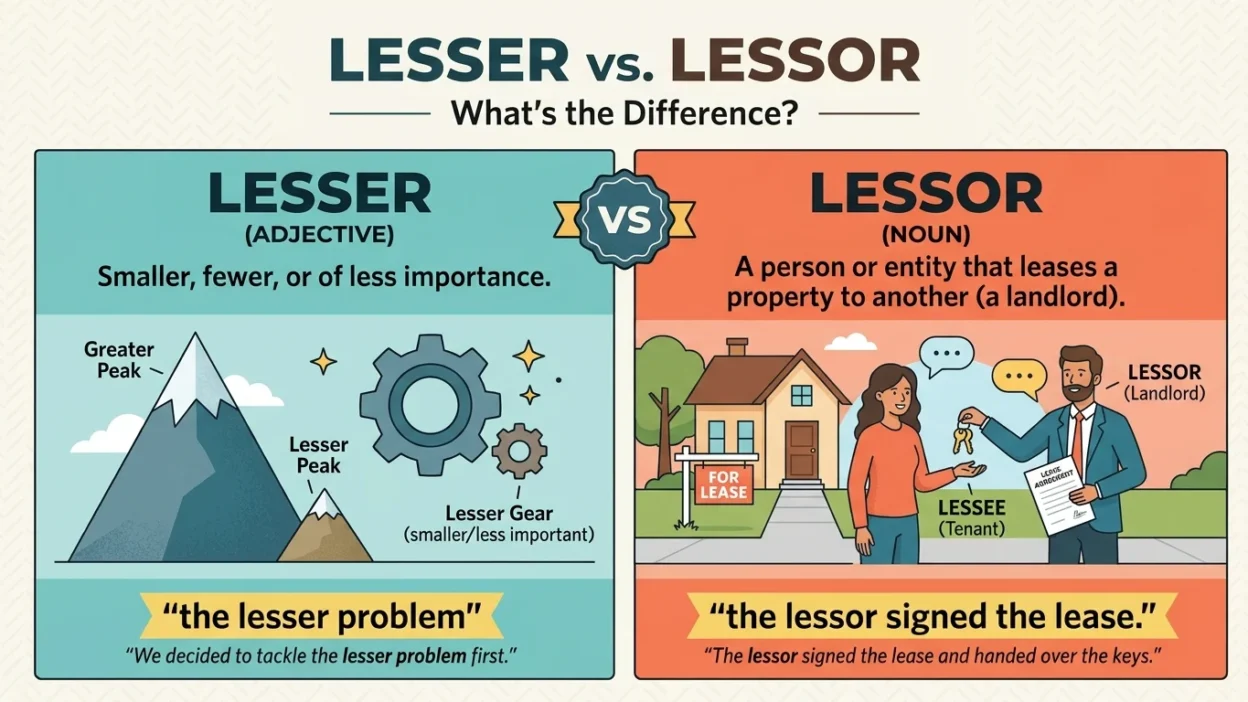
Do you write lesser or lessor? Although these two words look and sound similar, they have completely different meanings and grammatical uses. Lesser is an adjective that means smaller in amount, importance, value, degree, or significance. Lessor, on the other hand, is a noun that refers to a person or organization that leases property, equipment, or something else to another party. For example, you might choose the lesser of two evils, but the lessor is the person who rents out an apartment or commercial property.
The confusion between these words often arises because they differ by only one letter. However, using the wrong spelling can change the meaning of a sentence, particularly in business, property, and legal writing. Understanding the distinction will help you use both terms correctly. Let’s explore their definitions, grammatical roles, examples, common mistakes, and practical differences.
Quick Answer
Lesser means smaller, lower, or less important in degree, value, or significance. Lessor means a person or organization that leases property or equipment to someone else. For example, the lesser amount refers to a smaller amount, while the lessor is the party that provides property under a lease agreement.
Why Do People Confuse Lesser and Lessor?
People confuse lesser and lessor because they have similar spellings and pronunciation. Both words begin with less, but their endings and meanings are different.
The easiest way to distinguish them is to remember their grammatical functions:
- Lesser is an adjective. It describes something that is smaller, lower, or less significant.
- Lessor is a noun. It identifies the person or organization that leases something to another party.
For example:
- The company selected the lesser expense.
- The lessor rented the office space to a new business.
The first sentence describes an expense, while the second identifies a party in a leasing arrangement.
First Word: Lesser
Lesser is an adjective meaning smaller, lower, or less important in comparison with something else.
It is commonly used when comparing two things based on their importance, quality, value, degree, or extent.
Meaning of Lesser
According to its general meaning, lesser refers to something that has a lower level of importance, value, quality, or significance.
Examples:
- The lesser problem was easy to solve.
- She chose the lesser of two evils.
- The project received lesser attention than expected.
- This issue is of lesser importance.
In these examples, lesser describes something that is lower or less significant than another thing.
How to Use Lesser in a Sentence
Use lesser when you want to describe something that has a lower degree, value, or importance.
Examples:
- The manager focused on the lesser problem first.
- We should consider the lesser risk before making a decision.
- He accepted a position of lesser responsibility.
- The second option was of lesser value.
- They chose the lesser of two evils.
- This mistake had lesser consequences than the previous one.
- The smaller company received lesser recognition.
- She decided to take the lesser amount.
- The team faced a lesser challenge in the final round.
- His contribution was no lesser than anyone else’s.
Usage note: In many contexts, lesser is more natural in established expressions such as the lesser of two evils or lesser importance. When simply comparing quantities, less is often the better choice.
Second Word: Lessor
Lessor is a noun that refers to a person or organization that leases property, equipment, or another asset to someone else.
In a leasing agreement, the lessor is the party that provides the property or asset for use, usually in exchange for payments.
Meaning of Lessor
A lessor is commonly known as the landlord or leasing party, depending on the type of agreement.
For example, if a property owner rents an apartment to a tenant, the property owner is the lessor.
The person who rents and uses the property is called the lessee.
Examples:
- The lessor signed the rental agreement.
- The lessor agreed to repair the building’s roof.
- The company contacted the lessor about extending its lease.
- The lessor provided the equipment under a leasing contract.
How to Use Lessor in a Sentence
Use lessor when referring to the person or organization that leases something to another party.
Examples:
- The lessor owns the apartment building.
- The lessor signed the agreement with the tenant.
- The company contacted its lessor about the office lease.
- The lessor agreed to extend the rental period.
- The lessor is responsible for the obligations specified in the contract.
- The equipment lessor offered a flexible payment arrangement.
- The lessor provided the vehicle under a leasing agreement.
- The tenant asked the lessor to repair the damaged door.
- The lessor received monthly payments from the lessee.
- Both parties reviewed the terms before the lessor signed the contract.
Lesser vs. Lessor: Key Differences
Although lesser and lessor look similar, their meanings and grammatical functions are different.
| Feature | Lesser | Lessor |
|---|---|---|
| Part of speech | Adjective | Noun |
| Meaning | Smaller, lower, or less important | Person or organization that leases something |
| Main use | Comparisons | Rental and leasing agreements |
| Context | General English | Property, business, and legal writing |
| Example | The lesser risk | The lessor signed the contract |
| Opposite or related term | Greater | Lessee |
The simplest distinction is that lesser describes something, whereas lessor identifies someone who leases an asset to another party.
Lesser vs. Less vs. Lessor
It is also helpful to understand the difference between lesser, less, and lessor.
| Word | Meaning | Example |
|---|---|---|
| Less | A smaller amount or degree | We need less time. |
| Lesser | Smaller or less important in comparison | Choose the lesser risk. |
| Lessor | A person or organization that leases something | The lessor owns the property. |
Less
Less is generally used with uncountable nouns to indicate a smaller amount or degree.
Example: We need less water.
Lesser
Lesser is used to describe something that is lower in importance, value, or degree compared with another thing.
Example: This is the lesser concern.
Lessor
Lessor refers to the party that leases property or equipment to someone else.
Example: The lessor approved the lease extension.
When to Use Lesser or Lessor
Choosing the correct word becomes easier when you understand the context.
Use Lesser When:
- Comparing the importance of two things.
- Describing something with lower value or significance.
- Referring to a smaller degree or extent.
- Using expressions such as the lesser of two evils.
- Discussing something that is secondary or less significant.
Examples:
- The lesser problem was quickly resolved.
- She selected the lesser expense.
- This is a matter of lesser importance.
Use Lessor When:
- Discussing a rental or leasing agreement.
- Referring to a property owner who leases a building.
- Identifying a company that leases vehicles or equipment.
- Describing the party that provides an asset under a lease.
- Discussing the rights and responsibilities of leasing parties.
Examples:
- The lessor owns the commercial building.
- The lessor provided the machinery.
- The lessor approved the new contract.
Understanding Lessor and Lessee
Because lessor is frequently used in legal and business documents, it is useful to understand another related term: lessee.
A lessor is the person or organization that provides an asset under a lease. A lessee is the person or organization that receives the right to use that asset.
| Term | Meaning | Example |
|---|---|---|
| Lessor | The party that leases an asset to someone else | Property owner |
| Lessee | The party that leases and uses the asset | Tenant |
For example, if a landlord rents an apartment to a tenant:
- The landlord is the lessor.
- The tenant is the lessee.
This distinction is particularly important when reading rental contracts, commercial agreements, and legal documents.
Common Mistakes to Avoid
1. Using Lessor When You Mean Lesser
Incorrect: This is the lessor of the two problems.
Correct: This is the lesser of the two problems.
The sentence compares the importance or seriousness of two problems, so lesser is the correct word.
2. Using Lesser When You Mean Lessor
Incorrect: The lesser signed the rental agreement.
Correct: The lessor signed the rental agreement.
The sentence refers to the person leasing the property, so lessor is correct.
3. Confusing the Lessor With the Lessee
The lessor provides the asset, while the lessee receives the right to use it.
Remember:
- Lessor = leasing party that provides the asset.
- Lessee = leasing party that receives and uses the asset.
4. Assuming Lesser Always Means Less
Although lesser and less are related, they are not interchangeable in every sentence.
For example:
- Correct: We need less money.
- Correct: This is the lesser of two risks.
Use less for a smaller amount or degree and lesser when describing something as lower in comparison.
Memory Trick: How to Remember Lesser vs. Lessor
Use these simple memory tricks:
Lesser = Less important or smaller
The word lesser contains less, which can remind you of something smaller or lower.
Example: The lesser problem.
Lessor = The leasing party
The word lessor refers to the person or organization that leases an asset to someone else.
Example: The lessor owns the apartment.
Remember:
- Lesser describes something.
- Lessor identifies a leasing party.
American vs. British English: Lesser and Lessor
There is no significant difference between American and British English in the spelling or meaning of these two words.
Both varieties use:
- Lesser to describe something smaller, lower, or less important.
- Lessor to identify the person or organization that leases property or equipment.
Examples in American English:
- The company chose the lesser expense.
- The lessor signed the agreement.
Examples in British English:
- The lesser problem was resolved.
- The lessor agreed to renew the lease.
The spellings and basic meanings remain the same in both varieties.
Similar Words Related to Lesser and Lessor
Understanding related words can help you expand your vocabulary and avoid confusion.
- Less: A smaller amount or degree of something.
- Least: The smallest amount, degree, or extent.
- Lesser: Smaller, lower, or less important in comparison.
- Greater: Larger, higher, or more important.
- Lessor: A person or organization that leases an asset to another party.
- Lessee: A person or organization that receives the right to use a leased asset.
- Lease: A contract that gives someone the right to use property or equipment for a specified period.
- Landlord: A person or organization that rents property to tenants.
- Tenant: A person who rents or occupies property under a rental agreement.
Final Verdict: Lesser or Lessor?
Lesser and lessor are different words with different meanings.
Use lesser when describing something that is smaller, lower, or less important than something else. Use lessor when referring to a person or organization that leases property, equipment, or another asset to someone else.
For example, you might choose the lesser of two risks, but the lessor is the party that provides a property under a lease agreement.
Remember the simple distinction: lesser describes a comparison, while lessor refers to a leasing party.
Frequently Asked Questions (FAQs)
1. What is the difference between lesser and lessor?
Lesser is an adjective meaning smaller, lower, or less important. Lessor is a noun referring to a person or organization that leases property or equipment to someone else.
2. Is lessor the landlord or the tenant?
The lessor is generally the landlord or property owner who leases the property. The tenant who receives the right to use the property is called the lessee.
3. What is an example of lesser in a sentence?
An example is: “She chose the lesser of two evils.” Here, lesser means the option considered less harmful or undesirable.
4. What is an example of lessor in a sentence?
An example is: “The lessor signed the agreement with the tenant.” In this sentence, lessor refers to the party providing the property under the lease.
5. Is lessor a legal term?
Yes. Lessor is commonly used in legal, commercial, and property documents to identify the party that leases an asset to another party.
6. What is the opposite of lessor?
The related term is lessee. The lessor provides the asset under a lease, while the lessee receives the right to use it.
7. Is lesser the same as less?
No. Less generally refers to a smaller amount or degree, while lesser describes something that is lower in importance, value, or degree compared with something else.
8. Are lesser and lessor pronounced the same?
In many English accents, they are pronounced the same or very similarly. However, their meanings, grammatical roles, and spellings are different.
Remember This
- Lesser is an adjective.
- Lessor is a noun.
- Lesser means smaller, lower, or less important.
- Lessor means the party that leases an asset to someone else.
- A lessor provides the asset under a lease.
- A lessee receives the right to use the asset.
- Use lesser for comparisons and lessor for leasing agreements.
- Both words have the same spelling and meaning in American and British English.
Conclusion
Although lesser and lessor differ by only one letter, they have entirely different meanings. Lesser describes something that is smaller, lower, or less significant than another thing. Lessor identifies a person or organization that leases property, equipment, or another asset to someone else.
To avoid confusion, remember that lesser is used for comparisons, while lessor is associated with rental and leasing agreements. Once you understand this distinction, you can use both words confidently in everyday conversations, academic writing, business communication, and legal documents.

Charles Kevin is a passionate language writer and researcher at SimileHive, creating clear, engaging content about similes, idioms, metaphors, and figurative language to help readers improve English communication confidently every day.