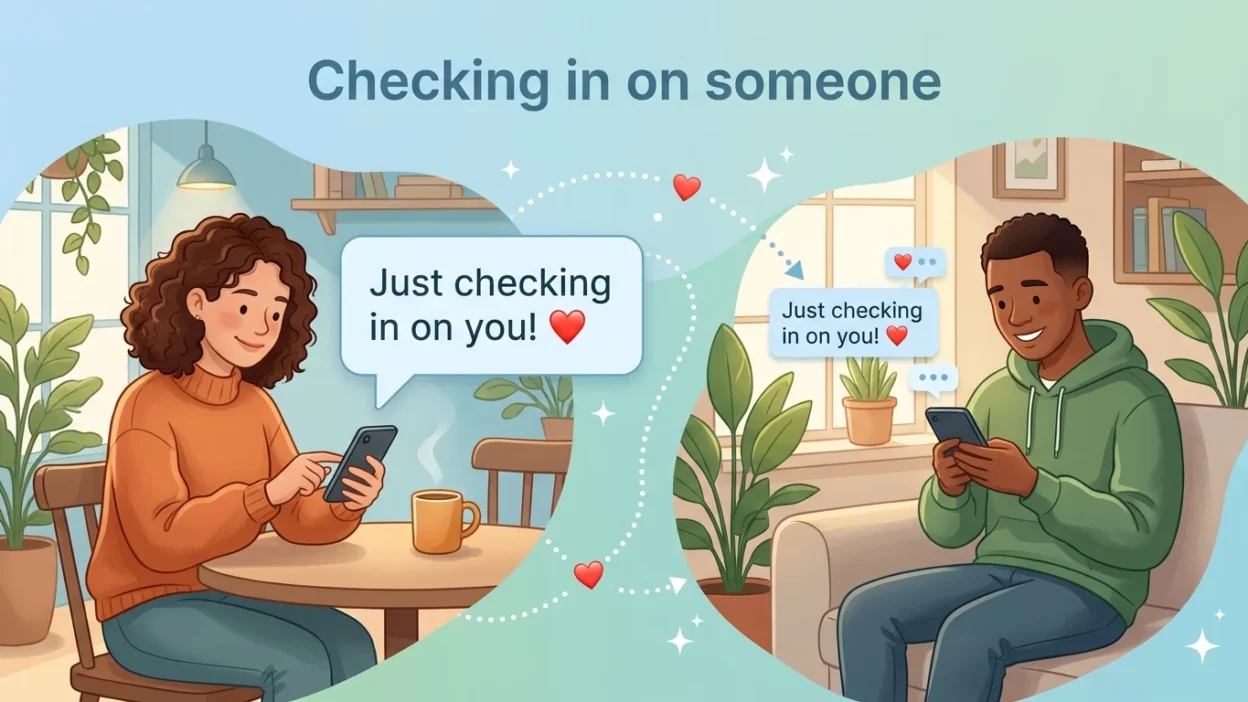
Have you ever received a message saying, “I just wanted to check in on you”? This common expression is often used when someone wants to know how you are doing, if everything is okay, or whether you need any help. It is a friendly way to show concern, offer support, and maintain a personal connection. You may hear it from friends, family members, coworkers, teachers, or even someone who has not spoken to you for a while.
The phrase check in on you generally means to contact someone to see how they are feeling, what is happening in their life, or whether they are doing well. It can be used in casual conversations, professional settings, and situations where someone may need emotional or practical support. Understanding its meaning and context will help you use it naturally in everyday English.
Quick Answer
Check in on you means to contact someone to see how they are doing, make sure they are okay, or find out whether they need help. It is commonly used to express care, concern, and support. For example, “I just wanted to check in on you” means “I wanted to see how you were doing.”
What Does Check In on You Mean?
The expression check in on you means to contact or visit someone to find out how they are doing. It usually suggests that the speaker cares about the other person’s well being and wants to make sure everything is all right.
The phrase can refer to a phone call, text message, email, or face to face conversation.
For example:
- I wanted to check in on you after your appointment.
- Your friend called to check in on you.
- My manager checks in on me every week to see how my work is going.
In each example, someone is making an effort to find out how another person is doing.
The expression does not always mean that something is wrong. Sometimes, people check in simply because they care, want to stay connected, or have not spoken to someone recently.
What Does It Mean When Someone Says, “I Want to Check In on You”?
When someone says, “I want to check in on you,” they usually mean they want to know how you are feeling or whether everything is going well.
Depending on the situation, the expression can communicate several things:
1. They Care About Your Well Being
A person may contact you because they genuinely care about you.
Example:
“I heard you were having a difficult week, so I wanted to check in on you.”
This means the speaker wants to know how you are coping.
2. They Want to Make Sure You Are Okay
Someone may check in after hearing about a problem, illness, accident, or stressful experience.
Example:
“Your brother asked me to check in on you after the accident.”
The speaker wants to make sure you are safe and recovering.
3. They Want to Offer Support
Sometimes, checking in is a way to find out whether someone needs assistance.
Example:
“I am checking in on you to see if you need anything.”
The speaker is offering help or support.
4. They Want to Maintain Contact
People also use this expression when they have not spoken to someone for a while.
Example:
“It has been a few weeks since we last talked, so I thought I would check in on you.”
Here, the speaker simply wants to reconnect.
How to Use Check In on You in a Sentence
The phrase can be used in different situations. Here are some common examples.
Casual Conversations
- I just wanted to check in on you and see how things are going.
- Hey, I am checking in on you. How have you been?
- I thought I would check in on you since we have not talked lately.
- Just checking in on you. Hope everything is going well.
- I wanted to check in on you before the weekend.
When Someone Is Going Through a Difficult Time
- I wanted to check in on you after hearing the sad news.
- Your friends are checking in on you because they care.
- I thought I should check in on you after your recent loss.
- She called to check in on you after your surgery.
- I am just checking in on you to see how you are feeling today.
In Professional Settings
- I wanted to check in on you to see how the project is progressing.
- Your supervisor may check in on you during the training period.
- I am checking in on you to see whether you need any assistance.
- My colleague checked in on me after I missed several days of work.
- The team leader will check in on you later this afternoon.
Check In on You vs Check Up on You
These expressions are similar, but they can have slightly different meanings depending on the context.
| Expression | Meaning | Example |
|---|---|---|
| Check in on you | Contact you to see how you are doing | I wanted to check in on you after your exam. |
| Check up on you | Make sure you are okay or find out what you are doing | My mother called to check up on me. |
Check in on you often sounds friendly and conversational. It commonly suggests concern, support, or a desire to stay connected.
Check up on you can also express care, but it may sometimes suggest closer supervision or making sure someone is following instructions.
For example, a parent might check up on a child to make sure the child is safe. A friend might check in on another friend to ask how life is going.
Check In on You vs Check In With You
These two expressions are also related, but they are not always interchangeable.
| Expression | Meaning | Example |
|---|---|---|
| Check in on you | See how you are doing or make sure you are okay | I wanted to check in on you after your illness. |
| Check in with you | Contact you to discuss something, get an update, or communicate | I wanted to check in with you about the meeting. |
Use check in on you when your main concern is the person’s well being.
Use check in with you when you want to communicate about a particular matter, although it can also be used to ask how someone is doing.
Is Check In on You a Friendly or Romantic Expression?
The phrase is generally friendly and caring, but its meaning depends on the relationship and context.
A friend might say it to show concern. A family member might use it to make sure you are safe. A coworker might say it to ask how you are managing your workload.
It can also appear in romantic conversations. For example:
“I just wanted to check in on you because I have been thinking about you.”
This may sound affectionate, especially when said by someone who has romantic feelings. However, the phrase itself does not automatically indicate romantic interest.
The surrounding conversation, relationship, and tone help determine the intended meaning.
Common Mistakes to Avoid
1. Confusing Check In on You With Check In With You
Both expressions are correct, but they often serve different purposes. Use check in on you to ask about someone’s well being and check in with you to discuss something or get an update.
2. Assuming It Always Means Something Is Wrong
Someone can check in on you even when everything is fine. The expression can simply be a friendly way to stay connected.
3. Assuming It Is Always Romantic
The phrase expresses care or concern, but it does not necessarily suggest romantic feelings.
4. Forgetting the Word On
When using this particular expression, the correct construction is check in on someone.
Correct: “I wanted to check in on you.”
Incorrect: “I wanted to check in you.”
5. Confusing the Verb and Noun Forms
Check in is a phrasal verb. Check-in is commonly used as a noun or adjective.
Examples:
- Verb: I will check in on you tomorrow.
- Noun: The hotel check-in starts at 3 p.m.
- Adjective: Please visit the check-in desk.
How to Respond When Someone Says They Want to Check In on You
If someone says, “I just wanted to check in on you,” you can respond in several natural ways.
If everything is fine:
- Thanks for checking in. I am doing well.
- I appreciate you reaching out. Everything is going fine.
- That is thoughtful of you. I am doing okay.
If you are having a difficult time:
- Thanks for checking in. Things have been a little difficult lately.
- I appreciate your concern. I have been going through a lot.
- Thanks for reaching out. I could actually use some help.
If you want to continue the conversation:
- Thanks for checking in. How have you been?
- I am glad you reached out. What have you been up to?
- It is nice to hear from you. How is everything going?
Memory Trick
Think of check in on someone as making contact to see how that person is doing.
Imagine that your friend has been sick. You send a message saying, “I just wanted to check in on you.”
You are not checking a document or inspecting an object. You are checking how your friend is feeling and whether everything is okay.
Remember:
Check in on someone = Contact someone to see how they are doing.
Frequently Asked Questions
1. What does “just checking in on you” mean?
It means someone is contacting you to see how you are doing, whether you are okay, or whether you need anything. It is usually a friendly expression of care or concern.
2. Does checking in on someone mean you care about them?
Usually, yes. The expression often shows concern, kindness, or interest in someone’s well being. However, it can also be used for routine professional communication.
3. What does it mean when a guy says he wants to check in on you?
It generally means he wants to know how you are doing or whether everything is okay. It may express friendship, concern, or affection, but it does not automatically mean he is romantically interested.
4. Is “check in on you” grammatically correct?
Yes. It is a natural and grammatically correct expression. For example, “I wanted to check in on you after your appointment.”
5. What is another way to say “check in on you”?
You can say “see how you are doing,” “make sure you are okay,” “see how things are going,” or “reach out to you.” The best alternative depends on the context.
6. What is the difference between checking in and checking up on someone?
Checking in often means contacting someone to ask how they are doing. Checking up on someone can also mean making sure they are okay, but it may suggest supervision or closer monitoring.
7. Can you say “I am checking in on you”?
Yes. It is a natural expression. You can use it when contacting someone to ask about their well being. For example, “I am checking in on you to see how you are feeling.”
8. Does “check in on you” mean someone misses you?
Not necessarily. Someone may miss you, but the expression itself only means they want to find out how you are doing. The surrounding conversation can provide more clues about their feelings.
Remember This
Check in on you means to contact someone to ask how they are doing, make sure they are okay, or find out whether they need help.
It is a common expression of care, concern, and support. Friends, family members, romantic partners, and coworkers can all use it. Its meaning depends on the situation, but it is generally a positive and considerate way to communicate.
Conclusion
The expression check in on you is a natural and widely used phrase in everyday English. It means contacting someone to see how they are feeling, find out if everything is okay, or offer help when needed. It can be used in personal conversations, professional communication, and situations where someone may appreciate a little support.
Although the phrase often expresses genuine concern, it does not automatically suggest romantic interest or imply that something is wrong. Its meaning depends on the relationship and context. When someone says, “I just wanted to check in on you,” they are usually letting you know that they are thinking about you and want to see how you are doing.

Adam Aaron is a language enthusiast and content writer at SimileHive, creating clear, engaging guides on similes, idioms, metaphors, and figurative language to help readers improve English confidently every day.