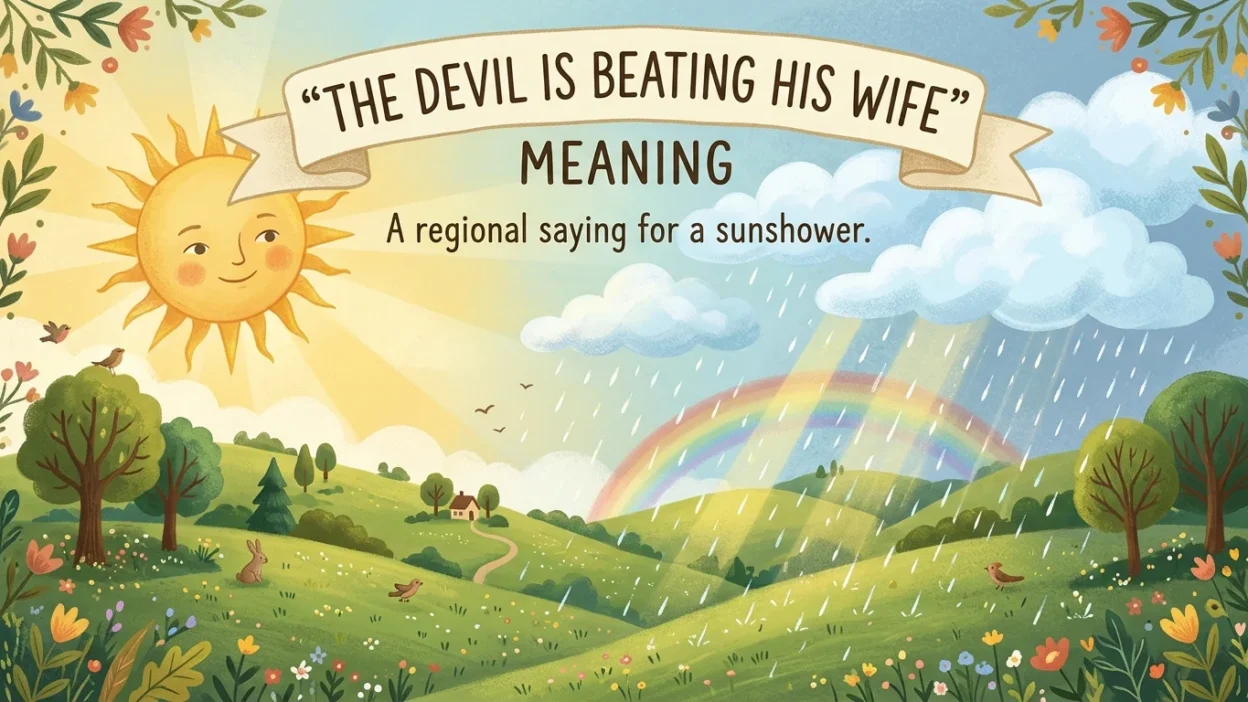
Have you ever seen rain falling while the sun is shining and wondered what to call this strange weather? In some English speaking regions, people use the unusual expression “the devil is beating his wife” to describe this situation. It is a colorful folk saying associated with a sunshower, when rain falls even though the sun is still visible.
The phrase may sound strange or disturbing because it describes an imaginary act of violence. However, its traditional meaning is connected to weather folklore rather than a literal event. It is an example of how language preserves old beliefs, regional sayings, and imaginative explanations for everyday experiences.
Although the expression is recognized in some communities, it is not universally familiar, and many English speakers simply call the weather a sunshower.
Quick Answer: What Does “The Devil Is Beating His Wife” Mean?
“The devil is beating his wife” is a regional folk expression used when rain falls while the sun is shining. This weather condition is commonly called a sunshower. The saying comes from folklore that imaginatively explains this unusual combination of sunshine and rain. It is not meant as a literal description of something happening.
Why Do People Say “The Devil Is Beating His Wife”?
People use this expression because sunshine and rain occurring at the same time can seem unusual or contradictory. Traditional folklore often explained mysterious natural events through imaginative stories involving supernatural characters.
In this saying, the devil is imagined as causing the rain while the sun continues to shine. The expression is a form of personification: it gives an imaginary character responsibility for a natural event.
The phrase is regional rather than universal. Some people recognize it immediately, while others may never have heard it. Because the wording refers to domestic violence, some speakers may also find it uncomfortable or inappropriate.
What Is a Sunshower?
A sunshower occurs when rain falls while sunlight is still visible. It can happen when a rain cloud passes over an area while the sun remains unobstructed, or when rain falls from a cloud that does not completely cover the sun.
For example:
- It was raining, but the sun was shining brightly.
- We saw a rainbow during the sunshower.
- The weather changed quickly, and a light sunshower began.
A sunshower is the ordinary, neutral term for the weather condition described by the expression.
Examples of “The Devil Is Beating His Wife”
Here are examples showing how the saying might be used in conversation.
- “Look outside! It’s raining while the sun is shining. Grandma says the devil is beating his wife.”
- “We used to hear that the devil was beating his wife whenever a sunshower started.”
- “The children laughed when their grandfather explained the old saying about the devil beating his wife.”
- “I had never heard the expression ‘the devil is beating his wife’ until I visited that region.”
- “It’s a beautiful sunshower, although my neighbor uses a much stranger expression for it.”
- “My grandmother remembered several weather sayings, including ‘the devil is beating his wife.’”
- “The sun was shining through the rain, and someone mentioned the old folk expression.”
- “Rather than using the traditional saying, we simply called it a sunshower.”
These examples illustrate the expression as a piece of folklore. In everyday conversation, “It’s raining while the sun is shining” or “We’re having a sunshower” will be clearer to most people.
Is “The Devil Is Beating His Wife” an Idiom?
It can be described as a regional idiom or folk expression because its meaning is not simply the literal meaning of its individual words. Instead, it refers to a particular weather condition: rain falling while the sun shines.
An idiom often has a figurative meaning that cannot be understood from the words alone. This expression fits that general pattern because knowing its traditional meaning requires familiarity with the saying.
However, it is not a widely used idiom throughout the English-speaking world. Its familiarity varies by region and community.
What Is the Origin of the Expression?
The exact origin of “the devil is beating his wife” is uncertain. Like many traditional sayings, it appears to belong to a wider body of weather folklore in which people used imaginative stories to explain natural phenomena.
Sunshowers have inspired different expressions in different cultures. Some sayings involve supernatural characters, while others refer to animals or other fanciful explanations. The devil-and-wife version is one regional example.
It is best not to attribute the phrase to a specific person, date, or country without reliable historical evidence. Its precise beginnings are not firmly established.
Is the Expression Offensive?
Some people use the phrase casually because they learned it as a traditional weather saying. Others may consider it disturbing because it refers to violence against a spouse.
Whether it feels offensive depends on the listener, context, and local culture. If you are unsure whether your audience knows the expression or is comfortable with it, choose a neutral alternative.
Instead of saying “the devil is beating his wife,” you can say:
- “It’s a sunshower.”
- “It’s raining while the sun is shining.”
- “We’re having sunshine and rain at the same time.”
These alternatives communicate the weather clearly without the violent imagery.
Similar Weather Expressions
| Expression | Meaning |
|---|---|
| Sunshower | Rain falling while the sun shines |
| April showers | A traditional expression for frequent spring rain, especially in April |
| Rain or shine | Regardless of whether it rains or the sun shines |
| Every cloud has a silver lining | Even a difficult situation may have a positive aspect |
| Come rain or come shine | No matter what the weather or circumstances are |
Of these expressions, sunshower is the closest match in meaning.
Frequently Asked Questions
1. What Does “The Devil Is Beating His Wife” Mean?
It is a regional folk expression for a sunshower, which occurs when rain falls while the sun is shining.
2. Is “The Devil Is Beating His Wife” a Real Saying?
Yes. It is a traditional expression known in some English-speaking communities, though it is not universally familiar.
3. Does the Expression Have a Literal Meaning?
No. In its traditional weather-related use, it is figurative folklore, not a literal statement about an actual event.
4. What Is the Weather Called When It Rains While the Sun Shines?
The usual term is sunshower. It describes rain falling while sunlight remains visible.
5. Where Did the Saying Originate?
Its exact origin is uncertain. It belongs to a tradition of folk expressions that use imaginative stories to explain unusual weather.
6. Is the Expression Appropriate to Use Today?
It may be understood as an old folk saying, but some people find its reference to domestic violence uncomfortable. “Sunshower” is a clearer and more neutral alternative.
7. Is “The Devil Is Beating His Wife” Used Everywhere?
No. It is a regional expression. Some communities recognize it, while many English speakers use only the word sunshower for the same weather condition.
Remember This
- Meaning: Rain falling while the sun is shining.
- Common weather term: Sunshower.
- Type: Regional idiom or folk expression.
- Origin: Uncertain; associated with weather folklore.
- Usage note: Because the wording refers to domestic violence, a neutral alternative may be preferable in many situations.
Conclusion
“The devil is beating his wife” is an unusual regional expression that describes a sunshower: rain falling while the sun is shining. Like many folk sayings, it uses an imaginative story to explain a natural event. Its exact origin is uncertain, and not every English speaker will recognize it.
If you encounter the phrase in conversation, remember its traditional weather related meaning rather than interpreting it literally. When speaking or writing for a broad audience, sunshower is usually the clearest and most neutral word to use.

Adam Aaron is a language enthusiast and content writer at SimileHive, creating clear, engaging guides on similes, idioms, metaphors, and figurative language to help readers improve English confidently every day.