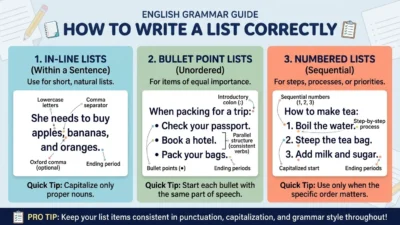
confusing words and ideoms9 Min Read Adam AdamonNovember 10, 2026 How to Write a List Correctly: Rules, Punctuation and Examples Writing a list may seem simple, but knowing how to punctuate, format, and organize it correctly can make a big difference in your writing.… Discover More
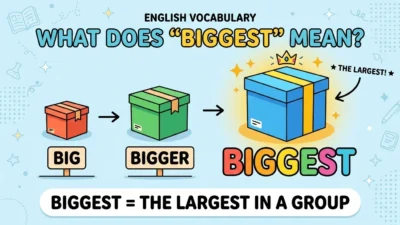
confusing words and ideoms7 Min Read Lucas LukeonNovember 10, 2026 Biggest: Meaning, Definition, Grammar and Examples in English What does biggest mean, and how should you use it correctly in a sentence? Biggest is the superlative form of the adjective big. It describes… Discover More
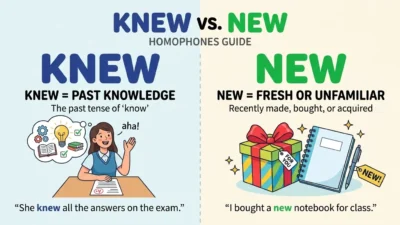
confusing words and ideoms7 Min Read Adam AdamonNovember 10, 2026 Knew vs New: Meaning, Difference, Pronunciation, and Examples Do you sometimes confuse knew and new when writing in English? These two words sound exactly the same in standard English pronunciation, but… Discover More
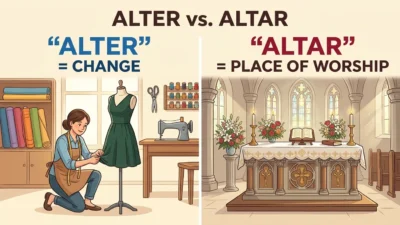
confusing words and ideoms7 Min Read Charles KevinonNovember 10, 2026 Alter vs Altar: Meaning, Difference, and How to Use Each Correctly Have you ever wondered whether to write alter or altar? These two words look and sound almost identical, but they have completely different… Discover More
confusing words and ideoms10 Min Read Lucas LukeonNovember 10, 2026 Can You Start a Sentence With “Just”? Meaning, Rules & Examples Can you start a sentence with just? Yes. Starting a sentence with just is grammatically correct, and it is common in everyday English as well… Discover More
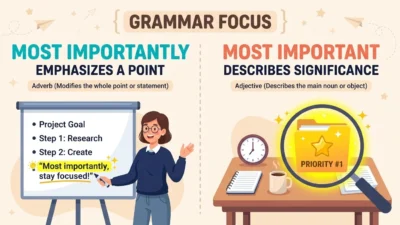
confusing words and ideoms9 Min Read Adam AdamonNovember 8, 2026 Most Importantly vs Most Important: What Is the Difference Are “most importantly” and “most important” interchangeable? Not always. Although these expressions are closely related, they have different… Discover More
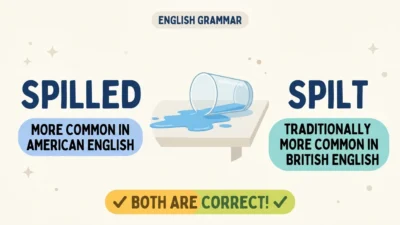
confusing words and ideoms8 Min Read Lucas LukeonNovember 8, 2026 Spilled vs Spilt: What Is the Difference and Which Should Use? Is it spilled or spilt? Both spellings are correct, and both are forms of the verb spill. They describe the act of accidentally causing a… Discover More
confusing words and ideoms12 Min Read Adam AdamonNovember 8, 2026 I Worked vs I Was Working vs I Have Been Working: What Is Difference? The phrases “I worked,” “I was working,” and “I have been working” may seem similar because they all describe an activity related to work.… Discover More
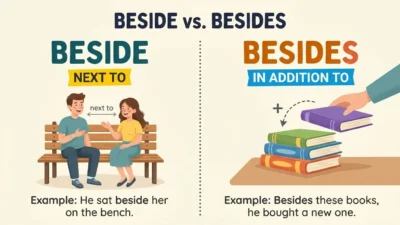
confusing words and ideoms8 Min Read Charles KevinonNovember 8, 2026 Beside vs Besides: What Is the Difference and When Should Use? The words beside and besides look almost identical, but they have different meanings and uses. Both are correct English words, yet choosing… Discover More
confusing words and ideoms9 Min Read Lucas LukeonNovember 8, 2026 Have One’s Work Cut Out: Meaning, Examples and How to Use The expression have one’s work cut out is a common English idiom used when someone faces a difficult, demanding, or challenging task. It… Discover More