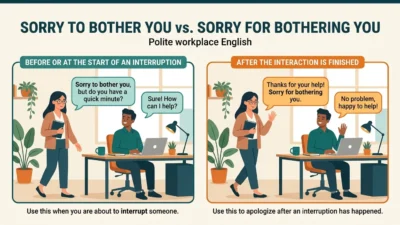
confusing words and ideoms7 Min Read Adam AdamonOctober 15, 2026 Sorry for Bothering You vs Sorry to Bother You: Which Is Correct? “Sorry for bothering you” and “sorry to bother you” are both correct and natural expressions in English. People use them to apologize for… Discover More
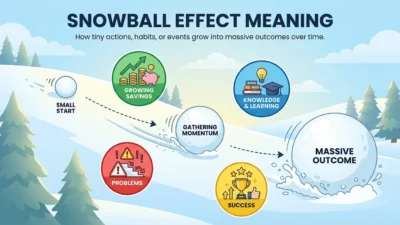
confusing words and ideoms8 Min Read Adam AdamonOctober 14, 2026 Snowball Effect Meaning: Definition, Examples, and Sentences The phrase “snowball effect” describes a situation in which something starts small but gradually grows bigger, stronger, or more serious over… Discover More
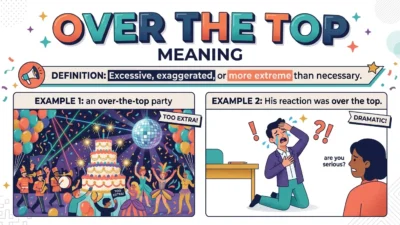
confusing words and ideoms8 Min Read Charles KevinonOctober 14, 2026 Over the Top Meaning: What Does This Popular Expression Mean? Have you ever seen someone react dramatically to a small problem or spend an enormous amount of money on a simple celebration? You might… Discover More
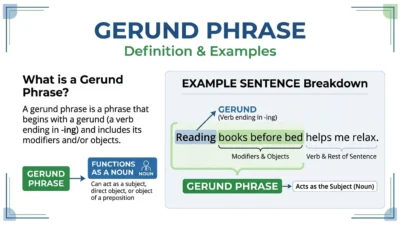
confusing words and ideoms8 Min Read Lucas LukeonOctober 14, 2026 Gerund Phrase Explained: Definition, Examples & Grammar Rules What is a gerund phrase, and how can you identify one in a sentence? A gerund phrase is a group of words that begins with a gerund, which is a… Discover More
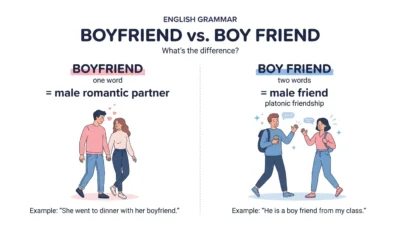
confusing words and ideoms7 Min Read Adam AdamonOctober 14, 2026 Boyfriend vs Boy Friend: Which Spelling Is Actually Correct? Should you write boyfriend or boy friend? Although these expressions look almost identical, they are used differently. Boyfriend, written as… Discover More
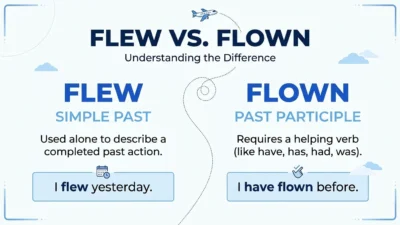
confusing words and ideoms7 Min Read Charles KevinonOctober 14, 2026 Flew vs Flown: What Is the Difference? Meaning and Examples Is it correct to say “I have flew” or “I have flown”? Many English learners confuse flew vs flown because both words are forms of the verb… Discover More
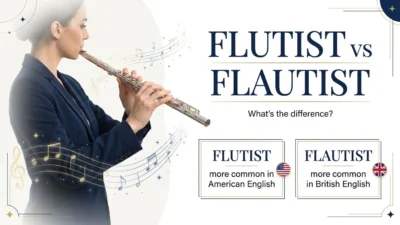
confusing words and ideoms6 Min Read Adam AdamonOctober 13, 2026 Flutist vs Flautist: Which Spelling Is Actually Correct? Should you write flutist or flautist? Both spellings are correct, and both refer to a person who plays the flute. The main difference is… Discover More
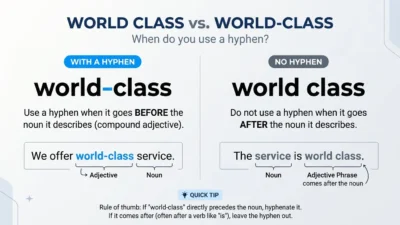
confusing words and ideoms7 Min Read Charles KevinonOctober 13, 2026 World Class or World-Class? The Correct Hyphen Rule Explained Should you write world class or world-class? The correct form depends on how you use the expression in a sentence. In standard English,… Discover More
confusing words and ideoms9 Min Read Lucas LukeonOctober 13, 2026 Admitted vs Accepted: What Is the Difference? Meaning & Usage Have you ever wondered whether to say “I was admitted to the university” or “I was accepted by the university”? Both expressions can describe… Discover More
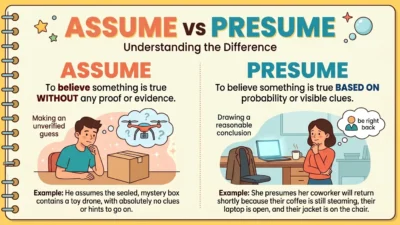
confusing words and ideoms10 Min Read Adam AdamonOctober 13, 2026 Presume vs Assume: What Is the Difference? Meaning & Examples Have you ever wondered whether to use presume or assume in a sentence? These two words are often used interchangeably because both describe… Discover More