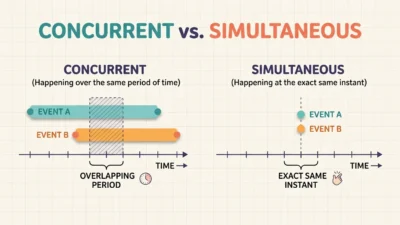
confusing words and ideoms7 Min Read Adam AdamonOctober 8, 2026 Concurrent vs Simultaneous: What’s the Difference? And Rules Concurrent and simultaneous both describe things that happen at the same time, so it is easy to confuse them. However, the two words focus on… Discover More
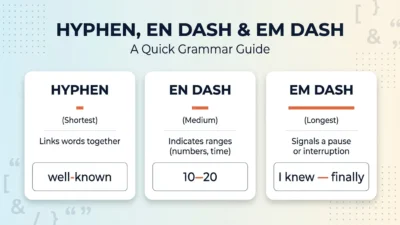
confusing words and ideoms8 Min Read Charles KevinonOctober 8, 2026 Dash Rules in English: How to Use Em and En Dashes & Hyphens Dashes are small punctuation marks, but they can cause big confusion. English uses different marks for different purposes, and knowing when to… Discover More
confusing words and ideoms6 Min Read Charles KevinonOctober 8, 2026 Chateau vs Chateaux: What’s the Difference? Meaning and Usage “Chateau” and “chateaux” are French words that are commonly used in English, especially when talking about historic buildings, castles,… Discover More
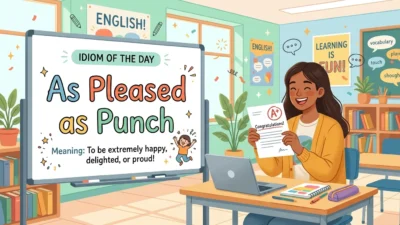
confusing words and ideoms6 Min Read Lucas LukeonOctober 8, 2026 As Pleased as Punch Meaning: What Does This Idiom Mean? “As pleased as punch” is a common English idiom used to describe someone who is very happy, delighted, or proud about something. If someone is… Discover More
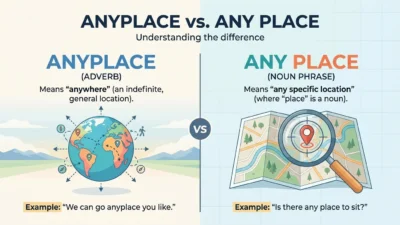
confusing words and ideoms8 Min Read Lucas LukeonOctober 7, 2026 Anyplace vs Any Place: Which Is Correct? Rules and Examples “Anyplace” and “any place” can both be correct, but they are used differently. Anyplace is a one word adverb meaning “anywhere” or “in, at, or… Discover More
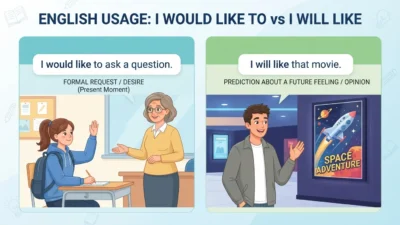
confusing words and ideoms9 Min Read Adam AdamonOctober 6, 2026 I Would Like To vs I Will Like To: The Difference You Need to Know “I would like to” and “I will like to” are both grammatically possible, but they do not normally mean the same thing. Use “I would like to” to… Discover More
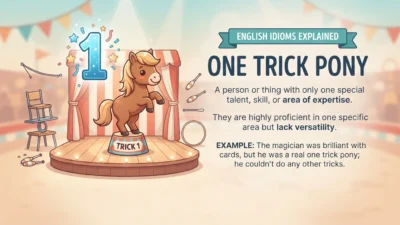
confusing words and ideoms8 Min Read Lucas LukeonOctober 6, 2026 One Trick Pony Meaning: Definition, Origin and How to Use It “One trick pony” is an informal expression used to describe a person, product, performer, or thing that has only one notable skill, talent,… Discover More
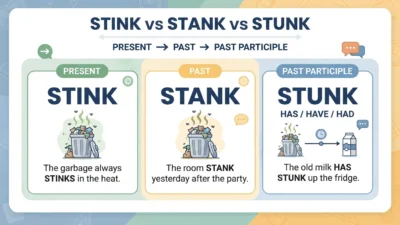
confusing words and ideoms9 Min Read Charles KevinonOctober 6, 2026 Stink vs Stank vs Stunk: What’s the Difference & Which Is Correct? “Stink,” “stank,” and “stunk” all come from the same verb, but they are used in different ways. The verb stink means to smell very bad or… Discover More
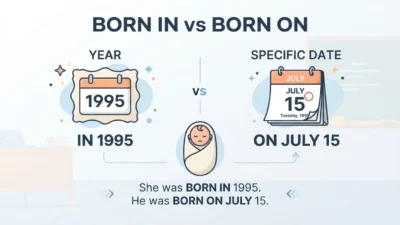
confusing words and ideoms8 Min Read Adam AdamonOctober 6, 2026 Born In vs Born On: Which One Is Correct? Rules and Examples “Born in” and “born on” are both correct, but they are used for different types of time expressions. Use born in with a year, month, season,… Discover More
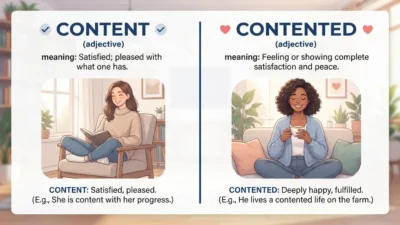
confusing words and ideoms8 Min Read Lucas LukeonOctober 6, 2026 Content vs Contented: What’s the Difference & When Should Use? “Content” and “contented” can both describe someone who is satisfied, peaceful, and happy with what they have, but they are used differently.… Discover More